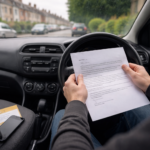
A speeding fine letter usually lands as a brown envelope with a police crest or a camera partnership header. In many UK households it gets opened at the kitchen counter, then the same questions come up: “Was it really that day?”, “Was anyone else driving?”, “Is this a scam?”, and “How long is there to respond?” The letter often refers to a Notice of Intended Prosecution (NIP) and a Section 172 request to name the driver, sometimes bundled together.
Typical patterns: the alleged speed is only slightly over the limit, the location name is unfamiliar, or the car was on a regular commute route where limits change quickly (30 to 20, or 70 to 50 through roadworks). Another common scenario is a company car or lease vehicle where the letter arrives late because it has been passed between registered keeper, fleet, and driver.
It can also arrive after a house move, when post forwarding is patchy and the V5C logbook address has not been updated. That is when people discover the first letter was missed and a reminder has arrived with a shorter deadline.
First checks to do
Read the deadlines
Look for two separate time pressures: the time to respond to the driver details request (often 28 days) and any time-limited offer (such as a speed awareness course or a fixed penalty). Missing the driver details deadline is where many cases get worse, because failing to provide details can lead to a separate offence with higher penalties.
Confirm it is genuine
Check the sender details, reference numbers, and payment/response channels. Genuine notices usually direct responses to an official police unit or camera enforcement office and provide clear instructions for naming the driver. If anything looks off (odd bank details, pressure to pay immediately, spelling errors), pause and verify using GOV.UK guidance to find the correct contact route for the force area rather than using phone numbers printed on a suspicious letter.
Check the vehicle details
Match the registration number, make/model, and date/time/location. Small errors can happen, but a wrong registration or a location that could not have been reached at that time is a red flag worth raising promptly. If the vehicle was sold, scrapped, or off the road, gather proof (sale receipt, DVLA confirmation, insurance cancellation) before contacting the issuing office.
Work out who drove
In many households more than one person uses the car. Check calendars, shift patterns, school runs, bank card transactions, phone location history, and dashcam footage. The expectation is “reasonable diligence” to identify the driver, not guesswork. If it genuinely cannot be worked out, keep a written log of the checks done, because that record often matters later.
Likely causes behind the letter
Camera enforcement hotspots
Most letters come from fixed roadside cameras, average speed cameras through roadworks, or mobile vans on known routes. Average speed zones catch drivers who slow for a camera then speed up again, because the system measures over distance.
Limit changes and signage
Common UK triggers include new 20mph zones, temporary roadworks limits, and smart motorway variable limits. People often remember the “usual” limit and miss a change, especially at night or in heavy rain when signs are harder to spot.
Address and keeper delays
If the V5C address is old, the first notice can go to the previous address and only surface when a reminder is issued. With lease and company vehicles, the first notice goes to the registered keeper (leasing company), then gets reissued to the nominated driver, which can compress the time left to respond.
Plate or admin errors
Misreads are less common than people hope, but they do happen, especially with similar characters (O/0, I/1). Admin errors also occur when a vehicle has recently changed plates or when a private plate has been transferred.
Step-by-step fixes
Keep the envelope
File the letter and envelope together. The postmark and delivery timing can matter if there is a dispute about when it arrived, particularly where there has been a move or postal delays.
Respond to driver request
Complete the driver details request accurately and return it using the method stated (online portal or post). Take screenshots or photos of the completed form and any confirmation page. If posting, use a tracked service and keep the receipt. This step is usually the most important practical action, because it prevents escalation for non-response.
Ask for photos sensibly
If the driver is genuinely uncertain, request any available photographs “to help identify the driver”. Many offices will provide images or a link. The request should be polite and prompt, and it should not be treated as a way to pause the deadline unless the issuing office confirms an extension in writing.
Check course eligibility
If offered a speed awareness course, read the conditions carefully. Typical constraints include not having taken a course within a set period and completing it by a deadline. If the course is suitable, booking early avoids losing the option due to limited slots.
Consider the fixed penalty
Where a fixed penalty is offered, it usually involves a set fine and points. The practical question is whether the details are correct and whether accepting is the least disruptive option. If the driver details are correct and the speed is within the fixed penalty threshold, many people choose this route to avoid court time and uncertainty.
Challenge only with evidence
Challenges that tend to go nowhere are vague claims that signage was “not seen” or that the speed “felt safe”. Challenges that can matter are evidence-based: proof the vehicle was elsewhere, proof it was sold before the date, or a clear mismatch in vehicle identity. Keep any supporting documents organised and send copies, not originals.
Update DVLA records
If the letter arrived because of an old address, update the V5C and driving licence address promptly. This reduces the risk of future notices, reminders, or enforcement letters going missing. It also helps if there is later correspondence about the same incident.
What happens if it is ignored
Driver details offence risk
Ignoring the Section 172 request commonly leads to a separate allegation of failing to provide driver details. In UK cases this is often more serious than the original speeding allegation, with higher fines and more points, and it can affect insurance premiums sharply.
Loss of course option
Speed awareness courses are usually offered only within a window. If the deadline passes, the case often moves to a fixed penalty or court route, even if the speed would otherwise have qualified for a course.
Court and enforcement steps
If deadlines are missed, the matter can progress to court paperwork. That can mean additional costs, more time spent responding, and a higher chance of a conviction being recorded without the household having properly engaged with the process.
When to escalate
Get advice early
Escalation is sensible where the driver cannot be identified after reasonable checks, where the vehicle details appear wrong, where the notice arrived very late due to keeper chain issues, or where there is a risk of disqualification due to existing points. Independent advice can help decide whether to accept an offer, request more information, or prepare for court.
For general consumer and legal process support, Citizens Advice is often a good starting point, especially where paperwork has gone to an old address or there are vulnerabilities affecting the ability to respond on time.
Collect a clear evidence pack
Evidence that usually helps in UK speeding notice disputes includes: copies of the notice and envelope, proof of address change dates, V5C update confirmation, insurance documents showing who was insured to drive, work rota or delivery logs, and any photos provided by the enforcement office. Keep a timeline with dates of receipt, responses sent, and any calls made (including the name of the person spoken to).
Handle linked admin issues
Sometimes a speeding letter arrives alongside other post that has gone astray after a move, such as council tax or parking notices. If there is also a parking charge or council-issued PCN in the mix, the process is different and the appeal route matters. The separate steps are set out in PCN parking fine — how to appeal, which can help prevent missed deadlines on the wrong type of notice.
FAQ
Is the first letter always within…
Often the first NIP to the registered keeper is expected within 14 days, but delays can occur where the keeper details are not up to date or where the vehicle is leased or a company car. The key practical point is still to respond to the driver details request on time unless formal advice says otherwise.
Can photos be used to identify…
Sometimes. Many images show the vehicle and plate clearly but not the face. Even so, photos can help confirm the location, direction of travel, and whether the vehicle is definitely the one in the household.
What if nobody knows who was…
Reasonable checks should be done and recorded. If it remains genuinely unclear, the response should explain the steps taken rather than guessing. This is an area where early advice can prevent a simple speeding matter turning into a driver details offence.
Does paying mean admitting guilt?
Accepting a fixed penalty is treated as accepting the allegation and the points/fine. If the details are wrong, it is usually better to raise the issue before paying.
Can the letter be a scam?
Scams exist, but most notices are genuine. Verification should be done using official contact routes rather than replying to unexpected links or payment instructions.
Before you move on
Put the deadline date in a calendar, gather the envelope and all pages, and decide today whether the driver can be identified from routine records (messages, bank transactions, rota, dashcam). If you felt pushed to act quickly or told there was no time, that’s often a sign the process wasn’t handled properly.
Get help with the next step
If the paperwork is confusing, deadlines are tight, or the driver cannot be confirmed, use the contact form at https://ukfixguide.com/contact/ to outline what has arrived and what has already been done.