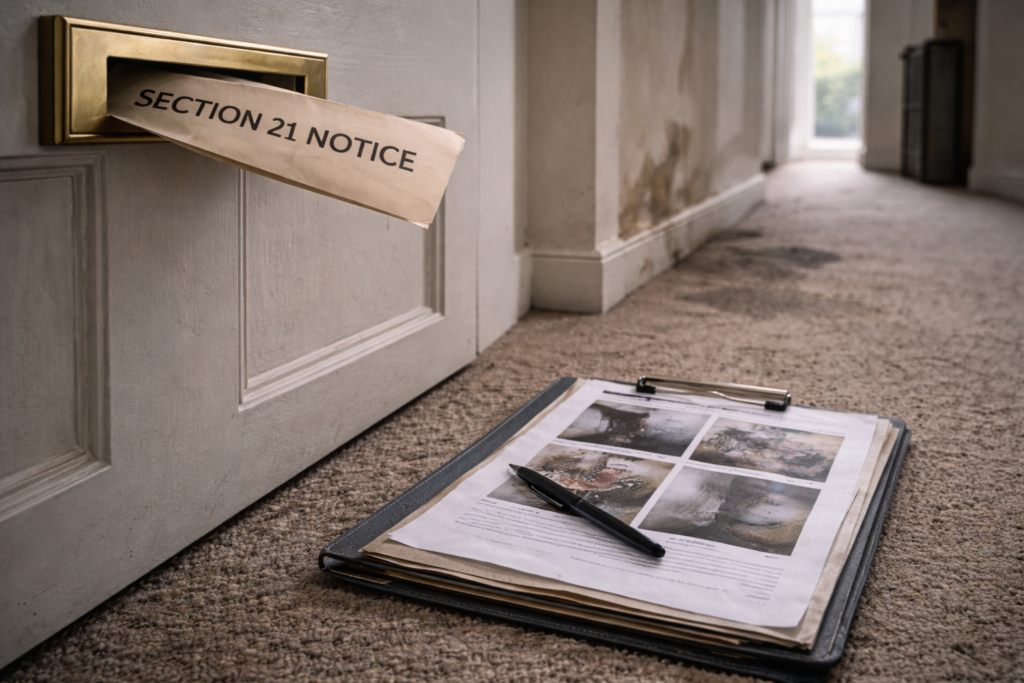
Reply to the landlord or agent in writing today, confirm the disrepair complaint date, and ask them to withdraw the Section 21 while repairs are arranged. If nothing is done, the notice often moves on to a possession claim and the pressure to leave increases even if the property is still in poor condition. Keep paying rent, keep everything in writing, and start collecting evidence that links the disrepair report to the timing of the notice. If the landlord will not back down, get the council’s Environmental Health team involved quickly so there is an official paper trail.
A Section 21 notice turning up soon after a disrepair complaint is a common flashpoint in private renting in the UK. It tends to happen after the tenant has chased repairs more than once, or after a partial response that does not fix the underlying issue. The practical aim is to slow down the eviction route and strengthen the position for repairs, negotiation, or a managed move on terms that protect the deposit and references.
What the problem is
This situation usually affects private tenants in England who have reported problems like damp, mould, leaks, unsafe electrics, broken heating, or persistent pests and then receive a Section 21 notice shortly afterwards. It often appears after the tenant has already raised the issue informally, then followed up with a written complaint or repair request, and the landlord has either delayed, offered a quick patch, or stopped responding. Many tenants only realise the seriousness when the notice arrives with a covering email that talks about “end of tenancy” rather than repairs.
In UK renting patterns, the notice is frequently issued at a point where the landlord believes the tenant is becoming “difficult” or may involve the council. It can also land after a contractor visit that identifies costly work, or after the tenant asks for rent reduction or reimbursement. The problem is not just the notice itself; it is the combination of unresolved disrepair and the risk of losing the home before the issues are properly addressed.
Why this happens
Disrepair can be expensive, disruptive, and time-consuming, and some landlords respond by trying to regain possession rather than fix the underlying problem. Where a landlord is planning to sell, re-let at a higher rent, or avoid enforcement action, a Section 21 notice can be used to apply pressure and reduce the chance of further complaints. Agents may also default to “serve notice” as a risk-management step when a complaint escalates, especially if the landlord is slow to approve works.
Delays also happen because repairs are often handled through informal chains: tenant reports to agent, agent requests quotes, landlord delays approval, and contractors have limited availability. When the tenant keeps chasing, the relationship can sour and the landlord may decide the easiest route is to end the tenancy rather than resolve the dispute. A typical organisational response pattern is that communication becomes brief, repairs are described as “in hand”, and the focus shifts to tenancy dates and access arrangements.
Some landlords assume the tenant will leave once a notice is served, meaning the repair liability becomes someone else’s problem. Others rely on the fact that many tenants do not know what makes a notice invalid or what steps can block or delay possession. The incentive is simple: a notice is quick to issue, while proper repairs and compliance checks take effort and money.
Your rights in practice
The strongest practical position comes from showing that the disrepair was reported clearly, that reasonable access was offered, and that the landlord failed to act within a sensible time. Written records matter more than phone calls, and council involvement often changes the tone because it creates independent evidence and can trigger restrictions on using Section 21 in certain circumstances. Keeping rent paid and avoiding damage or confrontation helps prevent the landlord switching to other eviction routes that are harder to defend.
What usually works in UK cases is tightening the timeline: confirm the dates of reports, list what was promised, and set a clear deadline for a repair plan. If the landlord is open to resolving it, a withdrawal of the notice in exchange for access and a repair schedule is a realistic outcome. If the landlord is not open to that, the next best leverage is an official inspection and written findings, because it reduces the landlord’s ability to dismiss the issue as “condensation” or “tenant lifestyle”.
It also helps to check whether the notice is procedurally usable at all, because many fail on basics such as paperwork, timing, or required documents. That check is not about arguing; it is about understanding whether the landlord can actually get a court order quickly. Even where the notice is technically valid, disrepair evidence can support negotiation on moving dates, deposit return, and references, and can support separate action for repairs if needed.
Legal or official basis
The key official route in practice is the local council’s Environmental Health service using the Housing Health and Safety Rating System (HHSRS). When the council inspects and identifies serious hazards, it can take formal action that creates an official record and can affect a landlord’s ability to rely on a Section 21 notice in certain situations. This is why the timing matters: the earlier the council is involved, the clearer the paper trail becomes and the harder it is for a landlord to frame the issue as minor or unreported.
Use the council’s housing or environmental health reporting route and ask for an inspection where there is ongoing risk to health or safety, such as persistent damp and mould, lack of heating or hot water, unsafe electrics, or structural leaks. Prepare to show the inspector the worst-affected areas, any temporary measures that have failed, and the history of reports to the landlord or agent. Practical details like room temperatures, recurring condensation, or repeated leak points often make the difference between “advice only” and formal action.
GOV.UK explains how councils deal with housing hazards and what enforcement can look like in practice: GOV.UK guidance.
Evidence that matters
Evidence needs to show two things: the disrepair exists and was reported, and the Section 21 arrived after the landlord was put on notice. The most useful items are dated photos and videos, written repair requests, and any contractor messages that confirm the issue is real and ongoing. Where health is affected, simple supporting evidence such as GP appointment confirmations or school absence notes can help, but only if it is directly connected to the housing conditions.
Do not edit images in a way that could be challenged, and do not rely on a single dramatic photo if the problem is recurring. Avoid long emotional messages; short, factual updates with dates and access offers tend to be taken more seriously by agents, councils, and courts. One thing not to do yet is stop paying rent to “force” repairs, because that often triggers a different eviction route and weakens negotiation.
Useful checklist
- Dated photos or videos showing the problem over time (wide shot and close-up)
- Copies of emails, portal messages, or letters reporting the issue and chasing it
- The Section 21 notice, envelope, and any covering email or letter
- Notes of access offered and any missed appointments by contractors
Common mistakes
Three mistakes come up repeatedly in UK disputes. The first is only reporting by phone or in person, leaving no clear record of what was said and when. The second is refusing access after trust breaks down, which then lets the landlord argue repairs were blocked. The third is sending threats or abusive messages, which distracts from the disrepair and can be used to justify ending the tenancy on “relationship breakdown” grounds.
Steps to take next
Start by treating the Section 21 and the disrepair as two linked tracks: one is about stopping or delaying possession, the other is about getting the home made safe. The order below reflects what tends to work best in UK renting disputes where the notice follows a complaint.
Confirm the timeline
Send a calm written message to the landlord or agent today. State the date the disrepair was first reported, list the key issues in one paragraph, and ask for a written repair plan with dates. Then ask explicitly whether the landlord will withdraw the Section 21 once repairs are booked and completed, and request confirmation in writing.
Check the notice
Read the notice carefully and keep a copy exactly as received. Check whether it gives the correct notice period, is on the correct form, and matches the tenancy details. If anything looks wrong, do not “correct” it for the landlord; keep the evidence and get advice before responding in detail.
Use the official route
Report the disrepair to the local council using the council’s official online form or complaints process, usually found on the council website under Housing, Private renting, Environmental Health, or Report a housing problem. Do not create a homemade “inspection request” document; use the council’s own process so the report is logged properly. Prepare the evidence listed above, plus a short summary of how long the issue has persisted and what the landlord has done so far.
Prepare key details
- Tenancy start date and whether it is fixed-term or periodic
- Landlord/agent contact details and any reference numbers from repair logs
- Dates of first report, chasers, and any contractor visits
- Photos/videos and the Section 21 notice copy
Wait for response
Council response times vary, but a first reply is commonly seen within a couple of weeks, with urgent hazards sometimes handled sooner. If there is no response after 10 working days, chase the council using the same official channel and ask for the case to be triaged due to the active eviction notice. If the council still does not respond, use the council’s formal complaints process and keep a copy of the complaint submission.
Escalate carefully
If the landlord proceeds toward court, get housing advice immediately and bring the full timeline and evidence bundle. If the landlord offers a deal, such as withdrawing the notice in return for access, ask for the repair schedule in writing and keep communication factual. If repairs remain stalled and the notice stays in place, the strategy often shifts to securing an inspection outcome and negotiating a managed move with deposit protection and references addressed.
In many UK cases, the issue is usually resolved when the landlord agrees a repair timetable after the council becomes involved or after the notice is challenged as unusable.
Related issues on this site
If the landlord starts claiming the damp is “condensation” or keeps sending contractors who do not fix the cause, the steps for documenting mould and getting a proper inspection can matter; see damp and mould in a private rented home. If the deposit is being used as leverage to make the tenant leave quietly, it can help to understand what usually happens with deductions and disputes once notice is served; see tenancy deposit dispute steps when the tenancy is likely to end soon.
Get help with the next step
Contact UKFixGuide — Get help wording a written repair timeline request that links the disrepair report to the Section 21 date without escalating the conflict.