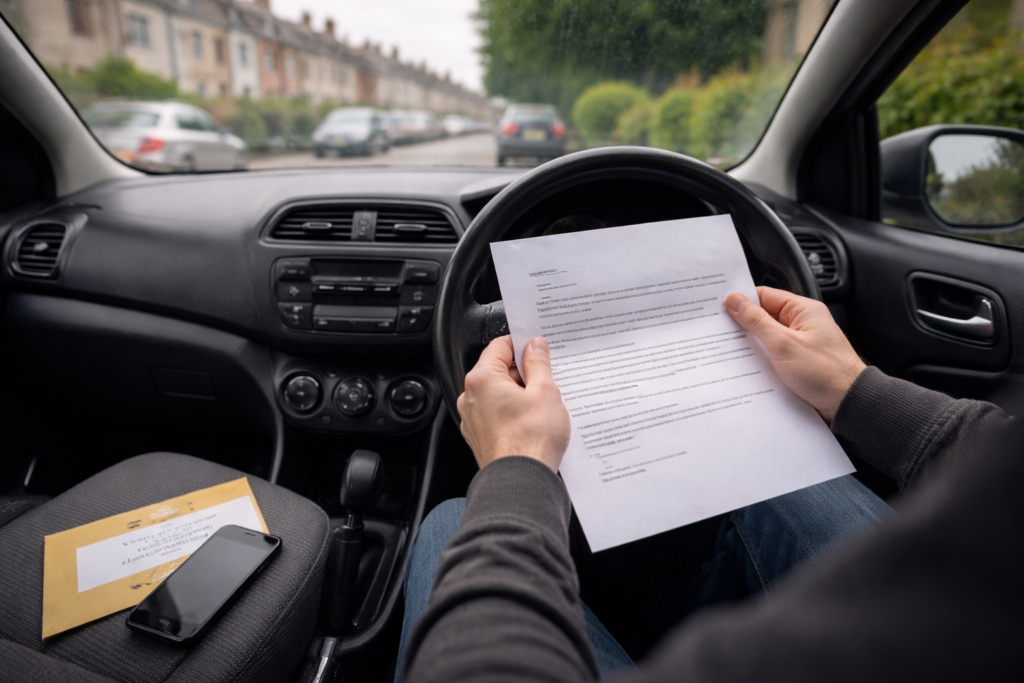
Submit a formal challenge using the council’s official PCN process and attach the key evidence straight away. If nothing is done, the charge usually increases and the case moves into enforcement stages that are harder to stop. Keep everything in writing, stick to the deadlines on the notice, and pay only if choosing to end the case. If the rejection looks generic or ignores evidence, prepare to take it to the independent stage rather than arguing by phone.
What the problem is
A council has rejected a parking penalty charge notice (PCN) appeal, leaving a driver or keeper unsure whether to pay, challenge again, or wait for the next document. This often hits people who parked in a controlled zone, used a pay-and-display machine that was faulty, relied on a permit that did not scan correctly, or stopped briefly for loading or a passenger. It commonly appears after an informal challenge has been sent online and a standard rejection email or letter arrives, sometimes with photos attached and a line saying the discount may be re-offered for a short period. The uncertainty is usually worst when the rejection arrives after a delay, or when the council’s response does not address the point raised, such as signage, a ticket that was purchased, or a medical reason.
In UK cases, this stage tends to come before the formal “Notice to Owner” is served (if the PCN was on the windscreen) or shortly after the first representations (if the PCN was issued by post). People often feel pushed to pay because the letter highlights the discount, but the practical decision is whether there is a defensible ground and enough evidence to take it to the next stage without missing deadlines. The problem is not simply that the appeal was rejected; it is that the next steps are procedural and time-sensitive, and the wrong move can remove options.
Why this happens
Councils reject a high proportion of early challenges because the first review is usually quick, evidence is often incomplete at that point, and the council relies heavily on the civil enforcement officer notes and photos. Many rejections follow a template that assumes the signage was adequate and the restriction was in force, even where the challenge was about a broken machine, a permit system error, or unclear bay markings. Another common cause is that the council treats mitigation (a reason why it happened) differently from a technical or factual dispute (why the contravention did not occur), and the early stage tends to be less flexible on mitigation.
The incentive is simple: early payment closes the case with less administrative work, while a contested case requires issuing further notices, handling representations, and potentially preparing an evidence pack for an independent adjudicator. Where the council believes the evidence is “good enough”, it may reject at the first stage and wait to see whether the person pays at the discount. A typical organisational response pattern is a brief rejection that repeats the contravention description and refers to photos, without engaging with the specific point raised.
Your UK position
A rejected early appeal does not end the matter, and it does not mean the council has proved its case beyond challenge. The practical leverage comes from using the correct stage of the process, meeting the deadlines, and presenting evidence in a way that an independent reviewer can follow. Councils are more likely to reconsider when the challenge is specific, supported by documents, and clearly explains why the contravention did not happen or why the PCN is not enforceable as issued.
It usually helps to separate the argument into one main point and a small number of supporting points, rather than sending long narratives. If the issue is signage, the most persuasive approach is clear photos showing what a driver would see on approach and at the bay, taken in similar lighting. If the issue is payment, proof of payment plus an explanation of how the vehicle details were entered (and any machine fault report) tends to carry weight. If the issue is an exemption (loading, boarding/alighting, blue badge rules where applicable), the strongest leverage is contemporaneous evidence such as delivery paperwork, appointment letters, or a brief witness statement from someone involved.
Where the council has ignored evidence or relied on unclear photos, the position improves at the independent stage because the decision is not made by the council. The key is not to miss the formal representation window when it arrives, because that is the route that preserves the right to independent adjudication.
Official basis in UK
For most council parking PCNs in England and Wales, the process is set by the Traffic Management Act 2004, which creates a structured route from PCN to formal representations and then to independent adjudication if needed. In practice, this means the council must follow set notice stages and consider representations properly, and the keeper can take the dispute beyond the council if the council refuses to cancel. The most reliable way to stay on track is to follow the official parking penalties information and links to the correct challenge route for the area on GOV.UK guidance, then use the council’s own portal or address exactly as stated on the notice.
Evidence that matters
Evidence wins PCN disputes more often than strongly worded complaints. The most useful items are those that show what was on street at the time, what was paid for or displayed, and what happened during the short period the council says the contravention occurred. Keep copies of everything submitted and everything received, including screenshots of online forms and confirmation pages.
Collect the council’s own evidence too. Download the photos, note the timestamps, and if available request or view the enforcement officer notes through the council’s portal. If the PCN is for a moving traffic contravention or bus lane, the video is often central; for parking, the photos and notes usually matter most. Where the argument is about signage or bay markings, take wide shots that show the context, plus close-ups of the sign face and any worn markings.
What not to do is as important as what to collect. Do not edit photos in a way that could be criticised as misleading; keep originals and, if needed, add a separate annotated copy. Do not rely on phone calls as proof of anything; councils rarely treat them as part of the case record. Do not send multiple conflicting explanations, because inconsistency is often used to dismiss credibility.
Checklist to gather before the next step:
- PCN number, vehicle registration, and the full text of the rejection letter or email
- Council photos and any officer notes or portal screenshots
- Your photos of signs, bay markings, and the approach to the location
- Proof of payment, permit status, or exemption evidence (receipts, delivery notes, appointment letters)
Three common mistakes seen in UK cases are missing the formal deadline because the discount period distracts from the real timetable, sending evidence without explaining what each item shows, and arguing mitigation only when the contravention facts are disputed. One thing that should not be done yet is paying “just to stop it” while still intending to contest, because payment usually closes the case and removes the appeal route.
What to do next
Check the stage
Confirm whether the rejection relates to an informal challenge (often after a windscreen PCN) or formal representations (often after a postal PCN or after a Notice to Owner). The next document and deadline depend on the stage, so read the rejection carefully and match it to what has already been received. If a Notice to Owner has not been served yet, the next step is usually to wait for it rather than sending repeated informal emails, unless the council explicitly invites further evidence within a set time.
Use official route
Submit the next challenge only through the council’s official PCN portal or the postal address shown on the notice, and keep the confirmation. Do not use social media messages or generic council contact forms, because they often do not attach to the enforcement case. Prepare the information the portal typically asks for: PCN number, vehicle registration, keeper details, and a clear statement of the ground being relied on, plus uploads of evidence files. If the portal limits file size, combine documents into a single PDF and keep the originals separately.
Write the case
Keep the wording practical and structured. Start with one sentence stating the outcome sought (cancellation) and the main reason, then set out the timeline in a few lines, then list the evidence and what it proves. If the council’s rejection ignored a point, state that it was not addressed and repeat it briefly with the supporting photo or document reference. Avoid emotional language and do not accuse staff of bad faith; adjudicators tend to respond better to clear facts than to frustration.
Watch the deadlines
Diary the date the next representation must be received, not just posted, and allow for weekends and bank holidays if sending by post. If the council has re-offered the discount, decide whether paying at the discount is acceptable as a final outcome; if not, focus on preserving the appeal route. Where the evidence is strong, many people choose to continue even if the discount is mentioned, because the independent stage is where weak council reasoning is most exposed.
Escalate correctly
If the council rejects formal representations, the rejection should explain how to appeal to the independent adjudicator and provide the necessary reference details. Use that official appeal route rather than starting a separate complaint to the council, because complaints teams usually cannot cancel a PCN once it is in the statutory process. If there is no response to formal representations within the normal window stated on the notice, keep proof of submission and be ready to challenge any later enforcement step using the same official process, because missing records and delayed handling do happen.
Normal response timeframes vary by council, but a reply to formal representations is commonly received within several weeks. If nothing arrives and enforcement letters start, switch strategy from arguing the contravention to proving the representations were submitted on time and asking for the case to be reset to the correct stage. When payment was made by credit card for parking or a related service and a separate dispute about the payment route is developing, the decision on whether to pursue a card-based remedy can overlap with the PCN timetable; in that situation, the escalation point described in Section 75 claim rejected by lender can help decide when to stop informal back-and-forth and move to a formal route.
In many UK cases, the issue is resolved when the council reviews clearer evidence at the formal stage or when the independent adjudicator directs cancellation after finding the signage or consideration of representations was not adequate.
Related issues on this site
If the PCN dispute is happening alongside a wider housing or travel problem, it can affect what evidence is available and how quickly responses arrive. Where a parking issue is tied to a tenancy situation, such as a permit scheme at a privately managed development and the council says it cannot intervene, the pattern is similar to Council refuses to act due to private tenancy and it may change who needs to be challenged and where. If the rejection is part of a broader pattern of template responses, it can help to focus on the formal route and independent review rather than trying to persuade frontline staff.
FAQ and quick checks
Discount window choice
The discount period after a PCN appeal rejected by council is often used to encourage quick payment, but it does not remove the right to continue if the case is still within the formal process. Paying usually ends the appeal route.
Notice to Owner
The Notice to Owner timeline after a PCN appeal rejected by council depends on whether the original PCN was on the windscreen or issued by post. If it has not arrived, keep the address details up to date with DVLA and watch for post.
Portal proof
Online submission evidence for a PCN appeal rejected by council should include the confirmation screen, any reference number, and the files uploaded. If the council later says nothing was received, this proof is often decisive.
Adjudicator chances
Independent appeal outcomes for a PCN appeal rejected by council usually turn on whether the evidence clearly supports the ground relied on and whether the council followed the process. A focused case with clear photos and documents tends to perform better than long narratives.
Before you move on
Check the next deadline on the notice, decide whether the goal is cancellation or simply limiting cost, and then use the official route with a tight set of evidence that matches the point being made. Time pressure can show up as a discount deadline that pushes rushed decisions.
Get help with the next step
Contact UKFixGuide — Share the PCN stage (windscreen or postal), the rejection wording, and what evidence exists so the next escalation step can be chosen without missing deadlines.