Reply to the council officer who issued the notice and ask what enforcement step is next, then send the landlord a dated written reminder that the deadline has passed. If nothing is done, the disrepair usually continues and the landlord often tries to stall until the tenant gives up or moves. Keep paying rent as normal unless the council or a court says otherwise, and start gathering clear evidence of the hazard and the missed deadline. If the property is unsafe, ask the council what immediate safety measures are expected while enforcement is considered.
What the problem is
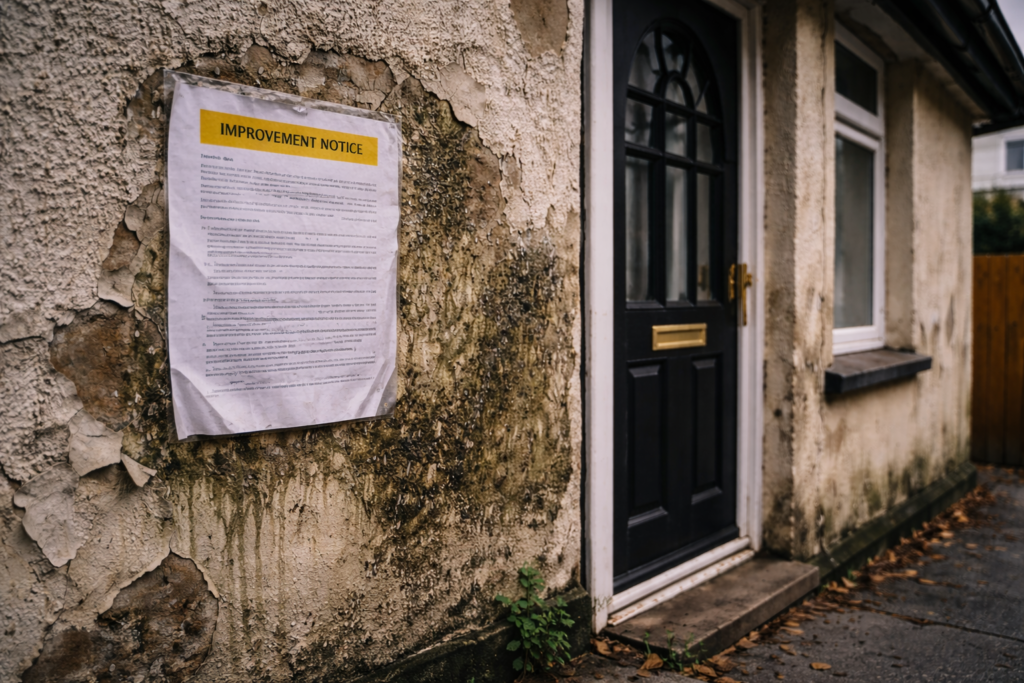
This comes up in UK private renting when a local council has served an improvement notice for hazards such as damp and mould, unsafe electrics, broken heating, or serious leaks, and the landlord does not complete the required works by the date on the notice. It affects tenants who have already gone through the stage of reporting issues, chasing repairs, and then involving the council because the landlord or agent did not act. The point it usually appears is after the council visit and paperwork, when the tenant expects contractors to arrive but nothing happens, or only a small patch repair is done that does not meet what the notice requires.
It can also appear after a partial response where the landlord claims works are “booked” or “waiting on parts” but provides no firm dates, or where access is requested repeatedly without a proper plan. In many cases the tenant is still living with the hazard while trying to keep the tenancy stable, and worries about retaliation, rent increases, or being pressured to accept a quick cosmetic fix.
Why this happens
The most common cause is cost and disruption: proper remedial work can be expensive, requires qualified trades, and may mean decanting or significant access. Some landlords gamble that the council will not move quickly to enforcement, or that the tenant will stop pushing once the initial inspection has happened. Agents may also slow things down by passing messages back and forth, asking for more access dates, or treating the notice like a “repair request” rather than a legal requirement with a deadline.
Another common driver is dispute about scope: landlords sometimes argue that the notice asks for more than is needed, or that the tenant caused the issue (for example, blaming “lifestyle” for damp) and use that to justify delay. Where multiple flats are involved, landlords may claim they are waiting for freeholder permission or building management, which can be real but does not remove the duty to comply with the notice. A typical organisational response pattern is to acknowledge messages quickly but avoid committing to a start date or named contractor.
Your rights or position
In practical terms, an improvement notice is a strong lever because it is issued by the council and sets out what must be done and by when. The most effective position is to keep communication factual, show continued cooperation with access, and keep the council updated with evidence that the deadline has been missed. Landlords often respond more seriously when the council is clearly being kept in the loop and when the tenant can show a clean timeline of requests, access offers, and the ongoing condition.
Retaliatory pressure is common in the background, but an improvement notice changes the risk calculation for a landlord because enforcement can follow. Staying consistent helps: rent paid, access offered, hazards documented, and all contact in writing. If the landlord tries to shift the conversation to blame or to informal “cash for inconvenience” offers, it usually works better to bring the focus back to compliance with the notice and the council’s expectations.
Legal or official basis
The official basis is the Housing Health and Safety Rating System (HHSRS) enforcement route used by local councils under the Housing Act 2004, which is what sits behind improvement notices for hazards in rented homes. In practice, the council can check compliance after the deadline, require further action, and consider enforcement steps if the works are not completed to the required standard. Councils vary in speed, but they generally move faster when there is clear evidence of ongoing risk, missed deadlines, and a tenant who is cooperating with inspections and access.
For the practical meaning of an improvement notice and what councils can do next, use this official overview: GOV.UK guidance.
What evidence matters
Evidence that shows the condition, the impact, and the missed deadline tends to carry the most weight. The aim is to make it easy for the council to confirm non-compliance and decide the next step without having to reconstruct events from scattered messages. Keep everything in one place and date it, including any promises made by the landlord or agent.
Collect copies of the improvement notice and any schedules attached, plus any follow-up letters or emails from the council. Keep photos and short videos that show the hazard clearly, and repeat them from the same angle over time so deterioration is obvious. If there is a safety element (for example, electrics tripping, boiler failing, water ingress near sockets), record what happens and when, and keep any engineer notes or appointment cancellations.
What not to do is just as important. Do not stop paying rent as a way to force action; that usually creates a separate dispute and can weaken the tenant’s position. Do not agree in writing that the works are “done” if they are not, even if the landlord is pushing for a quick confirmation. Do not rely on phone calls alone; follow up in writing so there is a record.
Key checklist
- Copy of the improvement notice and deadline date
- Dated photos or videos showing the hazard continuing
- Written timeline of access offered and missed appointments
- Any contractor reports, invoices, or cancellation messages
Common mistakes
Three common mistakes are sending lots of messages without stating the missed deadline clearly, allowing repeated access requests without asking for a specific work plan, and accepting a cosmetic fix that does not match what the notice requires.
Do not do yet
Do not commission major works personally and deduct the cost from rent unless the council or a court has confirmed that approach in writing.
What to do next
Confirm deadline
Check the improvement notice for the exact compliance date and the required outcomes (not just “repairs”, but what must be made safe or put right). If the deadline has passed, write one clear email to the landlord or agent stating that the notice deadline has been missed, the hazard remains, and access will be provided for properly scheduled works. Ask for the contractor name, start date, and the specific items they will complete to meet the notice.
Update council
Contact the council officer or team named on the notice and report non-compliance. Provide a short timeline, attach current photos, and ask what the next enforcement step is and whether a re-inspection is being arranged. If there is an immediate safety risk, say so plainly and ask whether temporary measures are expected while enforcement is considered.
Keep access clear
Offer a small set of access windows in writing and ask for confirmation at least a day in advance, including who will attend. If the landlord keeps asking for “anytime” access without booking, respond that access is available once a date and contractor are confirmed. This usually reduces the pattern where access requests are used as a reason for delay.
Watch retaliation
If the landlord starts making threats about eviction or tries to pressure a quick move-out because the notice is inconvenient, treat that as a separate risk to manage alongside repairs. Where that happens, it can help to check the practical options described under Landlord threatening eviction so the response stays calm and evidence-led while the council process continues.
Escalate properly
If there is no meaningful progress after the council has been told, ask the council what formal step is next and how the tenant will be updated. Use the council’s official housing enforcement or environmental health contact route shown on the council website, and follow the council’s complaints process only if the case is not being handled or updates are not being provided. Prepare the information the council normally asks for: the notice reference, current condition evidence, access history, and any landlord messages claiming the work is complete.
Prepare details
- Improvement notice reference and compliance date
- Latest dated photos/videos and a short timeline
- Copies of emails/texts about access and appointments
- Any health or safety impacts recorded factually
A normal response timeframe for an update after reporting non-compliance is within a couple of weeks, though urgent hazards can be handled sooner depending on the council’s triage. If there is no response, escalate by emailing the service manager for housing enforcement (or the equivalent named on the council site) and submitting the council’s official complaint form, attaching the same evidence bundle and stating that the improvement notice deadline has been missed. One sentence stating when the issue is usually resolved in UK cases: the issue is usually resolved once the council schedules a follow-up inspection and the landlord realises enforcement is likely if the works remain outstanding.
Related issues on this site
If the landlord’s response to the notice includes turning up unexpectedly, refusing to give notice before visits, or sending contractors without agreement, the situation can shift from repairs into access and harassment. In that case, the practical decision point is whether to keep offering access in writing while setting boundaries, and the page on Landlord entered property without notice can help frame what to record and how to respond. If an eviction notice arrives while the improvement notice is still live, it may also be relevant to understand what type of notice has been used and what deadlines apply.
FAQ
Missed deadline proof
For missed improvement notice deadline evidence, a dated photo set plus the notice page showing the compliance date is usually enough to start enforcement discussions.
Partial work claims
For landlord says repairs are done but hazard remains, ask the council to re-inspect and avoid confirming completion in writing until the required outcomes match the notice.
Rent payment worries
For should tenants keep paying rent during improvement notice dispute, rent is normally paid as usual unless a formal decision says otherwise, because non-payment can create a separate eviction risk.
Access refusal risk
For refusing access while waiting for a plan, offer reasonable dates in writing and ask for a named contractor and scope so access cannot be blamed for delay.
Before you move on
Put the next message in writing today: one to the council reporting non-compliance with current evidence, and one to the landlord asking for a dated work plan that matches the notice. A typical real UK outcome is that the landlord completes the work after the council follows up and makes clear that enforcement is being considered. Time pressure can show up as being pushed to accept a quick fix or vague promises instead of a proper schedule.
Get help with the next step
Contact UKFixGuide — If the improvement notice deadline has passed, include the notice date, the hazard type, and what the council has said since you reported non-compliance.