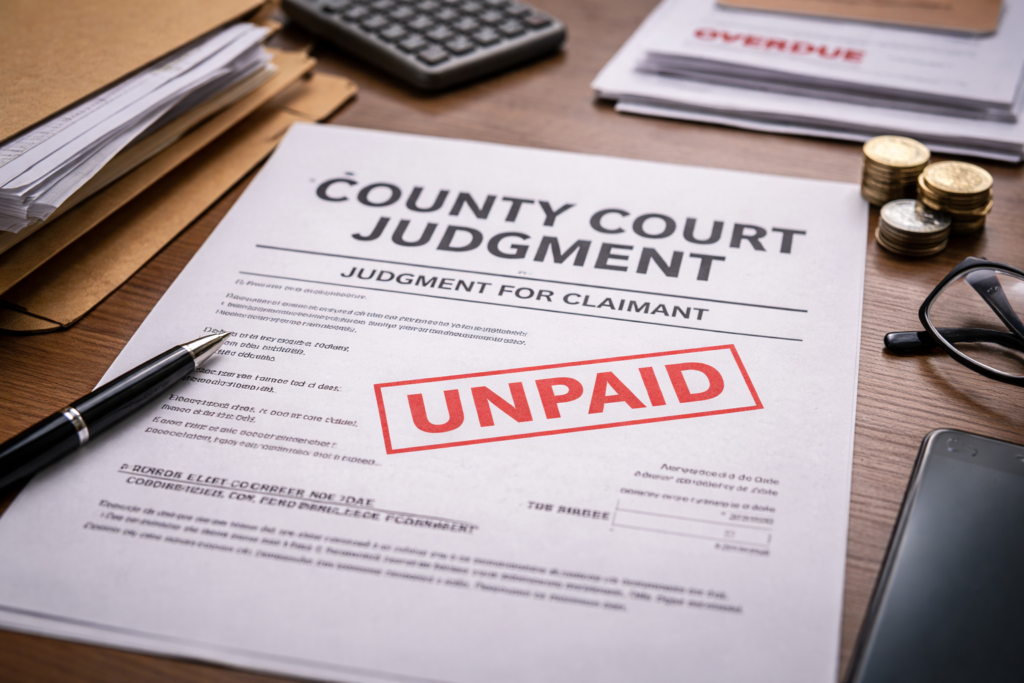
Send the company a clear written demand for payment today, attach the judgment details, and set a short deadline to pay. If nothing is done, the debt often sits unpaid and the company carries on trading as if nothing happened. If the deadline passes, move straight to enforcement through the court process that fits the company’s situation. Keep everything in writing and avoid informal back-and-forth that delays the next step.
When a judgment has been issued but a company does not pay, the problem is not proving the case any more; it is turning the judgment into money. The next steps are practical and procedural, and delays usually make enforcement harder rather than easier. A calm, organised approach tends to get the quickest result.
What the problem is
Where it shows
This usually comes up after a County Court Judgment (CCJ) has been made in England and Wales, or after a court order requiring payment by a certain date, and the date has passed with no money received. It often affects consumers and small businesses who have already chased, complained, and then issued a claim because the company would not resolve the dispute voluntarily. The point it becomes obvious is typically after the company has sent a partial response, promised to pay “soon”, or stopped replying once the judgment arrived.
Who gets stuck
It commonly affects people who have paid for goods or services that were not delivered properly, deposits that were not returned, or refunds that were agreed but never processed. It also affects people who have won a claim for consequential losses where the company has accepted the judgment but still does not pay. The practical difficulty is that a judgment does not automatically force payment; it gives the right to use enforcement methods.
Timing pinch points
The issue often appears right after the payment deadline in the judgment, or after the company’s last-minute message asking for more time. It can also appear after a company changes trading name, moves premises, or switches to email-only contact, leaving the creditor unsure whether enforcement will reach the right place. If the company is still trading, the aim is to choose an enforcement route that matches how it holds money or assets.
Why this happens
Cashflow tactics
Many companies delay because paying a judgment is an immediate cash cost, while ignoring it can feel consequence-free until enforcement starts. Some businesses prioritise suppliers, rent, or payroll and treat judgment debts as low urgency unless there is a direct risk to bank accounts, stock, or vehicles. Others rely on the fact that many people do not know what enforcement options exist or assume enforcement is complicated.
Admin friction
Non-payment is also caused by internal handoffs: the person who handled the complaint is not the person who authorises payments, and the judgment letter is not routed to the right team. Some companies insist on re-checking documents already accepted by the court, or ask for invoices and bank details again, which can create weeks of delay. A typical organisational response pattern is that replies become slower and more generic once the judgment is mentioned, while requests for “one more document” continue.
Incentives at play
From the company’s perspective, delaying can be a way to test whether the creditor will spend time and fees on enforcement. If the company is under financial strain, it may also be paying only the loudest creditors or those who can act quickly. Where a company is close to insolvency, it may avoid paying any single creditor to reduce the risk of being accused of unfairly preferring one over another.
Your UK position
Leverage points
A judgment puts the company on the back foot because it confirms the debt is due and removes the argument about liability. The practical leverage comes from choosing an enforcement method that creates real operational inconvenience, such as reaching funds held in a bank account or requiring information about assets. Clear deadlines and a credible enforcement plan often shift the company from delay to payment.
Negotiation limits
Payment plans can work where the company is trading and responsive, but they are risky if they are informal or open-ended. If a plan is considered, it usually works best when it is short, written, and linked to a specific enforcement pause rather than a vague promise. If the company is already ignoring the court’s deadline, a longer plan often becomes another delay cycle.
Practical realities
Enforcement is not a punishment; it is a process to recover money, and it can fail if the company has no assets or is insolvent. That said, many non-paying companies do have funds or assets but only pay once enforcement is underway. The key is to act while the company is still traceable and before assets move or the business closes.
Legal or official basis
County Court route
In England and Wales, a money judgment from the County Court can be enforced using court enforcement procedures, chosen based on what is most likely to reach the company’s money or assets. In practice, this means selecting a method such as instructing enforcement officers, securing the debt against property, or obtaining an order that targets money held by a third party. The court process is designed to turn a judgment into a recoverable debt, but it relies on the creditor applying for the right enforcement step and providing accurate details for the company.
For a practical overview of enforcement options and how the court expects applications to be made, use GOV.UK guidance.
What evidence matters
What to gather
Enforcement works best when the company can be identified precisely and located quickly. Collect the judgment or order, the claim number, the company’s correct legal name, and any trading addresses used during the dispute. If payment was meant to be made to a specific account, keep the emails or letters confirming that, as it helps show the company had the details needed to pay.
What to avoid
Do not accept vague assurances that “finance will process it” without a dated commitment and a clear method of payment. Do not keep sending the same chaser email every few days if it is not moving things forward; that often becomes background noise. One thing not to do yet is to post accusatory reviews or social media allegations while enforcement is being prepared, because it can distract from the procedural steps and sometimes triggers unhelpful counter-allegations.
Common mistakes
These errors regularly slow enforcement or cause it to fail:
- Using the wrong company name (for example, a trading name instead of the registered limited company).
- Sending enforcement to an old address when the company has moved.
- Agreeing to an open-ended payment plan without a clear trigger to restart enforcement.
Quick checklist
- Judgment/order and claim number
- Company legal name and registration details
- Current service address and any trading address
- Record of non-payment after the deadline
What to do next
Send final demand
Write a short, firm message to the company confirming the judgment amount, the payment deadline that has already passed, and a new deadline to pay (kept short and realistic). Attach the judgment and state how payment should be made. Ask for confirmation of payment date and method, not a general update.
Pick enforcement
If the deadline passes, choose an enforcement route based on what is known about the company. If the company trades from premises with stock or equipment, enforcement officers can be effective. If the company owns property, a charging option may be relevant. If there is a known bank relationship or money owed to the company by someone else, an order targeting third-party funds may be considered.
Use official forms
Apply using the court’s official enforcement application process rather than templates from forums or unofficial websites. The correct forms and fees depend on the enforcement method, and they are normally accessed through the court service information on GOV.UK and then filed as directed for the relevant court. Prepare the judgment details, the company’s exact legal identity, and the best address for service before starting the application.
Expect timeframes
After an enforcement application is submitted, a normal response timeframe is typically a few weeks for the process to move to the next stage, depending on the method chosen and local capacity. If there is no progress update after the timeframe given by the court or the enforcement route selected, chase through the official channel used for the application and confirm the company details have been recorded correctly. One sentence describing a typical real UK outcome: Many cases end with payment only after enforcement action is issued and the company realises the debt will not be ignored.
Escalate smartly
If the company starts offering partial payments or new excuses once enforcement is mentioned, treat it as a decision point: either accept a short written plan with clear dates or continue with enforcement. Where the company claims it has already paid, switch strategy to evidence-checking and ask for proof of payment that matches the judgment amount and date; if the company says the court papers went to the wrong place, keep the focus on enforcement unless the court formally changes the order. If the company is refusing to pay on principle despite the judgment, the situation often overlaps with Refund refused by company, and the same discipline applies: stop debating the merits and move forward procedurally.
When it resolves
The issue is usually resolved when the company pays in full after receiving formal enforcement notice, or when enforcement confirms there is no realistic recovery because the company has no assets or has entered insolvency. If insolvency signs appear, focus on getting accurate information quickly and avoid spending further fees on enforcement that is unlikely to succeed.
Next-step checklist
- Copy of the judgment and the unpaid amount
- Company legal name and current address for service
- Notes of any payment promises and dates missed
- Chosen enforcement method and the official application route
Related issues on this site
If the company is arguing that documents were not considered, or that something “wasn’t received”, it may help to compare the situation with Evidence submitted but not reviewed to decide whether the problem is really about missing information or simply delay tactics. If the dispute started as a service failure and the company kept pushing the complaint around until court action was needed, similar patterns can show up in other consumer disputes where the business avoids a clear yes/no decision. These related issues are most relevant when the company is trying to reopen the argument after judgment rather than dealing with payment.
FAQ
Payment deadline passed
For a payment deadline passed after judgment, the next move is a written demand with a short date and then an enforcement application if it is ignored. Waiting for goodwill rarely changes the outcome.
Company claims paid
For a company claims paid dispute, ask for proof that matches the judgment amount, date, and destination account. If the proof does not match, continue with enforcement rather than extended argument.
Trading name confusion
For trading name confusion on a judgment, enforcement needs the correct legal entity, not just the brand name on the website. Check the judgment paperwork and the company registration details before applying.
Worried about costs
For worried about costs when enforcing a CCJ, choose the enforcement route most likely to reach money quickly and avoid paying multiple fees on speculative options. If there are signs of insolvency, consider pausing to confirm whether recovery is realistic.
Before you move on
Gather the judgment details and the company’s correct legal identity, then decide whether a short final deadline is worth trying before filing the official enforcement application. Time pressure can show up as being pushed to accept quickly a vague promise of payment in exchange for delaying enforcement.
Get help with the next step
Contact UKFixGuide — If the company is ignoring a court judgment, share the judgment type and what details are known about the company so the most suitable enforcement route can be identified.





1 thought on “Judgment issued but company does not pay”