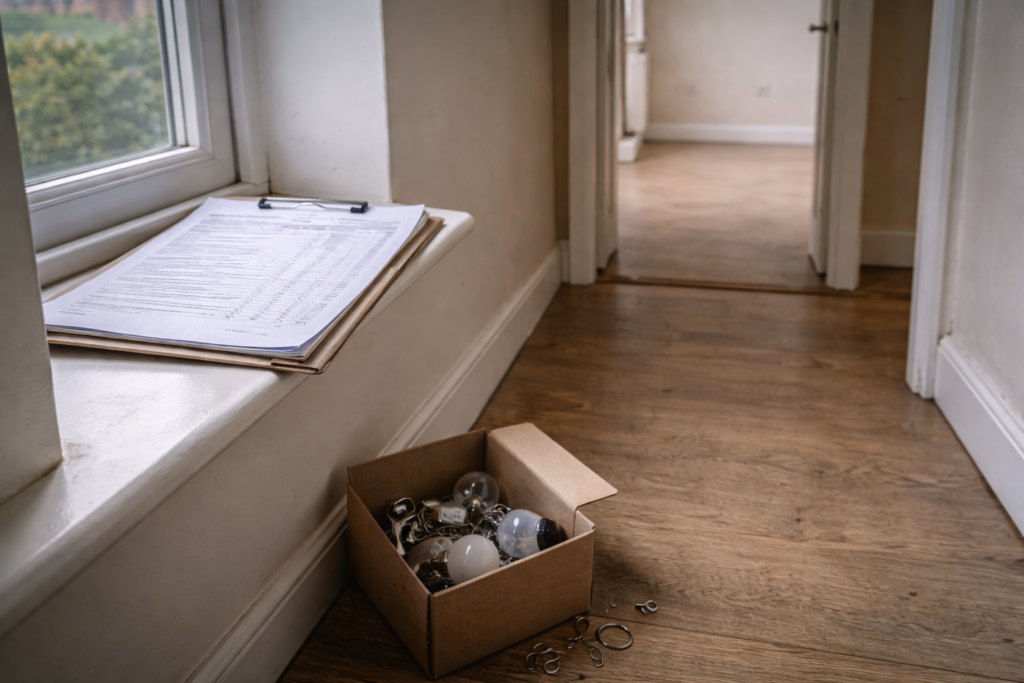
Problem seen in UK rentals
An end-of-tenancy inventory dispute usually shows up as a surprise deduction from the deposit, often for “cleaning”, “damage”, “missing items”, or “garden”. In many UK households the checkout report arrives days after keys are returned, with photos that do not match how the place was left, or with vague wording such as “marked walls throughout”. Another common pattern is the landlord or agent relying heavily on the original inventory, while the tenant only has a few phone photos and no dated evidence of condition at move-in.
Typical outcomes in UK cases depend on evidence. Where there is a signed check-in inventory with clear photos and a matching checkout, deductions are more likely to stick. Where the inventory is thin, unsigned, or the landlord cannot show invoices, deposit schemes often reduce or reject the claim.
What it looks like day-to-day
Spot the usual red flags
Common warning signs include: a checkout inspection done without offering an appointment; deductions described as “professional clean required” without any proof; replacement costs claimed for old items; and a long list of minor scuffs treated as damage rather than wear and tear. Another frequent issue is being asked to agree deductions quickly “to release the rest of the deposit”.
Check the timeline
In England and Wales, deposits for assured shorthold tenancies are normally protected in a tenancy deposit scheme, and there is a process for proposing deductions and disputing them. If the deposit is not being returned promptly, the separate issue of delay may apply; see Tenancy deposit not returned after 10 days.
Likely causes first
Start with weak inventories
The most common cause is a poor check-in inventory: no photos, generic descriptions, or no tenant signature. Without a reliable baseline, it becomes hard to prove that a mark or stain was not already there.
Separate wear and tear
Many disputes come down to wear and tear versus damage. Scuffed paint in hallways, flattened carpet in walkways, and minor limescale in hard-water areas are typical wear from normal living. Landlords often claim “redecoration” or “replacement” when only a proportionate contribution (or nothing) would be reasonable.
Look for missing invoices
Deposit schemes usually expect evidence of loss. A quote can help, but invoices and receipts carry more weight. A common pattern is a deduction based on an estimate, with no proof the work was done or that the cost was necessary.
Watch for cleaning claims
Cleaning is the biggest repeat issue. Tenants may leave the property clean, but not to the same standard as a professional deep clean. If the tenancy agreement says “professionally cleaned”, that clause is not automatically enforceable as a requirement to pay for a professional service; the key question is whether the property was returned in a comparable condition to move-in (allowing for fair wear).
Consider check-out process issues
Disputes often escalate when the checkout happens after the tenant has left, or when the landlord enters and starts work before the tenant can respond. If there were earlier access problems, it can affect trust and evidence; related issues are covered in Landlord entered property without notice.
Step-by-step fixes
Gather the key documents
Collect: tenancy agreement; check-in inventory and photos; checkout report; all emails/texts about condition; rent statement; deposit protection certificate and scheme details; and any cleaning/repair receipts. Save everything as PDFs and keep originals.
Build a photo timeline
Pull together move-in and move-out photos and videos. Where possible, use images with timestamps or metadata. If there are gaps, add supporting proof such as dated messages arranging viewings, meter readings photos, or delivery confirmations taken at the property.
Compare line by line
Create a simple table with three columns: inventory item/area, landlord claim, tenant response. For each claim, note whether it appears on the check-in inventory, whether it is shown clearly on checkout photos, and whether it is likely wear and tear. This format mirrors how deposit adjudicators tend to assess disputes.
Challenge betterment
If the claim is for replacement, check age and expected lifespan. Carpets, mattresses, and cheap furniture rarely justify full replacement costs after years of use. Ask for purchase dates, original invoices, and how the landlord calculated any contribution. If the landlord is upgrading (for example, replacing a worn carpet with a higher-grade one), that is usually “betterment” and should not be charged in full to the tenant.
Ask for proof of loss
Request itemised invoices, not just a total. For cleaning, ask what was not clean and what standard is being compared against (check-in condition). For repairs, ask for before/after photos and confirmation the work was required because of tenant actions, not general maintenance.
Make a written counter-offer
Where some deduction is reasonable, propose a figure and explain why. A practical approach is to accept small, provable issues (for example, a missing lightshade) while disputing broad or unsupported claims. Keep the tone factual and avoid arguments about personality or fairness.
Use the deposit scheme dispute
If agreement is not reached, raise a dispute through the tenancy deposit scheme’s alternative dispute resolution (ADR). This is common in the UK and often resolves matters without court. Submit the table, photos, and any receipts. Stick to evidence: what condition was at move-in, what condition was at move-out, and what cost is justified.
Keep to deadlines
Respond promptly to scheme messages and provide evidence in the format requested. Missed deadlines can lead to decisions being made on the landlord’s evidence alone.
If it gets ignored
Expect delays and deductions
When disputes drag on, the usual outcome is delayed deposit return and increasing pressure to accept a reduced amount. Some landlords proceed with cleaning or repairs immediately and then present a bill, which can make the conversation feel settled even when it is still disputable.
Risk poor references
Although deposit disputes should not automatically affect references, some tenants find that ongoing disagreements lead to vague or unhelpful reference responses. Keeping communications polite and evidence-led reduces that risk.
Watch for extra claims
Occasionally, a landlord threatens additional charges beyond the deposit. In practice, they would usually need to pursue that through court and prove the loss. Keeping a clear evidence pack helps if the dispute escalates.
When to escalate properly
Escalate to the scheme
If the deposit is protected, ADR is often the most efficient route. Provide only relevant documents and label files clearly (for example, “Kitchen move-out photos 01–10”).
Escalate to complaints routes
If an agent is involved, use their formal complaints process and ask which redress scheme they belong to. This does not replace the deposit scheme dispute, but it can help with process failures such as poor communication or misleading statements.
Prepare a court-ready pack
If ADR is not available (for example, the landlord refuses ADR where the scheme allows that) or the deposit was not protected, prepare evidence as if for a small claim: a timeline, the table of disputed items, photos, and proof of costs. Keep copies of all letters and note dates of phone calls.
Collect the right evidence
Evidence that usually carries weight in UK disputes includes: signed inventories with photos; independent check-out reports; dated receipts for cleaning; contractor invoices; and clear move-out videos showing each room in one continuous walk-through. Screenshots of messages arranging inspections can also help show whether access was offered.
FAQ
Can a landlord charge for professional…
They can claim reasonable cleaning costs if the property was left less clean than at move-in, but they normally need evidence of the move-in standard and the shortfall at move-out.
What counts as fair wear and…
Typical wear includes minor scuffs, faded paint, worn carpet in high-traffic areas, and small marks consistent with normal living, taking account of the length of the tenancy and number of occupants.
Do tenants have to be present…
Not always, but being offered a chance to attend helps avoid disputes. If attendance was refused or impossible, strong photos and written records become more important.
What if the inventory was never…
An unsigned inventory is weaker evidence. Deposit adjudicators often look for other proof that the tenant agreed the starting condition, such as emails, photos, or a later confirmation.
Can deductions be made without receipts?
Claims are stronger with invoices or receipts. Without them, schemes may reduce awards or reject parts of a claim, especially where costs look inflated.
How long does ADR take?
Times vary by scheme and case complexity. A common pattern is several weeks from submission to decision, longer if evidence is incomplete or parties miss deadlines.
Before you move on
Pull together a single folder with the signed inventory (or the best available substitute), a dated move-out video, and a one-page table responding to each deduction, then submit it through the deposit scheme or send it to the agent in one email thread. If you felt pushed to accept deductions quickly “to release the deposit”, that’s often a sign the process is being rushed rather than evidenced.
Get help with the next step
If the dispute is stuck or the evidence needs tightening, use the contact form at https://ukfixguide.com/contact/ to outline the deductions, the scheme name, and what documents are available.




1 thought on “Inventory dispute at end of tenancy”