Report the repair in writing to the landlord or managing agent today and ask for a clear timescale for attendance and completion. If nothing is done, the problem usually worsens and can start affecting safety, health, or the ability to use the home properly. Keep using the landlord’s official repair route and start collecting evidence from the moment the issue is raised. If the situation is urgent, move quickly to escalation routes that are recognised in UK tenancies rather than trying to fix it informally.
What the problem is
Emergency repairs in UK rented homes are the situations where something essential stops working or becomes unsafe, and the tenant needs action fast. This commonly affects private renters and housing association tenants during cold snaps, storms, or when older systems fail without warning, but it can also happen in summer with water leaks, electrical faults, or blocked drains. The issue often appears after the tenant has already reported the fault once and received either a vague acknowledgement, a missed appointment, or a partial fix that doesn’t hold. It also commonly shows up right after a landlord change, where the new agent says the problem is “historic” and tries to reset the clock on responsibility.
By the time it feels like an emergency, there is usually a practical knock-on effect: rooms become unusable, water damage spreads, or there is a safety concern that makes normal living difficult. The difficulty is rarely the first report; it is the gap between report and action, especially when the tenant is told to “wait for the next available slot” with no firm plan. Many tenants only realise they need a more formal approach after a deadline passes or after being asked to keep repeating the same information.
Why this happens
Emergency repairs get delayed for predictable reasons: contractors are triaged to the most obvious hazards, call centres log jobs with the wrong priority, and agents rely on standard appointment windows that do not match the urgency of the situation. Landlords and managing agents also tend to separate “repair” from “damage”, meaning the immediate fault might be logged but the consequences (like damp patches, warped flooring, or mould growth) are treated as a later issue. Where there is any dispute about access, lifestyle, or “tenant fault”, the job can be paused while the agent asks for photos, more details, or another visit to confirm what is already clear.
There is also a cost incentive: urgent call-outs and out-of-hours work cost more, so some businesses try to reclassify the problem as routine unless the tenant uses the right words and provides clear evidence. A common pattern is an initial acknowledgement followed by silence until the tenant chases, then a new request for the same details already provided. This is why a calm, structured paper trail tends to move things faster than repeated phone calls.
Your position in UK
In practical UK tenancy terms, the strongest leverage comes from showing three things clearly: the landlord was notified, the issue affects essential services or safety, and reasonable access was offered. When those points are documented, landlords and agents usually act more quickly because delay becomes harder to justify to their own complaints teams, insurers, or any later inspection. Written communication matters because it fixes dates and removes arguments about what was said on the phone.
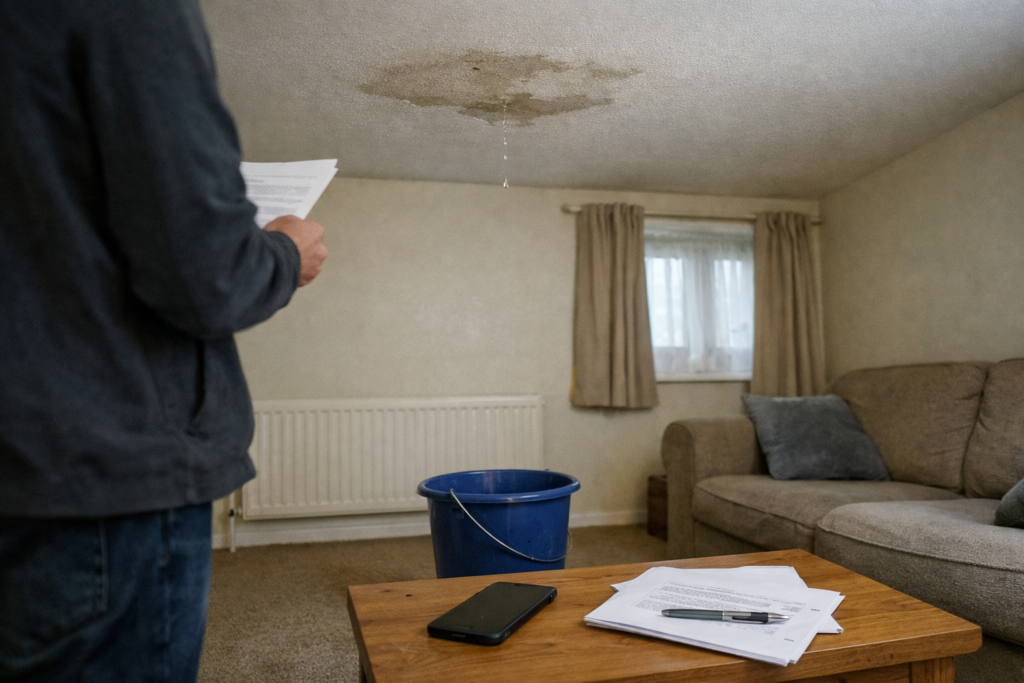
It also helps to be precise about what is not working and what the impact is on daily use of the home, without exaggeration. “No hot water since Monday morning” or “water leaking through the ceiling light fitting” tends to get traction because it is specific and time-stamped. If the landlord tries to push responsibility onto the tenant, the practical response is to keep the focus on the fault and the access offered, and to ask for the landlord’s proposed remedy and timescale in writing.
Where a tenant has already tried to be flexible, it is reasonable to set a short deadline for a response and to state the next escalation step. In many UK cases, once the tenant shows they are using the correct complaint route and keeping evidence, the repair is scheduled properly rather than left in a vague queue.
Legal or official basis
The most useful official basis for emergency repair disputes in England is the Housing Health and Safety Rating System (HHSRS), used by local councils to assess hazards in rented homes and require action where conditions pose a risk. In practice, the council is not there to manage day-to-day repairs, but the possibility of an inspection and formal action often changes the landlord’s pace, especially where there is loss of heating/hot water, electrical danger, serious leaks, or significant damp linked to disrepair. The approach that tends to work is to show the council the timeline of reports, the current condition, and why the issue is urgent, so the hazard is clear and the landlord cannot argue it is just “inconvenience”.
For how councils deal with housing hazards and what they can do, use this official source: GOV.UK guidance.
What evidence matters
Evidence is what turns an urgent situation into a straightforward decision for a landlord, contractor, or council. The aim is to prove the condition, the impact, and the timeline, while also showing that access has been offered. Keep everything in one place so it can be forwarded quickly if the complaint escalates.
Useful evidence usually includes dated photos and short videos, copies of repair reports, and a simple log of contact attempts. If there is a safety angle, capture it clearly (for example, a boiler fault code, a tripped consumer unit that will not reset, or water near electrics) without putting anyone at risk to get the shot. If the landlord sends a contractor who does not fix it, keep the visit notes, texts, or job sheets, and record what was said about the cause and what parts are needed.
What not to do is just as important. Do not start stripping out fixtures, opening sealed panels, or attempting DIY on gas or electrics to “help” the process, because it can create a dispute about damage or liability. Do not stop paying rent as a pressure tactic; it commonly backfires and distracts from the repair. Do not rely on verbal promises like “someone will call tomorrow” without asking for confirmation in writing.
Checklist to gather quickly:
- Dated photos or video showing the fault and any spread of damage
- Copies of emails, portal submissions, and texts reporting the issue
- A short timeline of events and missed appointments
- Notes of access offered and any constraints (work hours, keys, pets)
Three common mistakes seen in UK repair disputes are sending multiple separate reports that fragment the timeline, accepting repeated “monitor it” advice without a follow-up date, and agreeing to long appointment windows without confirming the job priority. One thing that should not be done yet is paying for a non-emergency private repair and deducting it from rent without written agreement, because that often triggers a separate dispute.
What to do next
Use official route
Start or continue with the landlord’s official repair reporting method only, whether that is an online portal, a dedicated repairs email, or the managing agent’s logged system. If the report was made by phone, follow up immediately with a written message that repeats the key facts: what failed, when it failed, what the impact is, and when access is available. Ask for the job reference number and the attendance timescale, and request confirmation in writing.
Set clear deadline
If there is no meaningful response, send a short chaser that sets a deadline for a reply and an appointment. Keep it practical: request a date for attendance and a plan if parts are needed. Where the issue is loss of essential services or a safety risk, it is reasonable to say the matter will be escalated if there is no confirmed appointment by the deadline.
Escalate correctly
If the landlord or agent still does not act, move to the formal complaints process for the landlord or housing provider and attach the evidence bundle. If the emergency is no heating or no hot water, follow a structured approach that matches how UK landlords typically triage these reports, including what to say and what to document; the steps in No heating in rental — emergency steps fit the point where chasing has failed and escalation needs to be clear. If there is an immediate danger (for example, suspected gas leak, exposed live wiring, or flooding that risks electrics), use the appropriate emergency service route first, then notify the landlord in writing that emergency action was required.
Prepare key details
Before escalating to the council under the HHSRS route, prepare the information the council will normally ask for: the address, landlord/agent details, the dates the issue was reported, and evidence of the current condition. Councils often want to see that the landlord was given a fair chance to act and that access was offered. Keep the message factual and focused on the hazard and impact rather than the history of the tenancy.
Checklist to have ready for the official complaints process or council contact:
- Tenancy address and landlord/agent contact details
- Repair report dates and any job reference numbers
- Photos/video and a brief impact summary
- Access availability and any missed appointment notes
A normal response timeframe for a landlord or agent to acknowledge a logged complaint is within a few working days, but emergency attendance should be arranged sooner where essential services or safety are affected. If there is no response by the stated deadline, escalate by submitting the formal complaint through the provider’s official process and, in parallel where the hazard is serious, contact the council’s private sector housing or environmental health team using the council’s official contact route. The issue is usually resolved once a specific appointment is booked and confirmed in writing, with a follow-up date agreed if parts are required.
A typical UK outcome is that the landlord arranges a contractor visit and the repair is completed after one or two appointments once the job is correctly prioritised.
Related issues on this site
If the landlord has recently changed and the new agent is saying the repair predates the tenancy or “belongs to the previous owner”, that is a different dispute pattern and can affect how the complaint is framed; New landlord refuses responsibility for old repairs is relevant when responsibility is being bounced around rather than denied outright. Where the repair problem is tied up with damp and mould arguments, it can also help to separate ventilation advice from structural defects so the evidence stays focused on disrepair rather than lifestyle.
FAQ
Emergency repair timing
Emergency repair response time in a UK rental depends on the hazard, but loss of essential services or safety risks should trigger rapid attendance rather than a routine slot. Ask for a confirmed appointment and a written plan if parts are needed.
Out of hours
Out of hours emergency repairs in UK tenancies are usually handled through a dedicated number or portal option, not the general inbox. Use the official route and follow up in writing so there is a dated record.
Temporary measures
Temporary heating or leak containment in a UK rented home can be reasonable while waiting for a proper fix, but it should not replace the repair. Keep receipts only if the landlord has agreed in writing to reimburse.
Access disputes
Access refused arguments in UK repair complaints are common, so keep a clear record of dates offered and any key-safe arrangements. If appointments are missed by the contractor, record that too.
Before you move on
Write down the exact deadline being set for the landlord’s response and keep the next escalation step ready to send with the evidence bundle. Time pressure can show up as being pushed to accept an open-ended wait with no confirmed appointment.
Get help with the next step
Contact UKFixGuide — If the landlord is still not arranging an urgent repair, include the dates reported, the impact on essential services, and any missed appointments so the escalation message can be tightened.