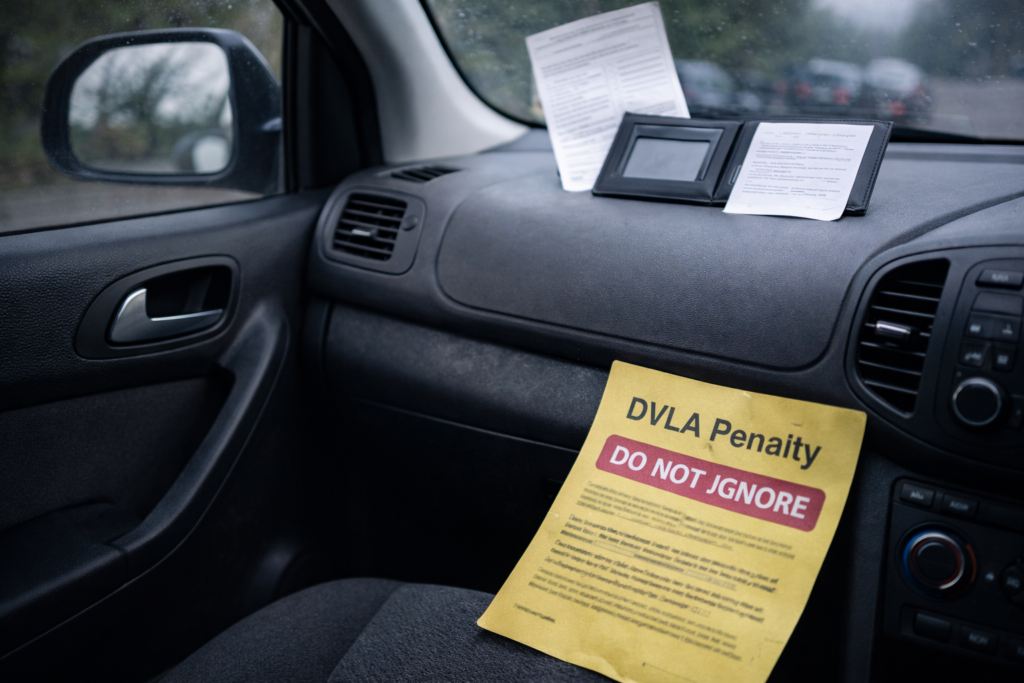
Contact DVLA straight away using the official online service for the penalty type shown on the letter, and submit a clear challenge with copies of your proof. If nothing is done, the penalty usually moves on to reminders and debt collection, and the amount can rise. Keep paying any current vehicle tax and keep the vehicle details correct while the challenge is being considered. If DVLA rejects the challenge or does not reply within a reasonable time, escalate through DVLA’s complaints route and keep everything in writing.
Most UK cases turn on whether DVLA can see timely evidence that the correct notification was sent and received, and whether the vehicle record was updated when it should have been.
What the problem is
A DVLA penalty that arrives “out of the blue” often lands after an admin change that should have been routine, such as updating keeper details, telling DVLA about a sale, declaring SORN, or taxing a vehicle after a change. It tends to affect people who have moved house, sold a car privately, bought a used vehicle, or posted paperwork around busy periods when processing times stretch. The letter usually arrives after the change was already attempted, and it often appears after a first reminder has been missed because it went to an old address.
This problem commonly shows up after a partial response from DVLA that does not address the key point (for example, acknowledging contact but still insisting the record shows no notification). It can also appear after a deadline has passed on the penalty notice, when the next letter is more urgent and the options feel narrower. In practice, the pressure point is the gap between what was sent and what DVLA’s system shows.
Why this happens
Admin delay problems usually come from a mismatch between real-world events and the DVLA vehicle record. A keeper posts a V5C section, a buyer sends off a new keeper slip, or an online change is made but the confirmation is not kept; later, DVLA’s record still shows the old keeper, the wrong address, or the wrong status. When enforcement is triggered by the record, the penalty is generated automatically even if the driver believed everything had been done correctly.
Common causes include address updates not being applied before a notice is issued, missing or unclear reference numbers, forms completed with small errors, and documents being sent without tracked proof. Another frequent cause is relying on a third party (a dealer, a buyer, or a family member) to “sort the paperwork” and then discovering the DVLA record never changed. DVLA’s process is record-led, so if the system does not show the change by the time the check runs, the penalty workflow continues.
A typical organisational response pattern is that the first reply repeats what the record shows and asks for evidence, rather than investigating the timeline unless the evidence is presented clearly.
Your rights or position
In UK practice, the strongest position comes from showing that the correct notification was made promptly and that any delay sits with processing rather than with the keeper’s actions. DVLA decisions are heavily evidence-based, so practical leverage comes from providing a tight timeline, copies of what was sent, and any confirmation references, then asking for the record to be corrected and the penalty withdrawn.
It also helps to separate two issues: the underlying vehicle status (taxed, SORN, keeper details) and the penalty itself. Getting the record corrected reduces the risk of repeat enforcement, while the penalty challenge focuses on why the notice should not stand. Where the penalty relates to an address issue, showing when the address was updated and why earlier letters were not received is often persuasive, especially if the vehicle was otherwise compliant.
What usually works is staying within DVLA’s own process, keeping the tone factual, and responding before the matter escalates to the next stage. Phone calls can help clarify what DVLA believes happened, but written submissions with attachments tend to carry more weight because they can be logged against the case.
Legal or official basis
The practical route for challenging a DVLA penalty caused by admin delay is DVLA’s formal complaints and enforcement review process, which is designed to correct records and reconsider penalties when evidence shows the notification was made or the record is wrong. In day-to-day terms, that means using the official DVLA online services or the address and reference details on the penalty letter, then following the published complaints steps if the first decision does not engage with the evidence.
Use the DVLA pages on GOV.UK guidance to find the correct service for your situation (for example, changing keeper details, taxing, SORN, or challenging an enforcement letter). The key is to match the challenge to the exact penalty type and reference number, because DVLA routes different penalties through different teams and inboxes.
Evidence that matters
Evidence is about proving the timeline and proving what DVLA should have received. The most useful items are anything that shows the date the notification was made and the details that were provided at the time. If the issue is an address change, evidence that the move happened and that DVLA was told promptly can help explain why letters were missed.
Collect copies of forms, photos of completed sections before posting, proof of postage, screenshots of online confirmations, and any emails or letters from DVLA. If a vehicle was sold, keep the buyer’s details and any messages confirming the handover date. If the vehicle was taxed or insured, keep the confirmation that shows the date and vehicle registration, as it supports the wider picture of compliance even if it does not prove keeper notification by itself.
What not to do is send original documents that cannot be replaced, unless DVLA explicitly requires originals for that specific process. Originals can get separated from the case file, and replacing them can take time.
Checklist to prepare:
- Penalty letter reference number and issue date
- Timeline of events (move, sale, SORN, tax) with dates
- Proof of notification (screenshots, proof of postage, copies)
- Any DVLA replies already received
Three common mistakes seen in UK cases are waiting for DVLA to “catch up” without challenging the penalty, sending a bundle of documents with no timeline or explanation, and relying on a phone call without following up in writing with the evidence attached.
One thing not to do yet is pay the penalty just to stop the letters unless DVLA confirms in writing that payment will not affect the ability to challenge, because payment can be treated as acceptance in some workflows.
What to do next
Check the notice
Read the penalty letter carefully and identify the exact reason given (for example, failure to notify keeper change, late licensing, or SORN-related enforcement). Note the reference number, the date of issue, and any deadline for response or reduced payment. If the letter went to an old address and was forwarded late, record the date it was actually received, but still work to the printed deadlines where possible.
Use official route
Submit the challenge using only the official DVLA method shown on the letter or the relevant service on GOV.UK, and keep a copy of everything sent. Do not recreate forms or invent “templates” that do not match the DVLA process; instead, write a short covering message that explains the timeline and attaches evidence. Prepare the information DVLA typically needs: vehicle registration, your name and address, the date of the event (sale/move/SORN/tax), and the penalty reference.
State the timeline
Set out the dates in plain language: what happened, when DVLA was notified, and what confirmation (if any) was received. If the issue is that DVLA processed the change late, make that the central point and attach proof of when the notification was made. If the issue is that DVLA never received it, explain the method used and attach proof of postage or online confirmation.
Keep the record clean
While the challenge is ongoing, make sure the vehicle record is correct going forward: update the address, ensure the vehicle is taxed or correctly SORN, and keep insurance aligned with the vehicle’s status. If the penalty relates to a transaction with a trader or a refund dispute linked to the same purchase, it can help to keep the issues separate so the DVLA challenge stays focused; where a seller tries to fob off responsibility with a credit note, the situation often overlaps with Voucher issued instead of refund and should be handled on its own track.
Watch for deadlines
DVLA letters often move quickly from an initial notice to a stronger demand if no response is logged. If a deadline is close, send the challenge immediately with the evidence available, and follow up with any missing items as soon as possible. Keep proof of sending, and keep a single case file so the same documents can be re-sent if needed.
Escalate properly
If DVLA rejects the challenge with a generic response that does not address the evidence, escalate through DVLA’s complaints process using the route on GOV.UK or the details on the letter, and ask for a review of the decision based on the timeline and attachments. If there is no response, a normal timeframe to allow is around 2–4 weeks for an initial written reply, depending on the team and the volume of cases. If nothing arrives by then, chase in writing quoting the reference and stating that the matter is being escalated due to non-response, and attach the original submission again.
Change strategy if the evidence is thin: focus on correcting the vehicle record immediately, then ask DVLA what specific proof would satisfy the review, rather than arguing about fairness. In many UK cases, the issue is usually resolved once DVLA links the evidence to the correct record and updates the keeper or status, after which the penalty is withdrawn or reissued correctly.
Related issues on this site
If the DVLA penalty sits alongside a dispute with a retailer or service provider, it can help to separate the admin record problem from the money problem. Where a business has issued money back without agreement, the steps in Partial refund issued without agreement can be relevant once the DVLA side is stable and the correct vehicle status is confirmed. These related issues tend to matter when a vehicle purchase or repair dispute has created delays, missing paperwork, or confusion about who was responsible for notifying changes.
FAQ
Proof of posting
Using proof of posting for a DVLA admin delay challenge helps show the notification was sent on time, even if processing took longer. Include a copy and link it to the date and the exact document sent.
Old address letters
Dealing with DVLA penalty letters sent to an old address usually means explaining when the move happened and when DVLA was told. Provide evidence of the address update attempt and the date the letter was actually received.
Paying while disputing
Deciding on paying a DVLA penalty while disputing it depends on whether DVLA will still review after payment. Ask for written confirmation before paying if the intention is to continue the challenge.
Complaint escalation
Starting a DVLA complaints escalation after no reply works best when the original submission is reattached and the reference is repeated clearly. Keep the request focused on correcting the record and reviewing the penalty decision.
Before you move on
Gather the timeline and evidence first, then submit the challenge through the official DVLA route shown on the notice so it is logged against the correct reference. Time pressure can build quickly once reminder letters start and deadlines tighten.
Get help with the next step
Contact UKFixGuide — If the DVLA letter has moved to a stronger demand stage, include the reference number, the dates you notified DVLA, and what evidence is available so the next escalation is targeted.