Start by reporting the disrepair in writing to the landlord or managing agent and clearly list the items damaged, then ask for a written decision on compensation. If nothing is done, the damage usually gets worse and the landlord may later argue the loss was avoidable. Keep the damaged items and gather proof now, because the strongest cases in the UK tend to be the ones documented before repairs are finally arranged. If the landlord refuses or delays, move to the formal complaints route and set a clear deadline for a response.
What the problem is
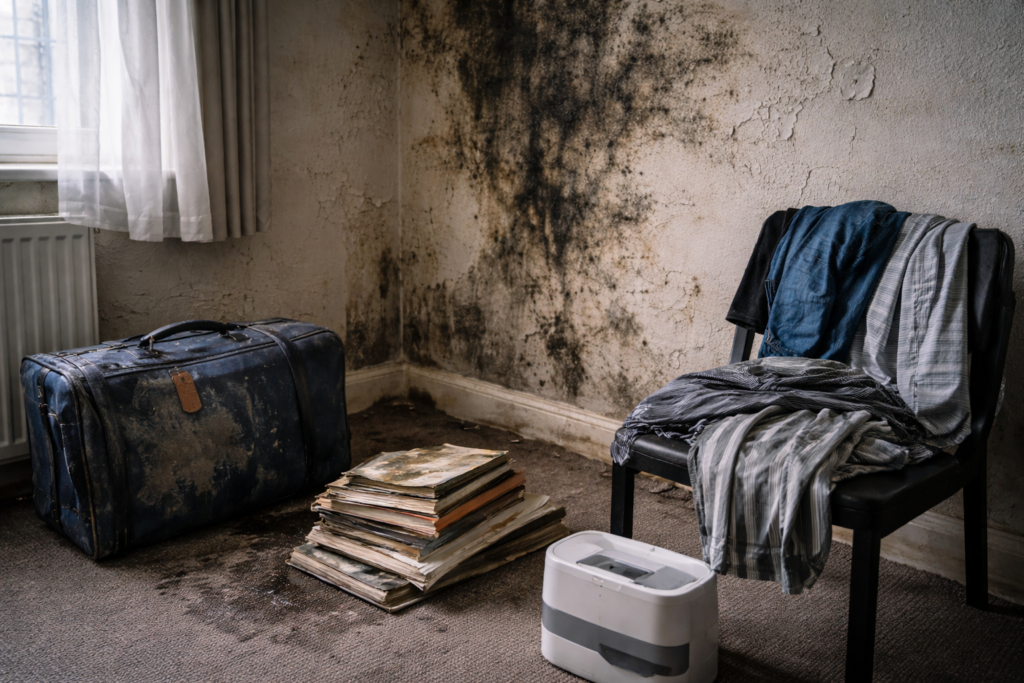
Disrepair that causes damage to personal belongings is a common UK renting problem, especially in older properties or where repairs have been repeatedly delayed. It often shows up after a tenant has already reported an issue like a leak, damp, mould, a broken window, or a faulty roof, and then finds clothing, furniture, electronics, or children’s items ruined by water, mould spores, or persistent condensation. The dispute usually starts once the landlord agrees to do some repairs but avoids talking about the damaged belongings, or offers a small goodwill amount that does not match the loss.
This tends to appear at a specific stage: after the first repair request has been made and acknowledged, but before the repair is completed, when the tenant is still living with the problem and the damage is ongoing. It can also surface after a partial response, where the landlord fixes the source issue but says the belongings are “not their responsibility” or asks for unrealistic proof. In practice, the issue affects tenants who have limited storage space, families with soft furnishings that absorb damp, and anyone who cannot easily move items away from the affected area while waiting for works to be scheduled.
Why this happens
The most common cause is delay: the longer water ingress, damp, or mould continues, the more likely it is that belongings become unsalvageable. Another frequent cause is repeated “temporary” fixes that do not stop the underlying problem, such as patching a ceiling stain without addressing the leak, or wiping mould without improving ventilation or fixing a cold bridge. Where contractors are involved, missed appointments and incomplete works often mean the tenant is left managing the risk to belongings for weeks at a time.
There is also a predictable incentive issue. Landlords and agents often treat repairs as a maintenance cost but treat compensation for belongings as a liability to be resisted, so the conversation gets pushed into complaints handling rather than dealt with alongside the repair. A typical organisational response pattern is that the landlord focuses on arranging access for repairs while asking for more and more proof before discussing any payment.
Insurance can complicate things. Some landlords will point to the tenant’s contents insurance even when the damage is linked to disrepair, while some tenants assume the landlord’s buildings insurance will automatically cover everything. In UK cases, the outcome often turns on whether the landlord had notice of the disrepair and a reasonable chance to fix it before the damage happened or worsened.
Your rights in practice
The strongest practical position comes from showing three things: the landlord was told about the disrepair, the landlord had a reasonable opportunity to put it right, and the damage to belongings followed the unresolved problem. Clear notice and a clear timeline usually matter more than arguing about fault in abstract terms. Where notice is well evidenced, landlords are more likely to settle because the dispute becomes about value and proof rather than whether anything should be paid.
What tends to work is keeping the repair request and the compensation request linked but separate: one thread for getting the property fixed, another for the belongings claim with an itemised schedule. Asking for a written decision (accept/decline and reasons) often moves the issue forward because it forces the landlord to take a position that can be challenged through the complaints process. If the landlord tries to shift blame onto “lifestyle” or “ventilation” without addressing the repair history, the most effective response is to bring the focus back to the reported defect, the dates, and what was done or not done.
Tenants usually have more leverage when they can show reasonable steps to limit loss, such as moving items away from the leak where possible, using containers, or documenting that there was nowhere else to store essentials. The aim is not perfection; it is showing that the damage was not caused by ignoring an obvious risk after repeated warnings.
Official basis in UK
The practical official route for many tenants is the landlord’s internal complaints process, which is expected to handle disputes about service failure, delays, and compensation offers in a structured way. Using the formal complaints stages helps because it creates a dated record, triggers internal review, and usually results in a written outcome that can be relied on later if the dispute continues. Where the landlord is a council or housing association, the complaints process is typically published online and sets out how to escalate from an initial response to a final review.
To keep the complaint effective, it helps to frame it as a service failure linked to disrepair: the repair delay or inadequate works caused foreseeable damage to belongings after notice was given, and a remedy is being requested. The complaint should ask for two outcomes: completion of repairs with dates, and a decision on compensation with reasons and a breakdown. Guidance on complaining to a council is set out on GOV.UK guidance, which is useful for understanding how to structure a complaint and what to expect from the process.
Evidence that matters
Evidence is usually the difference between a quick settlement and a long back-and-forth. The most persuasive evidence in UK cases shows the condition of the property, the landlord’s notice, the timeline of delay, and the condition/value of the damaged items. Photos and videos should show context (the room, the source area, and the item) rather than close-ups alone. Receipts help, but where receipts are missing, bank statements, order confirmations, warranty emails, or clear photos of labels and model numbers can still support a reasonable valuation.
Keep the damaged items where possible until a decision is made, especially for higher-value items, because landlords sometimes ask to inspect. If items must be disposed of for hygiene reasons, take detailed photos, keep disposal notes, and record why it was not reasonable to keep them. For mould-related damage, it helps to show the wider damp problem (walls, windows, humidity readings if available) alongside the item damage, so the landlord cannot treat it as an isolated issue.
Checklist of what to collect:
- Photos/videos showing the disrepair and the damaged items in place
- All repair reports, emails, texts, and appointment records
- Proof of purchase or reasonable value evidence for each item
- A simple timeline of key dates (reporting, inspections, works, repeat reports)
Three common mistakes show up repeatedly. One is throwing items away immediately and then being unable to show the extent of damage. Another is accepting a vague “goodwill” offer without getting it in writing and without confirming it is final settlement. The third is mixing multiple issues into one long message so the landlord answers the repair point but ignores the belongings claim.
One thing not to do yet is to stop paying rent as a way to force compensation, because that often creates a separate arrears problem that distracts from the disrepair and can escalate quickly.
What to do next
Write the report
Send a written repair report that also flags the belongings damage, even if the repair has already been mentioned informally. Include the property address, the defect, when it started, and how it is affecting health or safety if relevant, then add a short list of damaged items and ask for a written response on compensation. Keep the tone factual and ask for inspection and repair dates.
Set a deadline
Give a clear deadline for a response on both the repair and the compensation decision. In many UK situations, a reasonable expectation is an acknowledgement quickly and a fuller response within a couple of weeks, but the key is to set a date and keep the thread. If the landlord replies only about repairs, respond once to confirm repairs are being arranged and repeat the request for a written compensation decision.
Use complaints route
If the landlord delays, refuses, or keeps asking for the same evidence, move to the official complaints process rather than continuing informal emails. Use the landlord’s official complaint form or published complaints email address, usually found on the landlord’s website under “Complaints” or “Feedback”, and prepare the timeline, photos, and an itemised schedule of loss before submitting. Do not recreate the form or add extra fields; use the official process exactly as set out and attach supporting documents in the format requested.
Prepare this information before submitting the complaint:
- Repair reference numbers and dates of all reports
- Photos/videos and a short timeline document
- Item list with values and proof (receipts or alternatives)
- The remedy requested: repair completion dates and compensation decision
The normal timeframe is that a landlord provides a stage response within the timescale stated in its policy, often around 10–20 working days, with a further stage available if the response is incomplete. If there is no response by the stated deadline, escalate by replying to the complaint confirmation and requesting escalation to the next stage, and also submit a fresh escalation request through the same official channel so there is a clear audit trail.
Handle rent risks
If rent arrears are already building because money has been spent replacing essentials, keep payments as stable as possible and communicate in writing about affordability without linking it to withholding rent. Where a landlord starts threatening action for arrears while disrepair is unresolved, the strategy needs to avoid creating a separate enforcement track; the decision point is whether the arrears are being driven by the disrepair situation and whether evidence is being dismissed. If the landlord starts formal steps, the situation can overlap with a Section 8 notice citing rent arrears caused by disrepair, and the paperwork and timing become critical.
Change approach
If the landlord disputes value rather than responsibility, narrow the claim to the clearest items first and offer inspection. If the landlord disputes responsibility despite clear notice, focus on the timeline and the missed opportunities to repair, and ask for the complaint response to address those dates directly. The issue is usually resolved in UK cases once a formal complaint forces a written position and the evidence bundle is organised enough that the landlord can see what would be relied on if the dispute continued.
Related issues on this site
If the landlord says the photos are not enough or claims the damage is “unproven”, it can help to compare what tends to get accepted as proof in Evidence of disrepair rejected by council. Where the dispute is mainly about whether the landlord had proper notice and how many chances were given to fix the problem, that issue often sits behind both repair delays and compensation refusals. These related problems become relevant when the landlord’s responses start repeating the same rejection wording or when the complaint stage asks for “better evidence” without explaining what would be sufficient.
FAQ
Contents insurance route
For a contents insurance claim after disrepair damage, the insurer often asks whether the landlord had notice and what repairs were attempted. Keep the landlord correspondence because it can support the claim even if the insurer later seeks recovery.
Cash settlement offers
For a low cash settlement for damp-damaged belongings, ask whether it is full and final and request a breakdown of how it was calculated. If it is not full and final, confirm in writing what is still being claimed.
Replacing items quickly
For replacing essential items after a leak, keep proof of what was replaced and why it could not wait. Try to keep the damaged item until a decision is made, or document disposal carefully if hygiene makes that unreasonable.
Landlord inspection requests
For a landlord inspection of damaged belongings, offer reasonable access and keep a note of what was seen and said. Follow up by email the same day with a short summary so there is a dated record.
Before you move on
Put the repair report and the compensation request into writing today, then set a deadline and move into the official complaints process if the response stays vague. Time pressure can show up as being pushed to accept a quick goodwill amount before the full extent of damage is clear.
Get help with the next step
Contact UKFixGuide — If a landlord is refusing to discuss compensation for belongings damaged by disrepair, share the timeline and the complaint stage reached so the next escalation can be set out clearly.