What it looks like
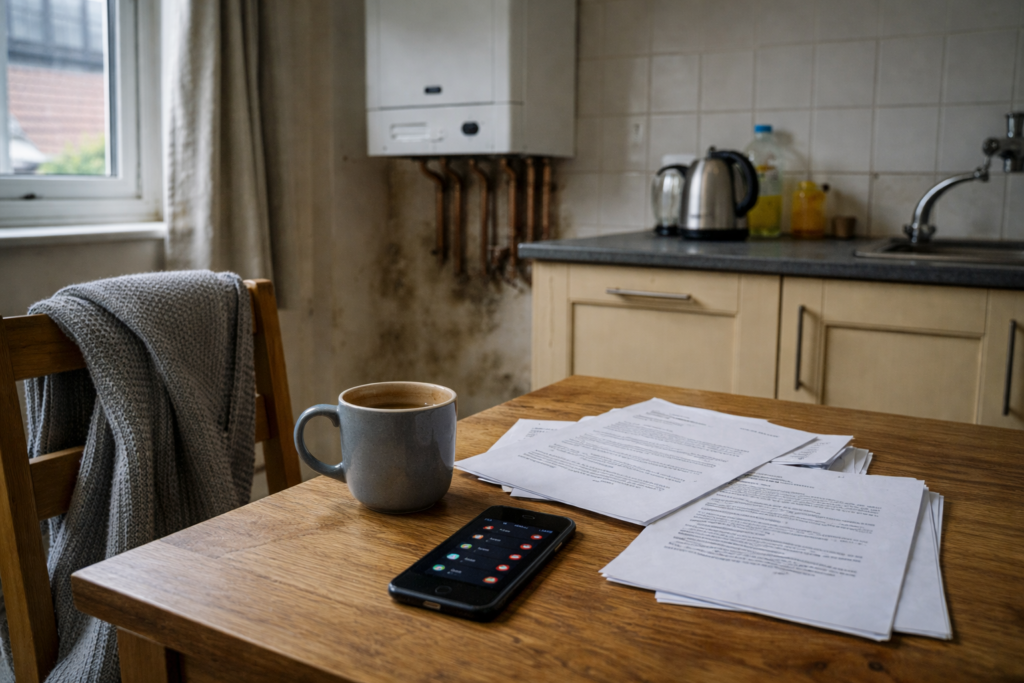
A broken boiler in a UK rental usually shows up fast: no heating, no hot water, or both. In winter it often becomes obvious overnight when radiators stay cold and taps run lukewarm. Many tenants also notice the boiler cycling on and off, flashing fault codes, or making unusual banging or whistling noises. Sometimes the boiler still runs but pressure keeps dropping, so it works for an hour and then cuts out again.
When the landlord is not responding, the pattern is often the same. A tenant reports the issue by text or email, gets a brief acknowledgement (or nothing), and then days pass with no engineer booked. If an agent is involved, the tenant may be told “the landlord needs to approve it” or “maintenance will call you”, but no appointment arrives. In shared houses, the problem can drag on because nobody is sure who reported it or which tenant has the landlord’s current number.
Typical knock-on effects include damp from drying clothes indoors, children missing school due to illness, and higher electricity costs from using fan heaters or boiling kettles for washing. Where prepayment meters are used, emergency credit can disappear quickly when electric heaters are running for long periods.
Common causes behind the fault
Check low system pressure
Low pressure is one of the most common reasons a combi boiler stops heating properly. UK households often see this after a radiator bleed, a small leak on a valve, or a slow drip under the boiler. Many boilers lock out when pressure drops below the safe range.
Look for frozen condensate
In cold snaps, the condensate pipe (often a white plastic pipe running outside) can freeze. The boiler then shuts down with a fault code. This is especially common in flats and terraces where the pipe runs externally for a long stretch.
Consider ignition or flame faults
If the boiler tries to start but fails repeatedly, it may be an ignition issue, a gas supply problem, or a sensor fault. Tenants sometimes report a clicking sound followed by shutdown. This needs a Gas Safe engineer rather than DIY attempts.
Watch for leaking components
Pressure dropping every day often points to a leak in the system: radiator valves, pipework under floors, or internal boiler parts. A small leak can be hard to spot, particularly in carpeted rooms or boxed-in pipe runs.
Note thermostat and timer issues
Sometimes the boiler is fine but the heating controls are not calling for heat. Dead thermostat batteries, incorrect programmer settings after a power cut, or a broken receiver can make it look like a boiler failure.
Safe checks before chasing
Confirm power and settings
Check the boiler has power, the fused spur is on, and any reset hasn’t been triggered by a tripped circuit. Confirm the programmer is set to “on” or “continuous” for testing, and the thermostat is turned up above room temperature. If the thermostat uses batteries, replace them.
Check boiler pressure gauge
If there is a pressure gauge, note the reading. Many systems run around 1.0–1.5 bar when cold, but the boiler’s manual is the best reference. If pressure is very low, take a photo of the gauge and the boiler display. Do not guess at refilling if unsure; topping up incorrectly can cause further faults or leaks.
Look for obvious leaks
Check around radiator valves, under sinks where heating pipes run, and beneath the boiler casing area (without opening the boiler). A towel test under suspect joints can reveal slow drips. Photograph any water marks, corrosion, or staining.
Check gas supply basics
If the hob or gas fire is also not working, the issue may be the gas supply rather than the boiler alone. If there is a prepayment meter, confirm credit is available. If there is any smell of gas, leave the property and follow emergency advice from the gas network operator; do not wait for the landlord.
Record fault codes
Write down the exact fault code and the boiler make and model. A clear photo of the display helps. In UK rentals, this often speeds up booking because agents can send the code to their usual contractor.
Getting the landlord to act
Send a clear written report
Send one message that includes: the date the boiler failed, whether there is no heating/hot water, any vulnerable occupants (babies, elderly, medical conditions), the fault code, and availability for access. Keep it factual and avoid long back-and-forth. Email is best because it creates a timestamped record, but a text can be used alongside it.
Set a reasonable deadline
In UK cases, the fastest outcomes usually come when a deadline is stated calmly: for example, asking for an engineer booking confirmation within 24 hours. If there is no heating and it is cold weather, the expectation is normally that action is taken quickly, not “next week”.
Follow up with evidence
If there is no response, send a short follow-up attaching photos of the boiler display, pressure gauge, and any leaks. If electric heaters are being used, keep receipts and take meter readings. Where a tenant has had to buy temporary measures (blankets, heater), keep proof of purchase.
Use the right escalation route
If the landlord or agent continues to ignore contact, use a structured escalation path rather than repeated calls. The internal steps that tend to work are: written complaint to the agent (if applicable), then formal notice to the landlord, then local council environmental health if the property is not fit to occupy due to lack of heating/hot water. For practical templates and escalation order, see Landlord ignoring repairs — escalation steps in the UK.
Ask for temporary heating
Where repair cannot happen immediately, request safe temporary heating arrangements. In many UK tenancies, landlords will provide portable heaters or reimburse reasonable costs, especially where the boiler is awaiting parts. Any agreement should be in writing.
Step-by-step fixes that help
Try a controlled reset
If the boiler manual allows it, try one reset only and note what happens. Repeated resets can mask an underlying fault and may be flagged by engineers as misuse. If the boiler restarts briefly and then fails again, record the time it ran and the code shown.
Thaw a frozen pipe safely
If a frozen condensate pipe is suspected, gentle warming (for example, warm water over the pipe or a hot water bottle) is the usual safe approach. Avoid open flames or high-heat tools. If the pipe is inaccessible or the boiler is showing repeated lockouts, stop and wait for a professional.
Check radiator valves
If some radiators are cold while others are hot, the boiler may be working but circulation is poor. Confirm radiator valves are open and not stuck. Do not force seized valves. A stuck thermostatic radiator valve pin is common after summer, but forcing it can cause leaks.
Reduce heat loss temporarily
Close internal doors, use draught excluders, and keep curtains shut at night. This does not fix the boiler, but it reduces the risk of the property becoming dangerously cold while waiting for repair.
Keep a simple log
Note dates, times, who was contacted, and what was said. In UK disputes, a short timeline often matters more than long messages. Include missed appointments and any promises to call back.
What happens if ignored
Expect damp and mould
Without heating and hot water, condensation rises and clothes drying indoors becomes unavoidable. In many UK homes, mould appears quickly on cold external walls and around windows, especially in bedrooms. This can create a second repair issue that takes longer to resolve.
Risk burst pipes
In freezing weather, a cold property increases the risk of frozen or burst pipes. That can turn a boiler problem into a major water damage claim, with disruption to neighbours in flats.
See higher running costs
Electric heaters are expensive compared with gas central heating. Tenants often see a sharp jump in electricity usage, and prepayment customers can run out of credit more frequently.
Face health impacts
Cold indoor temperatures can worsen asthma and other respiratory conditions. For households with babies, older adults, or medical needs, delays tend to escalate faster because the accommodation may become unsuitable.
When to escalate formally
Escalate if no booking
If there is no confirmed engineer appointment within a reasonable time for the season and severity, move to a formal written complaint. Include the timeline, photos, and the impact (no hot water, no heating, costs incurred). Ask for a clear date and time for attendance.
Contact the council if unsafe
Where the property is cold, damp, or lacks hot water for an extended period, local council environmental health can assess hazards. Councils often ask for evidence that the landlord was notified and given a chance to act, so the message trail matters.
Prepare for disputes
If the landlord later argues the issue was not reported, evidence usually decides it. Keep screenshots of messages, emails, call logs, and any voicemail recordings where permitted. If an agent is involved, keep the maintenance ticket number and any automated acknowledgements.
Know what not to do
Avoid withholding rent without advice, and avoid arranging major repairs without agreement unless there is clear legal basis and proper notice. In UK cases, rushed self-arranged repairs often lead to arguments about cost, workmanship, and access.
FAQ
How long can a landlord take?
For no heating or hot water, action is usually expected quickly, especially in cold weather. The exact timeframe depends on severity, vulnerability, and contractor availability, but days of silence is a common sign escalation is needed.
Can an agent block repairs?
Agents often manage the process, but the landlord remains responsible for repairs. If the agent is unresponsive, contact the landlord directly as well and keep both copied into emails.
Can a tenant call a Gas…
A tenant can request urgent attendance, but payment responsibility should be agreed in writing first unless there is an emergency safety situation. If unsure, get advice before authorising costly work.
What evidence helps most?
Photos of the boiler display and pressure gauge, a dated message trail showing the first report, notes of missed appointments, and receipts for reasonable temporary heating costs.
Does lack of hot water matter?
Yes. No hot water can make a home unsuitable, particularly for families and vulnerable people. It also increases hygiene risks and can worsen damp if kettles and pans are used constantly.
Before you move on
Collect three items now: a photo of the boiler fault code, a photo of the pressure gauge (if present), and a single timeline message you can forward to the landlord/agent. Send a written request for an engineer booking confirmation with a clear deadline, then keep all replies in one email thread for easy exporting if escalation is needed. If you felt pushed to accept a vague promise or told there was no time to confirm details, that’s often a sign the process wasn’t handled properly.
Get help with the next step
If the boiler is still broken and contact has stalled, use the contact form at https://ukfixguide.com/contact/ to share the timeline and what response (if any) has been received.


3 thoughts on “Boiler broken and landlord not responding”