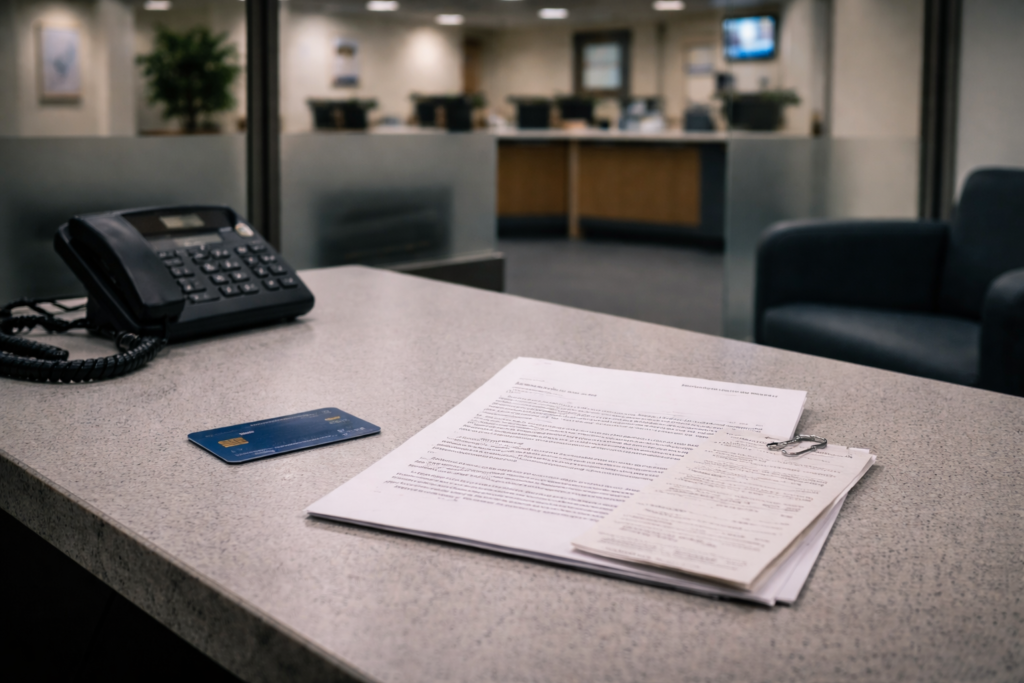
Raise a formal chargeback dispute with the bank’s card disputes team today, using its official process and attaching the key evidence in one bundle. If nothing is done, the bank will usually treat the matter as closed after its internal time limits and the merchant will keep the money. Ask the bank to confirm in writing whether it is refusing to open a chargeback at all, or refusing after assessing it, because the next escalation route depends on that wording. Keep spending and contact with the merchant separate from the dispute so the bank cannot say the position has changed.
Most UK cases move once the bank is given a clear timeline, proof of what was paid for, and a short explanation of why the transaction is disputed. If the bank still refuses, the practical aim becomes forcing a final response letter so the complaint can be escalated.
What the problem is
A bank refusing a chargeback usually shows up after a card purchase goes wrong and the merchant will not put things right, or after a refund promise is missed. In the UK it often affects people paying by debit card or credit card for online orders, travel, digital services, or tradespeople booked remotely. The refusal tends to arrive after the first contact with the bank’s general customer service, when the issue is passed to a disputes team and a short message comes back saying the bank “can’t raise a chargeback” or “chargeback isn’t available”.
This stage commonly appears after a partial response from the merchant, such as offering store credit, delaying delivery repeatedly, or claiming the service was provided when it was not. It also appears after a bank has asked for evidence and then replies with a brief rejection that does not address what was sent. Many people only realise it is a refusal when the bank stops replying or keeps repeating that it is “a matter between you and the retailer”.
Why this happens
Most refusals come down to how the bank categorises the dispute and whether it thinks the card scheme rules fit the facts. Common triggers include the bank treating the issue as a quality dispute without clear proof, treating it as a cancelled subscription rather than an unauthorised payment, or saying the merchant has already responded so it is “resolved”. Another frequent cause is timing: the bank believes the dispute is outside the scheme’s time window, or it thinks the clock started earlier than the customer does.
Banks also tend to refuse when the evidence is scattered across multiple messages, when the customer has continued using the service after complaining, or when there is confusion about who the merchant is (for example, a payment processor name on the statement). Chargeback work is operationally heavy, and the incentives push teams to filter cases that look unclear, late, or likely to be challenged by the merchant. A typical organisational pattern is a short template response that cites “chargeback not applicable” without explaining which part of the dispute failed.
Your rights in practice
In UK practice, the strongest leverage is not arguing card scheme rules line-by-line, but forcing the bank to treat the refusal as a complaint about the service it has provided. Banks are expected to handle complaints fairly, explain decisions in plain language, and show they considered the evidence. When a bank is asked to confirm its decision in writing and to point to the specific reason it will not act, the quality of the response often improves quickly.
It also helps to separate two issues: whether the transaction is disputed, and whether the bank’s handling has been reasonable. Even if the bank says chargeback is “not guaranteed”, it still needs to explain what it has done and why. Clear, dated evidence and a simple narrative usually work better than long arguments, especially where the merchant has failed to deliver, has delivered something materially different, or has not honoured a cancellation/refund promise.
Official route that applies
The practical official route for a bank refusing to act is the Financial Ombudsman Service (FOS) complaint process, which looks at whether the bank handled the matter fairly and reasonably. The bank must be given a chance to issue a final response first, and the FOS will then consider the communications, the evidence provided, and whether the bank’s decision-making and explanations were adequate. The FOS process is designed for consumers and is based on what is fair in the circumstances rather than technical arguments alone.
Use the FOS route after the bank has issued a final response or after the bank has had time to deal with the complaint and has not resolved it. The bank should be asked to confirm the outcome and the reasons in a final response letter so the escalation is straightforward. Details of how the ombudsman process works and how to complain are set out on GOV.UK guidance.
Evidence that matters
The bank will usually focus on what was promised, what was paid, what happened next, and what remedy was requested. Evidence that shows a clear timeline tends to carry the most weight: order confirmation, delivery dates, cancellation messages, refund promises, and any proof that the goods or service were not provided as agreed. If the dispute is about a subscription or recurring payment, the key items are the cancellation confirmation and any continued debits after that point.
What not to do is just as important. Do not send edited screenshots without context if the original email or full chat transcript is available, because banks often treat cropped images as unreliable. Do not keep changing the reason for the dispute (for example, switching between “fraud”, “not received”, and “not as described”), because it gives the bank an easy basis to say the case is unclear. Do not threaten the merchant with chargeback in a way that suggests the goods were received and accepted, as that can be used to argue the dispute is only about quality or a goodwill refund.
Checklist to prepare before contacting the disputes team:
- Card statement line showing the transaction date, amount, and merchant name
- Order/booking confirmation showing what was agreed and when
- Evidence of non-delivery, cancellation, or failure to provide the service (emails, tracking, appointment logs)
- Merchant communications about refunds, delays, or refusal
- A one-page timeline with dates and the remedy requested
Three common mistakes seen in UK cases are sending evidence in multiple separate messages so it is not reviewed together, continuing to use the service after raising the dispute, and missing the bank’s requested deadline for additional information. One thing not to do yet is start a new dispute reason with the bank if the first one has been logged, because it can reset the handling and create conflicting records.
Steps to take next
Confirm refusal type
Ask the bank to confirm, in writing, whether it is refusing to open a chargeback at all or whether it opened one and the merchant challenged it. Request the exact reason it says the dispute is not eligible and what evidence would change that decision. Keep the request short and factual, and ask for the response to be recorded as a complaint if it is not already.
Use official process
Submit the dispute through the bank’s official card disputes or chargeback route only, not through general webchat, because disputes teams often need the case logged in a specific system. The official route is normally found in the banking app under card transactions, in online banking under “dispute a card payment”, or via the bank’s complaints page where it directs card payment disputes. Prepare the evidence bundle first so it can be uploaded or sent in one go, and keep a copy of everything sent.
Information to have ready before submitting through the official route:
- Transaction date, amount, and merchant name as shown on the statement
- What was promised and what went wrong, in two or three sentences
- Key dates: order, expected delivery/service date, cancellation/refund request date
- Evidence files named clearly (for example, “order-confirmation.pdf”, “refund-promise-email.pdf”)
- Preferred remedy (refund to the card) and whether any partial refund was received
Set a deadline
Ask the bank to confirm when it will respond and when it expects the dispute to be decided. A normal pattern is an acknowledgement first, then a request for more information, then a decision once the merchant has been contacted. If the bank will not give a clear timeframe, ask it to confirm the complaint handling timeframe and when a final response will be issued.
Escalate as complaint
If the bank refuses again or stops responding, escalate formally as a complaint about how it has handled the dispute and ask for a final response letter. The complaint should attach the same evidence bundle and quote the dates of earlier contacts, so the bank cannot say it is seeing the issue for the first time. If the bank’s refusal is linked to affordability or cashflow pressure and the disputed payment has left wages short, it can help to deal with the immediate shortfall separately using the steps commonly used for EMPLOYER UNPAID WAGES situations, so essential bills are not missed while the dispute runs.
Move to ombudsman
If there is no final response after eight weeks, or if a final response arrives and the bank still refuses to act or explain itself properly, take the complaint to the Financial Ombudsman Service using its official complaint route. Escalate by submitting the bank’s final response letter (or proof of the eight-week point), the evidence bundle, and a short timeline. The issue is usually resolved in UK cases once the bank realises a clear complaint record is being prepared for the ombudsman and the evidence is organised.
Related issues on this site
If the disputed payment is tied to irregular working hours or pay that changes week to week, the practical next decision is often whether to prioritise stabilising income while the bank complaint runs, and the page on Zero-hours contract rights can help with that context. If the bank refusal is happening alongside missed bill arrangements because the money has gone, the situation can overlap with what happens when a repayment arrangement fails, and it may be useful to compare the knock-on effects described in payment plan problems. These related issues are most relevant when the chargeback refusal is creating immediate budgeting pressure rather than being only a dispute about principle.
FAQ and quick checks
Bank says not eligible
A “bank says chargeback not eligible for services” response is often improved by sending a dated timeline and the exact remedy requested, then asking for the refusal reason in writing as a complaint outcome.
Debit card disputes
For “debit card chargeback refusal by bank” cases, the practical route is still to use the bank’s official disputes process and then escalate as a complaint if the bank will not explain its decision.
Merchant partial refund
A “partial refund then chargeback refused” situation usually turns on proving what remains unpaid and showing that the merchant’s remedy did not match what was agreed.
Late dispute timing
A “chargeback time limit missed UK” refusal can sometimes be challenged by showing when the problem became clear, such as the date a promised refund failed to arrive.
Before you move on
Put the evidence into one file set, send one clear written request for the bank’s refusal reason and a final response deadline, and keep the merchant contact separate so the bank cannot say the situation has changed. Time pressure can show up when a bank hints the window is closing, which can push rushed decisions that weaken the record.
Get help with the next step
Contact UKFixGuide — Share the bank’s refusal wording and the transaction timeline so the next message to the disputes team can be tightened without changing the dispute reason.