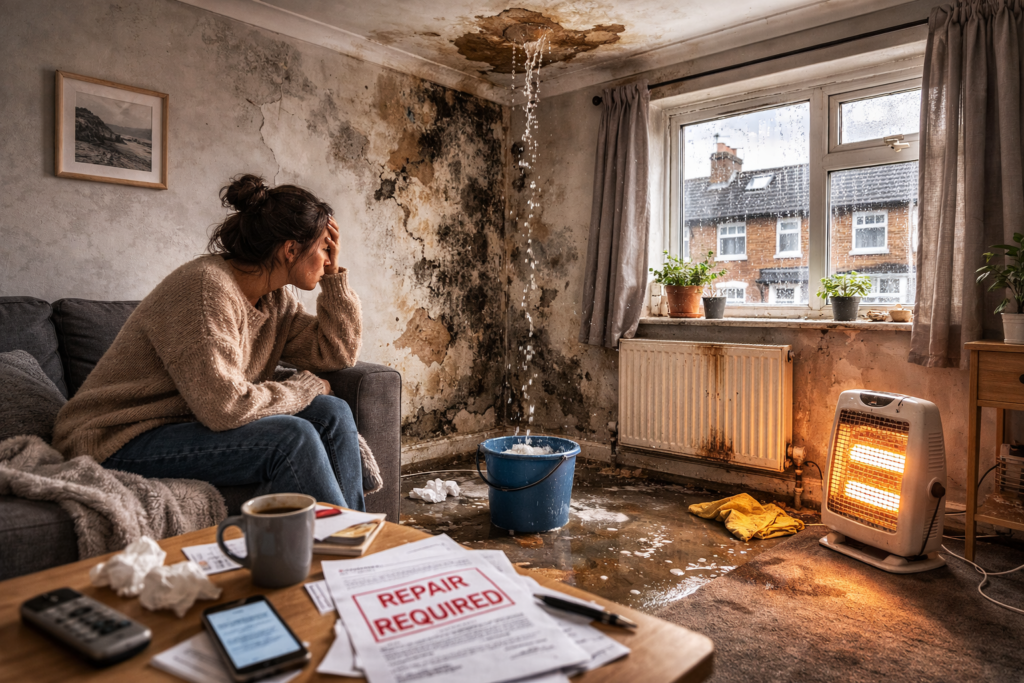
No heating in winter. Water leaking through the ceiling. Electrical sockets sparking. Mould spreading in a child’s bedroom.
At this point, this is no longer a “minor issue”. It may fall under urgent or statutory repair responsibility.
In the UK, landlords are typically responsible for repairs affecting safety, sanitation, and basic habitability, including:
- Heating and hot water systems
- Water supply and sanitation
- Structural integrity (roof, walls, windows)
- Electrical wiring and gas safety
- Serious damp and mould linked to structural issues
When a Repair Becomes “Urgent”
If the issue affects health, safety, or the ability to live normally in the property, it can escalate quickly. “Urgent” is not a fixed legal label used everywhere, but in practice it means problems that need fast action to prevent harm, damage, or loss of essential services.
Step 1 — Check Your Tenancy Agreement
Before escalating, confirm the basics:
- You are a tenant (not a lodger).
- The repair falls under landlord responsibility.
- There is no clause attempting to transfer structural or safety-critical maintenance onto you.
Most urgent repairs are not legally the tenant’s responsibility.
Step 2 — Notify the Landlord Properly (In Writing)
Phone calls are not enough. If you want leverage later, you need a written trail.
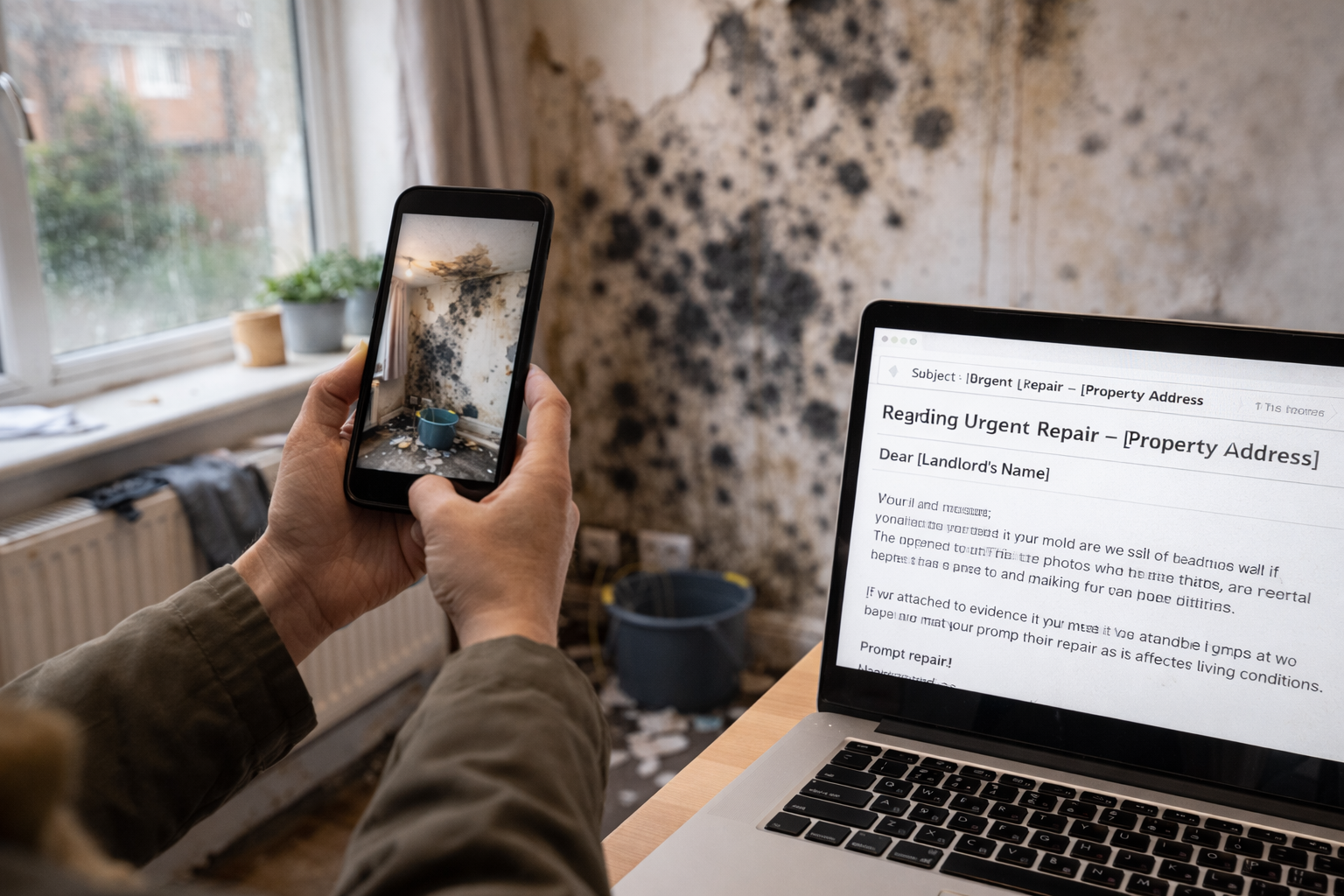
Send an email or written message that includes:
- A clear description of the issue
- The date it started (or the date you first noticed it)
- Photos or video evidence
- Any immediate risks (health, safety, property damage)
Keep copies of everything. If heating stops in winter, state clearly that the property is not safely habitable.
Step 3 — Allow a “Reasonable Time”
What is “reasonable” depends on the problem. These ranges are commonly treated as urgent in practice, but will vary with severity and risk:
- No heating in winter: often 24–72 hours
- Major water leak: immediate action expected
- Dangerous electrics: urgent
- Damp/mould: depends on severity and cause
If the landlord ignores communication completely (or repeatedly delays without action), you move to escalation.
Step 4 — Contact Environmental Health (Council)
If the landlord is not acting, contact your local council’s Environmental Health (or private sector housing) team.
They can potentially:
- Inspect the property
- Assess hazards
- Issue notices requiring repairs (depending on findings)
Once a formal notice is served, ignoring the situation becomes much harder for the landlord. This step can change leverage.

Step 5 — Can You Withhold Rent?
Short answer: not automatically.
Stopping rent without a lawful basis can expose you to arrears and eviction risk. Some tenants refer to “repair and deduct”, but it only works safely when the process is followed properly.
Common requirements (in practice) include:
- Giving written notice of the defect and requesting repair
- Allowing reasonable time
- Obtaining multiple quotes
- Sending a final warning that you will arrange the repair and deduct the cost
- Keeping receipts and paying only the amount genuinely spent on necessary repair
If you skip steps, you may create avoidable risk for yourself.
Step 6 — Can You Claim Compensation?
Possibly, depending on what happened and what you can evidence. Compensation is more likely to be relevant if:
- Your health was affected
- Part of the property became unusable
- You incurred additional costs (for example temporary heating, dehumidifiers, or replacing damaged items)
Claims are often approached through a formal complaint path first, then potentially a pre-action route and (in some cases) County Court.
Evidence is critical: dates, photos, communications, and any medical or cost documentation.
Common Mistake
Waiting too long and relying on informal messages.
If you do not have clear written evidence and a timeline, it becomes easier for a landlord to dispute what happened, when you reported it, and how serious it was.
What Happens If You Ignore the Situation?
- Damage may worsen and become more expensive
- Health risks can increase
- Council involvement may become more complex
- A landlord may argue delay suggests the issue was not urgent
Early documentation protects you.
Quick Escalation Map
- Report the issue in writing
- Gather evidence (photos, video, dates)
- Allow reasonable time
- Send a formal follow-up
- Contact Environmental Health / council team
- Consider a legal route if unresolved
Order matters.
FAQ
Can my landlord enter without notice to repair?
Usually notice is required, except in genuine emergencies. Keep communication in writing and ask for a specific time window if visits are needed.
Can I move out immediately?
Leaving without following tenancy terms can expose you to liability. If the property is unsafe, seek formal routes and keep evidence before making decisions.
What if the property is unsafe?
Council involvement is often the fastest escalation route for safety-related hazards, especially where the landlord is unresponsive.
Is mould always landlord responsibility?
Not always. It depends on the cause (for example structural damp versus condensation/lifestyle factors). Evidence and inspection findings matter.