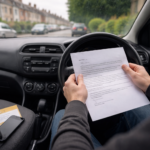
Reply in writing today and ask for the full damage evidence pack, the rental agreement terms they rely on, and a clear breakdown of how the charge was calculated. If nothing is done, the demand usually escalates into repeated chasing, a larger “admin” total, and sometimes a debt collection referral. Keep the dispute narrow: challenge proof, timing, and whether the damage is new and attributable to the hire period. If payment is being taken automatically, contact the card provider straight away to stop further debits while the dispute is raised through the hire company’s official complaints route.
What the problem is
A hire car is returned and, days or weeks later, an email or letter arrives saying damage has been found and a charge is due. In UK rentals this often lands after the deposit has been released, after a rushed handover at an airport, or after a “no issues” return receipt that turns out to be vague. It affects drivers who used a credit card for the deposit, anyone who returned out of hours, and people who were not offered a walk-round inspection at the end.
The dispute usually starts after a partial response from the hire company, where a single photo and a total figure are provided but the underlying documents are not. Many people only realise the situation has moved on when a deadline is set for payment, or when a “final notice” arrives that is still not backed by a proper inspection report. By that stage, the company may be treating the charge as agreed even though the customer has only asked for evidence.
Why this happens
Damage charging is often driven by how vehicles are turned around quickly, how inspections are recorded, and how costs are recovered internally. A car can be checked in poor light, by different staff, or after it has been moved and cleaned, and the record may not clearly show when the mark appeared. Where the business uses a third-party damage management process, the person writing to the customer may be working from a template and a set of images rather than a full timeline of custody.
Common behaviour includes quoting a repair estimate rather than an invoice, adding loss-of-use days without showing the vehicle was actually off the road, and applying standard admin fees. The incentive is to close the file quickly and recover money before a customer can gather counter-evidence, especially where the deposit authorisation is still available. A typical organisational response pattern is to send a brief reply that repeats the amount due and offers a small reduction if payment is made quickly.
Your UK position
In practice, the strongest leverage comes from keeping the dispute factual and asking for the documents that show the damage is new, attributable to the hire period, and costed fairly. A hire company is more likely to back down or reduce the amount when faced with a clear request for the check-out and check-in reports, time-stamped photos, and proof of repair costs, because those items are harder to improvise later. If the company cannot show a consistent chain from vehicle condition at collection to condition at return, the claim often becomes a negotiation rather than a demand.
Payment method matters. Credit cards and some debit card routes can provide a way to challenge a charge where the service was not provided as billed or the amount is disputed, but that route works best when the dispute has been raised promptly and in writing with the supplier. The practical aim is to prevent the company treating silence as acceptance, while also avoiding statements that could be read as admitting liability.
Official basis in UK
The most practical official route behind many successful outcomes is the Consumer Rights Act 2015, which expects services to be provided with reasonable care and skill and charges to be fair and transparent in how they are applied. In real disputes this means the hire company should be able to show a reasonable inspection process, a fair method for calculating the cost, and terms that were clearly presented at booking and at handover. Where the paperwork is thin or the process looks inconsistent, the customer’s written complaint can focus on the lack of reasonable evidence and the unfairness of charging without proper substantiation.
GOV.UK guidance supports the practical approach of disputing charges with the trader and keeping records of what was agreed and what was provided.
Evidence that matters
Evidence is usually won or lost on timing and clarity. The most useful items are anything that shows the car’s condition at collection and at return, plus anything that shows what the hire company did next. If there was a rushed return, proof of the return time and location can help show the car was left in the company’s control before the damage was recorded.
Collect what can still be gathered: booking confirmation, the rental agreement and terms, the check-out sheet, the check-in sheet (even if created later), photos and videos taken at pickup and drop-off, and any emails or app messages about the return. If the company claims a repair, ask for the invoice or work order and the dates the vehicle was unavailable, not just an estimate. If the claim includes “loss of use”, ask for evidence the vehicle was actually taken out of service and for how long.
What not to do: do not send edited photos that remove metadata or crop out context, because that often triggers a credibility argument. Do not argue about what “should” have happened at the desk; stick to what did happen and what can be shown. Do not accept a “discount for quick payment” while still disputing liability, because it can be treated as agreement.
Checklist to pull together before the next message:
- Time-stamped photos or video from collection and return
- Check-out and check-in reports (or proof they were not provided)
- The charge breakdown showing repair, admin fees, and any loss-of-use
- Proof of return time (receipt, email, app log, parking record)
Three common mistakes seen in UK cases are admitting the damage “might have happened” in an early email, ignoring the demand until a debt collector letter arrives, and disputing the amount without first disputing the evidence that the damage is attributable to the hire. One thing not to do yet is to post accusations on social media before the complaint and evidence request have been formally logged, because it can distract from the paper trail that resolves the charge.
Steps to take next
Send written dispute
Use the hire company’s official complaints process (usually found in the booking email, the app, or the “Contact/Complaints” page on the company website) and submit the dispute in writing so it is logged. Ask for the full evidence pack: the pre-rental condition record, the post-rental inspection record, all time-stamped photos, the name or ID of the inspector, and the cost basis (invoice if repaired, or a detailed estimate if not). State clearly that liability is disputed pending evidence, and that no consent is given to take further payments while the dispute is open.
Control card payments
If the company is attempting to take payment from a stored card, contact the card provider immediately to stop further debits and to note the transaction is disputed. If a payment has already been taken, ask the card provider what dispute route applies to the card type and transaction, and keep the focus on the lack of evidence and the disputed basis for the amount. Where the hire company is still within the window to capture a deposit authorisation, acting quickly can prevent repeated attempts.
Ask for documents
Request a single, coherent timeline: collection time, inspection time, return time, inspection time, and when the damage was first recorded. If the company relies on a third-party assessor, ask for the assessor’s report and how the vehicle was secured between return and inspection. If the paperwork suggests the inspection happened long after return, that is a concrete point to challenge because it weakens attribution.
Escalate correctly
If the company does not respond, or responds without the requested documents, escalate within the same official complaints route and ask for a final written position. A normal response timeframe is around 14 days for an initial complaint response, with longer where documents must be retrieved, but silence beyond that is usually a sign the file is being pushed to collections rather than properly reviewed. If there is no meaningful response by day 14, send a short chaser that repeats the document request and states that the charge remains disputed; if there is still no meaningful response by day 28, escalate to the company’s head office complaints team (or the named complaints escalation address) and notify the card provider that the supplier has not substantiated the charge.
If the business starts hinting at closing down the conversation or moving straight to debt collection, treat that as a decision point to tighten the paper trail and keep everything in writing; similar patterns are covered in Company requests mediation then withdraws because a sudden change in tone often happens after evidence is requested. In many UK cases the issue is resolved when the company produces weak documentation and offers a reduced settlement, or withdraws the charge once the card dispute and complaint escalation are both active.
Change approach
If the evidence pack arrives and it is strong (clear before-and-after photos, consistent timestamps, and a reasonable invoice), the strategy usually shifts from denying liability to challenging the amount and extras. Ask whether the repair was actually carried out, whether the vehicle was off the road, and whether admin fees match the contract terms provided at booking. If the evidence is weak or inconsistent, keep the position simple: the charge is not accepted because the company has not shown the damage occurred during the hire or that the amount is a fair reflection of loss.
Checklist for the official complaint submission:
- Booking reference and hire dates
- Return receipt or proof of return time
- Photos/video filenames and the device date/time
- The exact amount demanded and any payment attempt dates
Related issues nearby
If the dispute starts to look like the company is relying on paperwork created after the event, it can help to compare the pattern with Inventory ignores existing damage, because the same “existing mark treated as new” problem shows up across different consumer disputes. If the hire company becomes unresponsive or changes its trading status while the complaint is open, the decision-making changes quickly and the next steps can differ from a normal complaint timeline.
FAQ
Damage photo quality
For hire car damage photo quality disputes, ask for the original time-stamped images and the full set, not a single cropped close-up. Blurry photos without context usually cannot show when the damage happened.
Admin fee add-ons
For hire car admin fee add-ons, request the contract term that allows each fee and a breakdown of what work was done. If it is a standard figure with no explanation, it is often negotiable.
Out of hours return
For out of hours return claims, provide proof of the return time and any photos taken where the car was left. The key point is the gap between return and inspection.
Debt collector letters
For hire car debt collector letters, reply once in writing stating the charge is disputed and that evidence has been requested from the hire company. Keep copies and avoid phone calls that cannot be evidenced.
Before you move on
Send the evidence request and formal complaint first, then decide whether the dispute is about liability or only about the amount once the documents arrive. Time pressure can show up as a “pay today for a discount” message that pushes a rushed decision.
Get help with the next step
Contact UKFixGuide — Share the hire company’s demand letter wording and the dates of collection, return, and inspection so the escalation message matches the timeline.