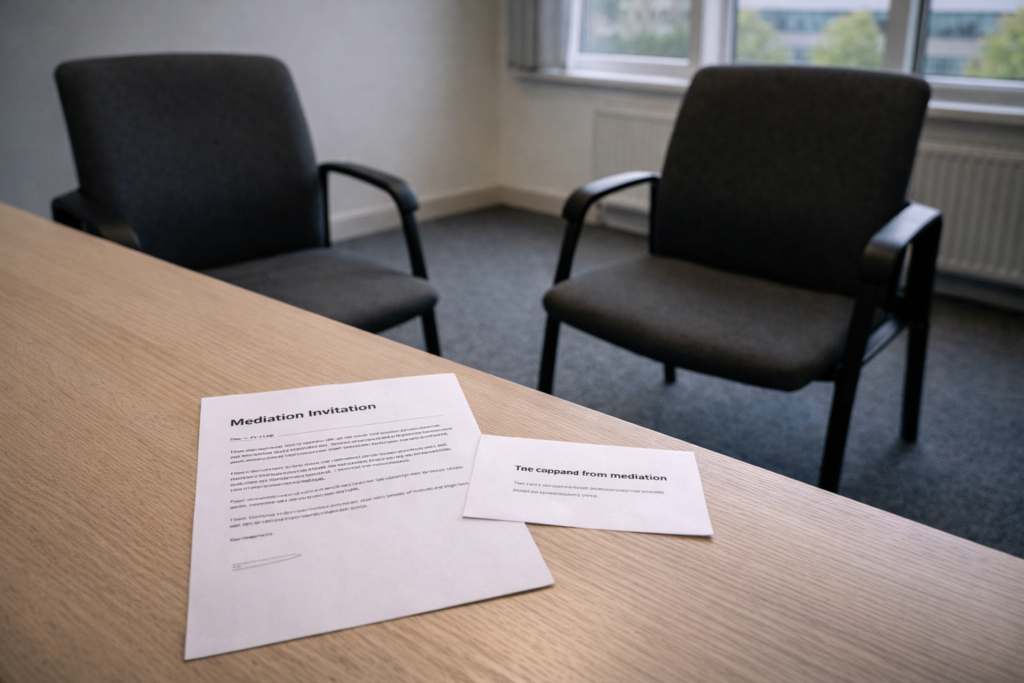
Reply in writing the same day, confirm that mediation was accepted, and ask for the company’s final position and the next route to resolve the dispute. If nothing is done, the matter usually drifts, deadlines get missed, and the company treats the issue as closed or “awaiting your response”. Keep everything in one email thread or letter chain and set a clear deadline for a substantive reply. If the company will not re-engage, move to the formal complaints or dispute route that matches how the purchase or service was paid for.
What the problem is
This situation comes up in UK consumer and service disputes where a company suggests mediation to look reasonable, then pulls out once it becomes clear the customer has evidence, a firm position, or a deadline is approaching. It affects people dealing with retailers, trades, subscription providers, travel firms, and insurers, especially where there has already been a complaint and the company is under pressure to respond. It often appears after a partial response such as a small goodwill offer, or after the company has asked for “one last call” and then goes quiet. It can also happen after the customer accepts mediation in good faith and pauses other escalation steps, only to find the company withdraws or stops arranging it.
In practice, the withdrawal is usually framed as “mediation is no longer appropriate”, “we cannot agree to your terms”, or “we have reviewed the case and our position remains unchanged”. The immediate problem is not the mediation itself, but the loss of momentum and the risk that the customer’s next step becomes unclear, especially if the company implies that refusing mediation makes the customer unreasonable. Where there are time limits (chargeback windows, card scheme deadlines, or complaint stages), the pause can be costly.
Why this happens
Companies tend to propose mediation when a dispute is escalating, because it can slow the process, reduce complaint volumes, and create a record that the business “tried to resolve it”. If the customer accepts, the company may gain time to review internal notes, wait for a supplier response, or see whether the customer gives up. Withdrawal often happens when the business decides the cost of settling is higher than the risk of the customer pursuing it, or when the company realises mediation would require disclosure, attendance, or a clear offer it does not want to make.
Another common driver is internal ownership: the person who offered mediation may not control the budget or authority to settle, and a manager later blocks it. Some firms also use mediation as a filter, expecting only a small percentage of customers to follow through; if the customer does, the business may revert to a standard “final response” template. A typical organisational response pattern is that the company switches from conversational messages to short, policy-based statements and stops answering specific points.
Withdrawal can also be tactical. If the company senses the customer is relying on mediation instead of using a formal route (complaints escalation, card dispute, or ombudsman), it may withdraw at a moment that leaves the customer scrambling. That is why the safest approach is to treat mediation as optional unless it is part of a binding scheme, and to keep formal timelines moving in parallel.
Your rights or position
In UK disputes, a company can usually choose not to mediate unless it has committed to a specific scheme or contract term that requires it. The practical leverage is not forcing mediation, but making the company commit to a clear final position and then using the appropriate escalation route. What tends to work is pinning down what the company is refusing to do, why, and what evidence it relies on, then moving the dispute to a process where silence or vague answers count against them.
If the company offered mediation and then withdrew, that history still helps. It shows the customer acted reasonably, responded promptly, and tried to resolve matters without escalation. That can matter when asking for a final response, when challenging delays, and when presenting a timeline to a third party (for example, a card provider dispute team). The strongest position comes from keeping communications calm and structured, setting deadlines, and avoiding open-ended back-and-forth calls that leave no record.
Where the company is using withdrawal to pressure acceptance of a smaller offer, the practical response is to separate the issues: confirm whether any offer is still open, confirm whether it is full and final, and confirm what happens next if it is declined. If the company will not answer those points, it is usually a sign to stop negotiating and move to the next formal step.
Legal or official basis
For most consumer disputes about goods or services in the UK, the practical baseline is the Consumer Rights Act 2015, which sets expectations around services being carried out with reasonable care and skill and goods being of satisfactory quality and as described. In day-to-day disputes, this matters because it gives a clear framework for what a reasonable remedy looks like and helps keep the conversation focused on outcomes rather than “goodwill”. When a company withdraws from mediation, the next move is often to restate the remedy being sought under that framework and set a deadline for a final response, then escalate through the payment route or complaint route if the company will not engage.
For a plain-English overview that supports this approach, use GOV.UK guidance and keep a copy of the page you relied on when writing to the company.
What evidence matters
Evidence is what stops the dispute becoming a “he said, she said” argument after mediation falls away. The most useful material is anything that proves the company offered mediation, the customer accepted, and the company then withdrew or failed to arrange it. That timeline helps show reasonableness and prevents the company later claiming the customer refused to cooperate.
Collect the written mediation offer, the acceptance message, any proposed dates, and any cancellation or withdrawal wording. Keep screenshots of chat logs, copies of letters, and call notes with date and time. If the dispute is about faulty goods or poor service, keep photos, engineer reports, invoices, and a short factual summary of what happened and what remedy is being requested.
What not to do is rewrite history in anger. Avoid sending long emails that mix multiple complaints, personal attacks, or threats, because they make it easier for the company to label the customer as unreasonable and stop engaging. Do not alter documents or edit screenshots in a way that could be challenged.
Key documents
Keep a tight bundle that can be forwarded to a complaints team or card provider without reformatting.
- The mediation offer and the withdrawal message
- Proof of purchase and payment method
- Photos, reports, and any repair or inspection notes
- A dated timeline of contacts and responses
Common mistakes
These errors regularly weaken otherwise strong UK complaints.
- Accepting mediation and then pausing all other deadlines until it “gets arranged”
- Relying on phone calls only, with no written confirmation of what was agreed
- Accepting a partial refund or credit without confirming whether it is full and final
Do not do yet
Do not send a final “last chance” message that includes new allegations or a new remedy, because it resets the discussion and gives the company room to delay again.
What to do next
Confirm withdrawal
Send a short written reply confirming the dates: when mediation was offered, when it was accepted, and when it was withdrawn. Ask the company to confirm whether it is issuing a final response and, if not, when a full written response will be provided. Give a clear deadline (for example, 7 or 14 days) for a substantive reply that addresses the remedy being sought.
Lock the remedy
State the outcome being requested in one sentence (refund, repair, replacement, price reduction, or compensation for a specific loss) and keep it consistent. If the company made an offer during the mediation discussion, ask whether it remains open and whether it is full and final. If the company refuses to answer, treat that as a refusal to resolve and move on.
Use complaints route
If the business is now slow-walking or ignoring points, move the matter into its formal complaints process and ask for a final response letter or email. Where the company is already beyond the time it promised to respond, the situation often matches Formal complaint deadline missed by company, and the next step is to stop waiting for informal updates and insist on the written stage outcome.
Choose escalation
Pick the escalation route that fits the transaction rather than the mediation story. If payment was by card, prepare to raise a dispute with the card provider using its official dispute or chargeback process; the form is normally found in the banking app, online banking “disputes” area, or by requesting it through secure message. If the dispute is with a regulated firm that has a set complaints pathway, follow its official complaints process and request the final response needed for the next stage. If the company is unregulated and refuses to engage, a letter before action may be the practical next step, but only after the evidence bundle is ready and the remedy is fixed.
Prepare details
Before using any official form or complaints portal, have the key information ready so the submission is complete and hard to dismiss.
- Order or account reference, dates, and payment proof
- What was promised versus what happened, in two or three sentences
- The mediation offer, acceptance, and withdrawal messages
- The remedy being requested and the deadline already given
Wait timeframe
For most UK complaints processes, a substantive reply is normally received within a few weeks, though some firms respond faster when a clear deadline and evidence bundle are provided. If there is no response by the deadline given, escalate by submitting the dispute through the official channel (card dispute form or formal complaint escalation stage) and attach the timeline showing the mediation withdrawal. If the company replies with a vague holding message, change strategy by asking for a final response and moving to the payment or formal route rather than continuing informal negotiation. One sentence stating when it is usually resolved in UK cases: This is usually resolved when the company realises the next step is a formal dispute route with clear evidence and deadlines.
Related issues on this site
If the company’s withdrawal from mediation comes with a flat refusal to put things right, the situation can overlap with Refund refused by company, especially where the business keeps repeating policy rather than addressing the fault or service failure. If the bigger problem is silence after the mediation offer collapses, it can also look like a stalled complaint where chasing becomes the main task. These related issues are most relevant when the company stops answering specific questions, or when a partial offer is being used to close the matter without confirming whether it is full and final.
FAQ
Mediation withdrawal proof
Mediation withdrawal email evidence is usually enough if it shows the offer, acceptance, and cancellation wording in the same thread. Add a dated note of any calls that happened around it.
Final response request
A final response letter request should ask for the company’s settled position and the remedy it will or will not provide. Set a deadline and keep the request to one page.
Card dispute timing
Card dispute timing after mediation withdrawal should be based on the bank’s dispute window, not the company’s pace. Submit as soon as it is clear the company will not resolve it promptly.
Partial offer wording
Partial refund full and final wording needs to be confirmed in writing before accepting anything. If it is unclear, treat it as a negotiation point and keep escalation options open.
Before you move on
Send one calm message that fixes the timeline, asks for the final position, and sets a deadline, then prepare the evidence bundle for the official route that matches how the transaction was paid for. The pressure dynamic is often being pushed to accept quickly while the company withdraws the option that sounded cooperative.
Get help with the next step
Contact UKFixGuide — If the company has withdrawn from mediation and is now stalling, share the timeline and the written withdrawal so the next escalation step can be chosen without missing deadlines.





2 thoughts on “Company requests mediation then withdraws”