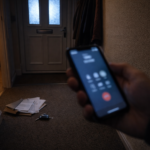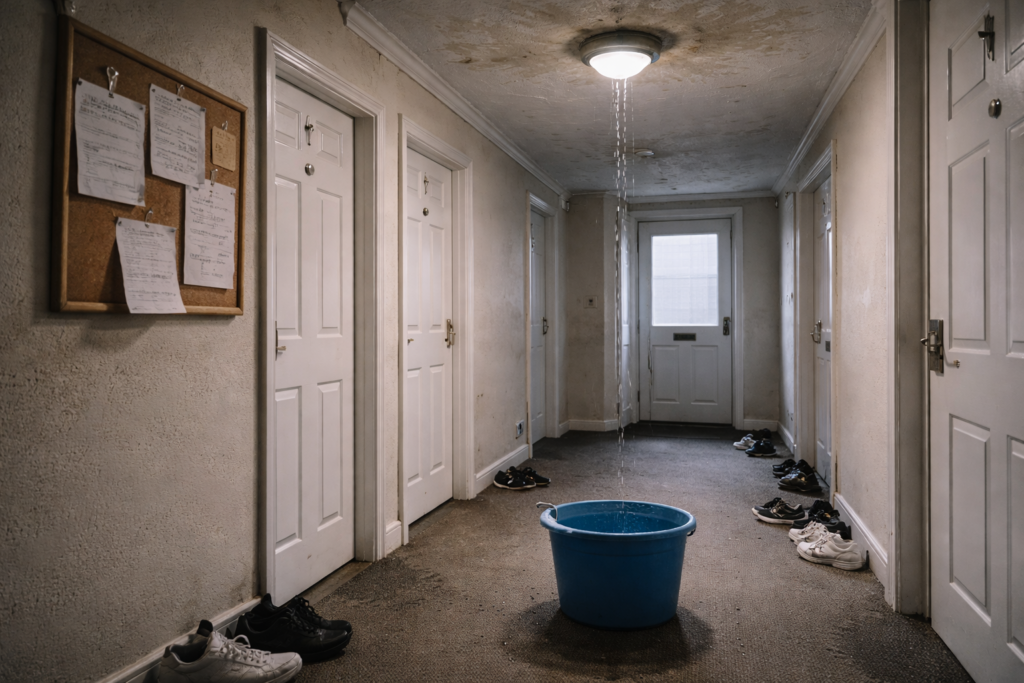
Report the repair in writing to the landlord or managing agent today and ask for a dated plan for inspection and works. If nothing is done, the problem usually gets worse and the cost and disruption tend to rise, especially with leaks, heating faults, or unsafe electrics. Keep paying rent as normal and focus on creating a clear paper trail that shows the issue, the impact, and the time passed. If the property is shared, make sure the report is made in a way that cannot be dismissed as “not the tenant’s responsibility”.
Most shared-home repair disputes in the UK are resolved once the right person is identified and the request is framed as a safety and habitability issue rather than a disagreement between housemates.
What the problem is
In UK shared housing, repairs often fall into a grey area where tenants, landlords, and sometimes managing agents each assume someone else will deal with it. This shows up most often in HMOs and joint tenancies, but it also happens in informal flatshares where one person is named on the tenancy and others pay them. The issue tends to surface after an initial message has been sent and a few days pass with no inspection booked, or after a partial response such as “tell your housemate to sort it” or “that’s wear and tear”.
It affects people when something breaks in a communal area (kitchen, hallway, boiler cupboard), when a leak spreads between rooms, or when a fault sits on the boundary between “tenant damage” and “building responsibility”. It also appears after a deadline has been missed, such as a promised visit that never happens, or when a contractor attends but no follow-up work is authorised. In shared homes, the practical problem is less about who caused the issue and more about who has the power to instruct repairs and pay for them.
Why this happens
Shared properties create split incentives: tenants want a quick fix, while landlords and agents want to avoid unnecessary cost and avoid accepting responsibility for something that might be chargeable to tenants. Common causes include unclear tenancy wording, multiple points of contact, and repairs that sit between the flat and the wider building (for example, communal plumbing stacks, shared drains, or entry systems). Another frequent cause is that the landlord is waiting for “proof” that the issue is not caused by misuse, especially for blockages, broken appliances, and damp.
Business behaviour is fairly consistent: the first response often tries to narrow the issue to a single room or person, or to push it back as “tenant to arrange”. Where there is a managing agent, the agent may say the landlord must approve spending, while the landlord says the agent should handle it day to day. A typical organisational response pattern is that messages are acknowledged quickly but decisions are delayed until a firmer deadline or escalation appears.
Delays also happen because access is harder in shared homes. If the landlord believes entry will be refused, or that keys are held by different people, the repair gets deprioritised. When several tenants report the same issue separately, it can create contradictory accounts that slow things down, especially if one person downplays the severity or frames it as a housemate dispute.
Your rights in practice
In UK cases, the strongest practical position comes from treating repairs as a property condition issue that the landlord must address, not as a negotiation between housemates. The landlord (or their agent) is normally the party who can instruct contractors for the structure, installations, and safety-critical items, and they cannot rely on the fact the home is shared to avoid action. What usually works is a single, clear report that identifies the problem, the location, the impact, and reasonable access times, followed by a written chase if there is no booking.
For joint tenancies, any tenant can usually report repairs, but it helps if one person is nominated to handle access and updates so the landlord cannot claim confusion. For HMOs, landlords are typically more responsive when the report is framed around hazards (no heating, water leaks, electrical safety, fire doors) and when tenants show they are cooperating on access. If the landlord suggests tenants should pay first and claim back, that is a strategy change point: it can remove leverage and make it harder to recover money later unless there is clear written agreement.
Rent withholding is rarely the move that gets a repair done quickly in the UK; it more often triggers arrears pressure and distracts from the repair itself. A better leverage point is a dated record showing the landlord was told, the issue persisted, and access was offered. Where the repair is urgent, the practical aim is to force a decision: either a booked repair, or a clear refusal that can be escalated.
Official basis to use
The most practical official route for unresolved repairs in a shared property is the local council’s private renting enforcement through Environmental Health (often accessed via “housing standards” or “private sector housing”). In practice, the council can assess hazards and, where needed, require the landlord to carry out works; the key is providing a clear timeline and evidence that the landlord was notified and had a chance to act. This route is particularly effective for issues affecting health and safety, such as persistent damp and mould, lack of heating or hot water, unsafe electrics, or serious leaks.
Use the council contact details found via GOV.UK guidance and select the housing or environmental health option for private rented homes. Expect the council to ask what was reported, when it was reported, what response was received, and whether access can be arranged for an inspection. Councils vary in speed, but they tend to prioritise hazards and repeat reports where the landlord has not engaged.
Evidence that matters
Evidence is less about proving blame between housemates and more about proving notice, impact, and persistence. Collect items that show the issue clearly, show that the landlord or agent received the report, and show that reasonable access was offered. Where the problem is intermittent (boiler cutting out, electrics tripping), a dated log is often more persuasive than a single message.
What not to do is create a confusing thread with multiple versions of events. Keep one main channel (email is best) and attach supporting photos and short clips. If the landlord claims the issue is caused by tenant behaviour, evidence that the problem exists in communal areas or affects multiple rooms can help keep the focus on repair rather than blame.
Useful proof
- Photos or short videos showing the fault and any spread (leaks, damp patches, broken fixtures).
- Copies of all reports to the landlord/agent with dates and any reference numbers.
- A simple timeline of what happened and when access was offered.
- Any contractor notes from visits, even if no work was completed.
Common mistakes
Three common mistakes are sending only WhatsApp messages with no clear address or date, agreeing to pay for a repair without written confirmation of reimbursement, and letting different housemates send conflicting descriptions that make the issue sound minor. One thing not to do yet is instruct a private contractor for non-urgent work and then try to deduct the cost from rent without a clear written agreement.
Steps to take now
Send one report
Send a single written repair report to the landlord or managing agent using their official repairs or complaints process, not an informal chat thread. Include the property address, the exact location (for example “kitchen ceiling above hob”), what is happening, when it started, and two or three time windows for access. Ask for a dated plan: inspection date, contractor booking, and expected completion window.
Chase with deadline
If there is no booking or clear decision, send a follow-up after a short, reasonable period and set a deadline for a response. Keep it calm and factual: the issue, the dates already reported, and the impact (for example loss of heating, water ingress, safety concern). If the landlord starts talking about arrears or unrelated charges at the same time, treat it as a separate track; where pressure letters appear, it can help to compare the tone and timing with Small debt threatening letters explained so the repair issue does not get derailed.
Prepare escalation
If the repair affects safety or basic facilities and the landlord still does not act, prepare to escalate to the council route described above. Before doing so, gather the evidence list and confirm that at least one tenant can provide access for inspection. If the landlord claims the account is “on hold” because of a payment issue, keep the repair report separate and continue to request an inspection date; if a bank restriction is being used as the reason rent cannot be paid, that is a different problem that needs its own steps.
Use official channels
Where the landlord or agent has an online portal or repairs form, use that official route as well as email, and keep screenshots of submission confirmations. Prepare this information before submitting: tenancy start date, landlord/agent contact details, a short timeline, and the best access contact. The normal response timeframe for an initial acknowledgement is within a few working days, with urgent hazards handled faster and non-urgent items taking longer depending on contractor availability.
Escalate if silent
If there is no meaningful response by the deadline set in writing, escalate by contacting the council’s private renting or environmental health team and provide the evidence pack. Escalate in writing where possible, and include that access is available and that the landlord has been notified. One sentence that matches what is usually seen in UK cases: the issue is usually resolved once an inspection is booked and the landlord is given a clear compliance expectation.
Change approach
If the landlord offers a partial fix that does not address the cause (for example repeated sealant over an active leak), respond by accepting access for the visit but restating the continuing symptoms and asking what diagnostic step will be taken next. If the landlord insists the problem is “tenant damage” without inspection, ask what evidence they rely on and request an inspection anyway. If a housemate is blocking access, document the access offers made and consider whether the tenancy arrangement needs separate advice, because repairs cannot progress without entry.
FAQs and quick checks
Joint tenancy liability
Joint tenancy repair responsibility in shared housing usually sits with the landlord for the property condition, while tenants remain responsible for avoiding damage. A single tenant can normally report the repair, but consistent access arrangements help prevent delays.
HMO common areas
HMO communal area repairs in the UK are typically treated as higher priority because they affect multiple occupants and safety routes. Reports should name the exact location and confirm who can provide access.
Agent versus landlord
Managing agent versus landlord responsibility disputes often slow repairs because approval is bounced back and forth. Keep reporting through the agent’s official process while copying the landlord if contact details are available.
Paying for repairs
Paying for repairs upfront in a shared rental can backfire if reimbursement is not agreed in writing. Only consider it for genuine emergencies where safety is at risk and there is clear written confirmation of repayment.
Before you move on
Write down the date the repair was first reported, send one clean follow-up with a deadline, and line up access so an inspection cannot be refused on practical grounds. Shared homes often create time pressure because someone is pushed to accept a quick patch or pay upfront to keep the peace.
Get help with the next step
Contact UKFixGuide — If the landlord or agent is delaying repairs in a shared home, include the timeline, photos, and any promised dates so the next message is firm and usable for escalation.