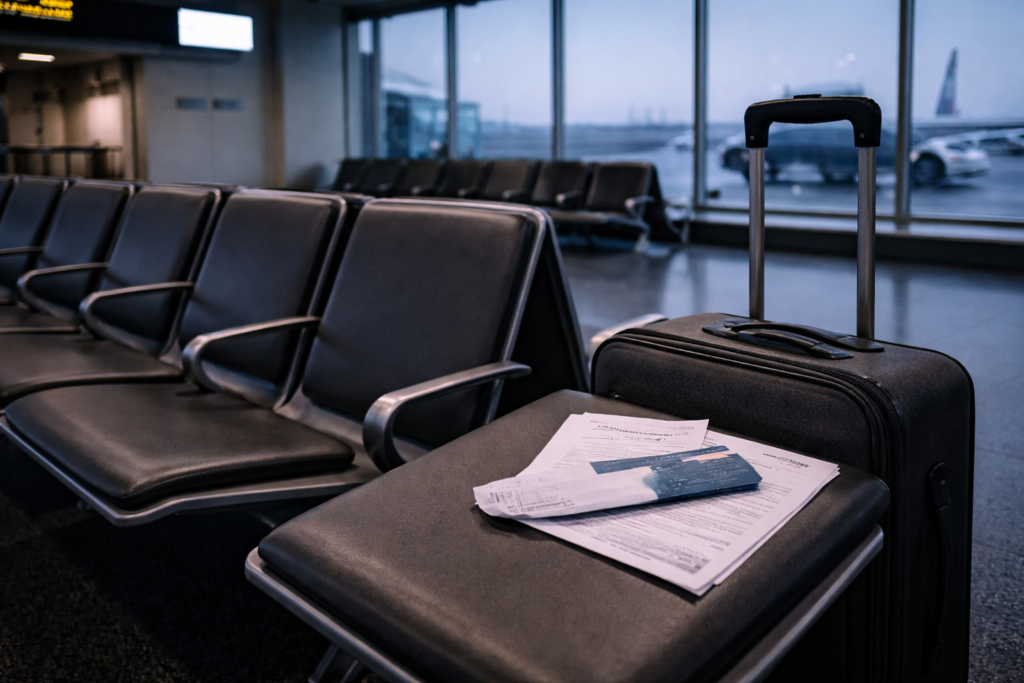
If an airline has agreed a refund but keeps delaying payment, this is usually a breach of its UK261 refund obligation and the next step is to send a final written deadline and escalate to the airline’s ADR scheme or the CAA if it still does not pay.
What’s happening
Spot the common pattern
In UK cases, “refund delayed” usually means one of three things: the airline has accepted the refund but is slow to process it; the airline is treating it as a voucher or “credit” unless challenged; or the airline is bouncing the request between the airline and the booking agent (online travel agent, package seller, or comparison site). The most common trigger is a cancelled flight, a significant schedule change, or a disruption where the passenger chose a refund rather than re-routing.
Typical outcomes seen in practice are that the airline gives a vague timescale (“up to 90 days”), asks for the same documents again, or claims the refund has been “sent” but nothing arrives. Another frequent issue is partial refunds (taxes only, or one leg only) or refunds sent to a closed card/account without telling the passenger, which then creates extra delay while the payment is traced.
Check who took the money
Delays are more likely when the booking was made through an agent. If the agent took payment and issued the ticket, the airline may insist the refund must go back to the agent, who then has to pass it on. That does not remove the underlying refund right, but it changes the practical route: chasing the wrong party can waste weeks.
Know what “delayed” looks like
Airlines often quote internal processing windows, but the key question is whether a refund is due at all and whether it has actually been paid back to the original payment method. A “refund approved” email is not the same as money received. Bank processing can add a few working days, but long gaps with no transaction usually mean the refund has not been issued, has failed, or has been issued to the wrong place.
What the law says (UK)
UK retained Regulation (EC) No 261/2004, Article 8 – right to reimbursement or re-routing applies where a flight is cancelled or the passenger is entitled to choose reimbursement, and reimbursement must be paid within 7 days (cash, electronic bank transfer, bank orders or cheques, or with the signed agreement of the passenger in travel vouchers); if the airline does not pay after being asked, the usual escalation is to the airline’s approved Alternative Dispute Resolution (ADR) body (if it is a member) or to complain to the CAA for enforcement support, while keeping evidence of the request and the airline’s responses. Source: Citizens Advice.
Steps to fix
Confirm the trigger event
Start by pinning down why the refund is due. The cleanest cases are airline-initiated cancellations or major changes where the passenger chose a refund. Keep the cancellation notice, the booking confirmation, and any “refund confirmed” message. If the airline is saying the flight operated, check the flight status and whether the ticket was marked “no-show” due to a schedule change or a missed connection caused by the airline.
Identify the correct payee
Look at the card statement or bank record for the original payment. If the merchant name is an online travel agent, the agent is usually the party that must pass the refund back, even if the airline authorises it. If the merchant name is the airline, chase the airline directly. Where a package holiday was bought, the package organiser may be responsible for refunding under package rules, but the immediate issue here is the airline refund delay: the fastest route is normally the party that took the payment.
Get the refund reference
Ask for a refund transaction reference (sometimes called an ARN for card refunds) and the date it was processed. Airlines often say “processed” without giving a traceable reference. If an ARN is provided, the card issuer can usually confirm whether a refund is in the system and where it went. If the airline refuses to provide any reference, treat that as a sign it may not have been issued.
Set a written deadline
Send a short, firm message (email or webform plus screenshot) stating: the flight details, booking reference, the date the refund was requested/accepted, that reimbursement is due under UK261 Article 8 within 7 days, and a clear deadline (for example, 14 days) to pay to the original payment method. Ask for confirmation of the payment date and the refund reference. Keep it factual and avoid long narratives; long messages tend to get templated replies.
Check for “voucher pressure”
If the airline offers a voucher “instead of” a refund, check whether a refund was already chosen or whether the airline is trying to treat the voucher as the default. Under the rules, vouchers require the passenger’s signed agreement. If a voucher was accepted by mistake, ask immediately whether it can be reversed and replaced with reimbursement, and keep a copy of the acceptance screen or email trail.
Use the right complaint route
Most UK-facing airlines have a formal complaints channel and, if they are members, an ADR scheme. Use the airline’s complaint form and keep the submission confirmation. If the airline is part of an ADR scheme, escalation is usually possible once the airline issues a “final response” or once a set time has passed without resolution (often around 8 weeks, depending on the scheme’s rules). If the airline is not in ADR, the CAA complaint route is still worth using for pressure and record-building, even though it does not act as a personal claims handler.
Consider payment recovery options
If the airline or agent continues to delay, check whether a card dispute route is available. A chargeback can sometimes work for non-delivery or cancelled services, and Section 75 may apply for credit card purchases within the qualifying price range where there is a breach of contract. For a clear comparison of the two routes, see Chargeback vs Section 75. If the company is refusing outright rather than delaying, the steps in Refund refused by company can help structure the complaint and evidence.
Keep a clean evidence pack
In UK disputes, the cases that resolve quickest are the ones with a tidy timeline. Save: booking confirmation, cancellation notice, refund request date, any refund approval email, screenshots of chat/webforms, and bank statements showing no refund received. If an agent is involved, keep the agent’s terms page and any message saying the airline must refund the agent first.
Chase the bank only after proof
Banks can help trace a refund only if there is a transaction reference or clear evidence a refund was processed. Without that, the bank will usually direct the customer back to the merchant. If an ARN exists, provide it to the card issuer and ask them to confirm whether it has posted, is pending, or was rejected.
What NOT to do
Don’t accept vague timelines
“Up to 90 days” is a common script. If the airline has accepted the refund, ask for the processed date and a traceable reference, then set a written deadline. Open-ended waiting often leads to the case dropping out of the airline’s queue.
Don’t switch channels repeatedly
Starting fresh on chat, social media, email, and phone can create multiple case IDs and conflicting notes. Pick one written channel that produces a reference number and keep replying in the same thread so the history stays attached.
Don’t agree to a voucher casually
Voucher acceptance can be treated as settlement. If a voucher is genuinely wanted, confirm expiry, transferability, and whether cash refund rights are being waived. If cash is the goal, do not click “accept” to stop the chasing.
Don’t miss card scheme time limits
Chargeback windows can be tight and vary by card scheme and circumstances. Waiting months because the airline keeps promising “next week” can remove a useful fallback option.
Don’t rely on phone-only promises
Phone agents often cannot trigger finance actions and may give optimistic timescales. If a call is necessary, follow up immediately in writing: date/time, agent name (if given), and what was promised.
What happens if it’s ignored
Delays tend to harden
When a refund delay is left alone, it often becomes harder to unwind because records age out, staff change, and the airline’s internal case notes become the only “truth” they rely on. If the refund was sent to a closed account, the money may bounce back, but that can take weeks and may not be automatically reissued without prompting.
Evidence gets weaker
Airlines and agents frequently change website wording, remove chat transcripts, or limit access to old booking pages. If screenshots and emails are not saved early, later complaints can turn into a “he said, she said” argument about what was offered and what was accepted.
Alternative routes may expire
Card dispute options can become unavailable with time. Even where a legal claim remains possible, losing the easy payment route can mean more admin, longer waits, and a higher chance of settling for less than the full amount.
Travel plans get disrupted again
Refund delays often overlap with rebooking. People end up paying twice (new flights plus the missing refund), which increases the pressure to accept vouchers or partial refunds just to close the issue.
When to escalate
Escalate after a clear breach
Escalation is usually justified when: the airline has cancelled or materially changed the flight, a refund was requested, and more than a short banking window has passed without payment; or the airline claims it has paid but cannot provide a traceable reference; or the airline is insisting on a voucher without explicit agreement.
Push for a final response
Ask the airline to treat the complaint as formal and to issue its final response. This matters because ADR schemes often require either a final response or a waiting period before they will accept a case. Keep the request short and written.
Use ADR where available
If the airline is a member of an ADR scheme, submit the evidence pack and a simple remedy request: reimbursement to the original payment method, with the amount and the date it became due. ADR decisions are usually based on documents, so clarity and timestamps matter more than long explanations.
Complain to the CAA
The CAA can record the issue and may take enforcement action where there is a pattern, even if it does not chase individual refunds in the way an ADR body might. A CAA complaint also helps show that reasonable steps were taken before considering court.
Consider small claims
If ADR is not available or fails, a money claim can be the next step for a straightforward unpaid refund. The strongest cases are those with a clear cancellation notice, a clear refund request, and a clean bank record showing no reimbursement received. Before going down this route, it is usually sensible to send a final letter/email giving a last deadline and stating that court action will be considered if payment is not made.
FAQ
How long can an airline take?
Where UK261 Article 8 applies, reimbursement is due within 7 days; in practice, banks can add a few working days, but long delays without a traceable refund reference are not normal.
What if the airline says the…
Chase the party that took the payment for the money-back, but also ask the airline for written confirmation that a refund has been authorised and whether it has been sent to the agent, including the date and any reference.
What if the refund went to…
Ask the airline for the ARN/transaction reference and processed date, then ask the card issuer to trace it; closed accounts often redirect refunds, but it can take time and sometimes needs manual intervention.
Can a voucher be forced instead?
No, a voucher should only replace cash reimbursement if the passenger agrees; if a voucher was accepted by mistake, challenge it quickly and keep evidence of the acceptance screen and any wording used.
Does compensation for delay affect the…
Refund rights and compensation are separate issues; a refund is about the ticket price when reimbursement is chosen, while compensation depends on the disruption circumstances and eligibility.
Before you move on
Save a single timeline (dates, screenshots, bank proof) and send one final written deadline asking for the refund reference, because being pushed to accept a voucher “today” or told there is no time is a common pressure tactic when cash refunds are overdue.
Get help with the next step
If the airline or agent is still delaying, send the key documents and dates through https://ukfixguide.com/contact/ to get help choosing the fastest escalation route.



2 thoughts on “Airline refund delayed”