Parking fine in the post
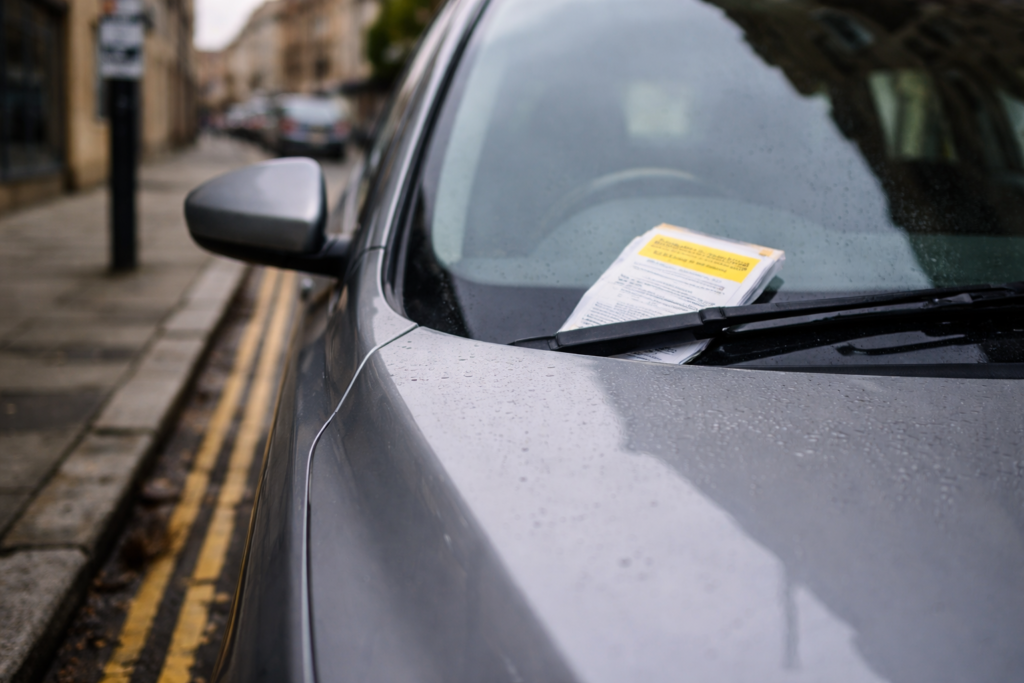
A council parking fine (usually a Penalty Charge Notice, or PCN) often lands days after the event, with two photos, a location, and a demand to pay within 14 days for a discount. In UK households it tends to show up after a quick stop near a school, a hospital visit, loading outside a shop, or parking on a street that looks unrestricted until the small print on the sign is read properly. The common pattern is confusion about what was actually contravened: the bay markings look faded, the sign is turned, the time plate is higher than expected, or the vehicle was only there briefly.
Another typical scenario is a PCN issued by CCTV for bus lanes, box junctions, or “no stopping” zones. Those notices can feel more final because there was no ticket on the windscreen, but the same basics apply: check the paperwork, check the evidence, and challenge within the right time window.
First checks that matter
Confirm who issued it
Look for the council name and the payment portal. Council PCNs are enforced under civil rules. Private parking tickets (from supermarkets, retail parks, or residential management companies) are a different process and wording will usually mention “Parking Charge Notice” and a private operator. If the letter talks about “Notice to Owner” or “Charge Certificate”, it is almost certainly council enforcement.
Check the dates
Note the “date of notice”, the alleged contravention date, and the deadline for the discounted amount. Councils commonly re-offer the discount if an informal challenge is sent within the discount period, but it is not guaranteed. Missing deadlines is what usually turns a manageable dispute into a higher charge.
Read the contravention code
The code and description (for example, parking in a residents’ bay without a permit, overstaying in a pay-and-display bay, or stopping on a restricted bus stop) determines what evidence is relevant. A challenge that addresses the wrong issue tends to be rejected quickly.
Open the evidence pack
Use the council’s online portal to view all photos and any CCTV clip. Save copies. Many successful challenges rely on a missing sign photo, unclear bay markings, or images that do not show the vehicle in contravention for the stated time.
Likely causes in UK cases
Misread signs and plates
The most common cause is signage that is technically present but easy to misread: shared-use bays with different rules by time of day, event-day restrictions, or a time plate positioned away from the bay. Where a restriction changes at 6.30pm or during school hours, drivers often assume the rule is the same as nearby streets.
Faded lines and unclear bays
Another frequent issue is worn bay markings, missing end lines, or double yellow lines that are broken up by resurfacing. Councils often still enforce, but unclear markings can support an argument that the restriction was not adequately conveyed.
Payment and registration errors
Pay-by-phone mistakes are common: a wrong digit in the registration, paying for the wrong location code, or starting the session a few minutes late due to poor signal. Councils vary in how they treat “minor keying errors”, so evidence of payment is crucial.
Loading and exemptions misunderstood
Loading is allowed in some places and not in others. A quick drop-off is not the same as loading. Where loading is permitted, councils usually expect continuous activity and evidence such as delivery notes, receipts with times, or witness statements.
Permit and visitor issues
Residents’ permits expiring, visitor permits not activated properly, or a new vehicle registration not updated are common triggers. The usual outcome depends on whether proof exists that a valid permit should have covered the vehicle at the time.
Step-by-step challenge process
Gather proof early
Collect screenshots of any payment, bank transactions, pay-by-phone confirmations, and the council’s photo set. If signage or lines are in question, take fresh photos from a driver’s viewpoint, including distance shots showing how the bay is approached, plus close-ups of the time plate and road markings. If the PCN was issued by CCTV, note whether the video actually shows the full alleged period rather than a single still.
Revisit the location
Check whether the sign nearest the vehicle position matches the restriction on the PCN. In many UK streets there are multiple bays with different rules. Photograph the nearest sign and the next sign along. If a sign is twisted, obscured by foliage, or placed behind a parked van, capture that clearly.
Match evidence to the code
Write down what the council must prove for that contravention. For example, for a residents’ bay PCN, the council needs clear bay markings and a sign stating permit requirements. For a pay-and-display overstay, the council needs evidence of the paid time and the observed time. For a “stopped on a restricted bus stop” contravention, the council needs the marked stop clearway and signage.
Send an informal challenge
If the PCN was on the windscreen, an informal challenge is usually made before a Notice to Owner is issued. Keep it short, factual, and tied to evidence: what happened, why the restriction was unclear or why an exemption applied, and what proof is attached. Ask for the discount to be held or re-offered if the council rejects. Save the submission confirmation and a copy of what was sent.
Wait for the next notice
If the council rejects an informal challenge, the next stage is normally a Notice to Owner sent to the registered keeper. That document is where formal representations are made. Many households miss this because the vehicle logbook address is outdated, so checking the V5C details is a practical step if post is unreliable.
Make formal representations
Formal representations should be structured: identify the PCN number, state the ground (for example, contravention did not occur, procedural impropriety, or the vehicle was taken without consent), then list evidence in numbered points. If the issue is unclear signage, include photos and explain the approach route. If the issue is payment, attach proof and explain any keying error.
Appeal to the tribunal
If rejected again, the council should provide appeal details for an independent tribunal (London Tribunals for London, or the Traffic Penalty Tribunal elsewhere). Appeals are usually decided on papers or by a short hearing. The typical winning cases are those with clear documentary proof: missing or contradictory signage, council evidence that does not show the contravention, or procedural errors in notices.
Common reasons challenges succeed
Show unclear restriction
Success often comes from demonstrating that a driver could not reasonably understand the restriction: a missing time plate, a bay sign facing away, or lines so worn they do not define a bay. Photos from the approach angle usually carry more weight than close-ups alone.
Prove payment or permit
Where payment was made, a receipt or app confirmation with the correct location and near-correct registration can be persuasive, especially if the council has a policy on minor errors. For permits, evidence that the permit was valid and linked to the vehicle at the time is key.
Spot paperwork errors
Procedural issues do happen: wrong dates, missing mandatory wording, or failing to consider representations properly. These are less common than signage disputes but can be decisive when present.
What happens if ignored
Lose the discount
The usual first consequence is the discount period expiring, leaving the full charge payable. If nothing is done, a Charge Certificate can increase the amount, and later stages can add court registration fees.
Face enforcement action
Continued non-payment can lead to enforcement agents (bailiffs). At that stage, the focus shifts from arguing the contravention to dealing with enforcement procedure and costs. Many households only engage once the amount has escalated, when options are narrower.
When to escalate properly
Escalate after rejection
Escalation usually makes sense when the rejection letter fails to address key evidence, the council’s photos do not show the restriction clearly, or there is strong proof of payment/permit. If the council’s response is generic, a tribunal appeal often gets a more careful review.
Prepare a clean bundle
Evidence that helps most: dated photos of signs and lines, screenshots of payment, copies of permits, delivery notes for loading, hospital appointment letters (where relevant), and a timeline of events. Keep filenames clear and reference them in the text.
Check related admin issues
If the notice arrived late due to a move, address updates and liability can complicate matters. For council billing issues after a move, the pattern is similar: dates, proof, and prompt contact. See Council tax bill wrong after moving for the same evidence-first approach that often prevents escalation.
FAQ
Can the discount be kept?
Many councils re-offer the discount if an informal challenge is made within the discount window, but it is discretionary. The safest approach is to challenge quickly and keep proof of submission.
What if the sign was there?
A sign existing is not always enough. If it was not reasonably visible from the bay or approach route, photos showing sightlines, height, angle, and obstructions can support a challenge.
Does a quick stop count?
For “no stopping” restrictions (bus stops, red routes, school keep clear with specific rules), even brief stopping can be enforced. For yellow lines, brief stopping may be allowed for boarding/alighting or loading where permitted, but evidence is usually needed.
What if the registration was typed…
Some councils cancel for minor keying errors if payment can be matched. Provide the receipt, the intended registration, and explain the error clearly.
Can someone else appeal?
The registered keeper is normally responsible, but representations can be made on the keeper’s behalf if authorised. Keep written permission and ensure the keeper’s details are used on forms.
Before you move on
Pull together a single folder with the PCN, all council photos/video, fresh location photos, and any payment or permit proof, then send the challenge while the discount window is still open. If you felt pushed to act quickly or told there was no time, that’s often a sign the process wasn’t handled properly.
Get help with the next step
If the deadlines are close or the council response looks generic, use the evidence above to draft a clear challenge and get it checked at https://ukfixguide.com/contact/.