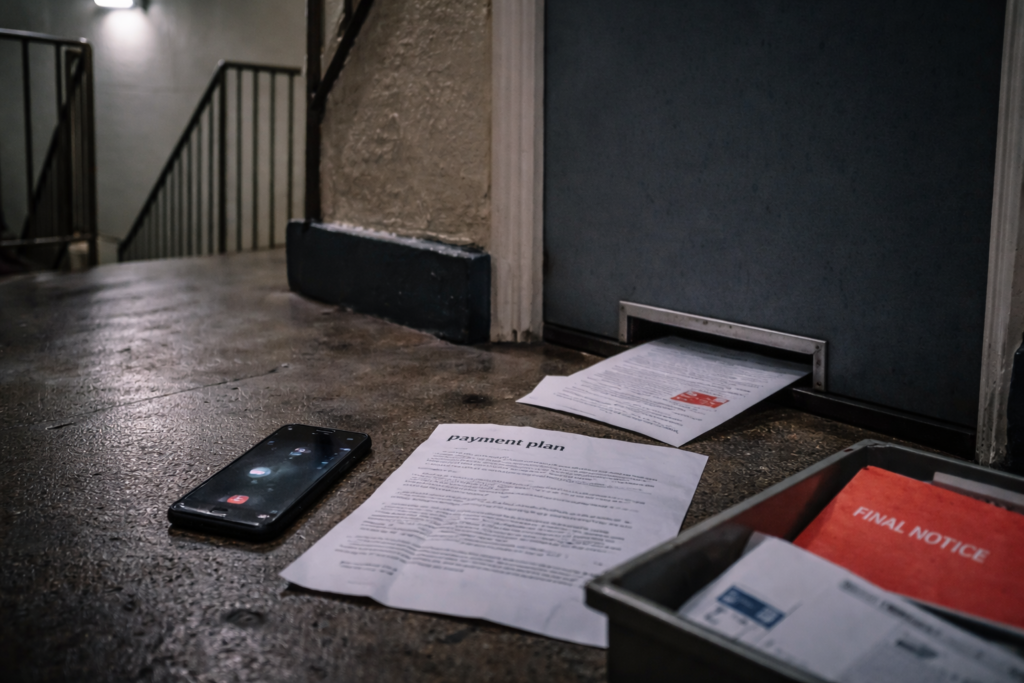
Payment plan breaks down
A broken payment plan usually shows up the same way across UK households: a direct debit fails, a card payment bounces, or a “promise to pay” date is missed after a call. Within days, a text or email arrives saying the plan has ended, the account is “in arrears”, or the full balance is now due. For energy, broadband, mobile, council tax, catalogue credit, or a loan, the next step is often a late fee, a default notice, or the account being passed to a collections team.
Common patterns include payments failing after a bank switch, a new card number, a payday shift, or a temporary drop in income. Another frequent UK scenario is a plan agreed over the phone that never gets confirmed in writing, so the first missed payment triggers automated letters that do not match what was discussed.
What it looks like day-to-day
Spot the early signs
Most people notice one of these first: a “payment declined” message, a direct debit marked “unpaid” in online banking, or a letter saying “your arrangement has been cancelled”. Some firms send a “notice of sums in arrears” (credit agreements) or a “default notice” giving a deadline to catch up. Utilities may warn about a prepayment meter or disconnection steps, although disconnection is uncommon for domestic customers and tends to follow a longer process.
Expect mixed messages
It is common to receive conflicting communications: an agent says the plan is still active, but the system generates arrears letters; or the app shows one figure while the letter shows another. This usually happens when a payment is pending, reversed, or allocated to the wrong account reference.
Likely causes in UK cases
Check payment method changes
The most common cause is a payment method issue rather than refusal to pay: expired card, new card after fraud, bank switch, insufficient funds at the time the direct debit was collected, or a standing order sent to an old sort code/account number.
Confirm dates and amounts
Plans often fail because the first payment date was misunderstood (for example, “end of month” vs a specific date), or because the amount was set too low to satisfy the creditor’s minimum. Some lenders and telecoms providers require a minimum monthly amount; if it is not met, the plan can auto-cancel.
Look for admin errors
Allocation errors are common: payments go to a different account, a closed account, or are held as “unidentified” because the reference was missing. Another frequent issue is a plan being set up on one system (collections) while billing continues on another, so the account still shows as overdue.
Watch for fees and interest
Even when payments are made, late fees, interest, or missed-instalment charges can push the balance above what the plan covers. The plan then appears “broken” because the arrears never reduce.
Step-by-step fixes that work
Gather the key facts
Before contacting anyone, pull together: the plan start date, agreed amount, payment dates, the last successful payment, and any reference numbers. Download bank evidence showing failed or successful payments (screenshots are fine). Keep copies of texts, emails, letters, and chat transcripts.
Check the payment trail
In online banking, confirm whether the payment actually left the account and whether it was returned. For direct debits, look for “unpaid” or “reversed” entries. For standing orders, confirm the payee details and reference. If a card payment failed, check whether the merchant attempted multiple times (sometimes shown as pending then dropped).
Contact the right team
Ask to speak to the team that manages arrangements (often “collections”, “arrears”, or “financial support”), not general customer service. Provide the date the plan was agreed and the exact terms. Request that the account notes are read back to confirm what is recorded.
Ask for a temporary hold
Where the plan has broken due to a technical or timing issue, request a short hold on enforcement and fees while the payment method is corrected. Many UK firms can place a 7–14 day hold, especially if evidence shows an attempted payment or a bank error.
Reset the plan in writing
Ask for the new arrangement to be confirmed by email or letter, including: amount, dates, duration, what happens if a payment is late, and whether fees/interest continue. If the firm will not confirm in writing, follow up with an email summarising what was agreed and keep a copy.
Fix the payment method properly
If direct debit failed due to funds, consider moving the date to 1–3 working days after income usually clears. If a bank switch caused issues, set up a new direct debit rather than relying on old mandates. For standing orders, update payee details and reference; many misallocations come from missing references.
Challenge incorrect charges
If the plan broke because of charges that should not apply (for example, a fee added during a promised hold), ask for a breakdown of the balance and a list of fees/interest since the plan started. Request removal of charges caused by their error or by a payment allocation mistake.
Escalate a complaint when needed
If the firm refuses to reinstate the plan despite evidence, raise a formal complaint and ask for a written final response. Complaints often get a clearer review of call recordings, account notes, and whether the plan was set up correctly. If the issue is a purchase or service dispute driving non-payment, the steps in Refund refused by company can help organise evidence and timelines before negotiating payments.
Consequences if it is ignored
Expect faster escalation
Once a plan is marked broken, automated processes tend to accelerate. Typical outcomes include late fees, interest, a default notice (credit), service restriction (telecoms), or referral to a debt collection agency. For council tax, missing an arrangement can lead to the right to pay by instalments being withdrawn, with the full year’s balance demanded, followed by summons costs if it continues.
Watch credit file impacts
For credit agreements and some telecoms accounts, missed payments can be reported to credit reference agencies. A default marker can make future borrowing, mobile contracts, and some tenancy checks harder. Even where a plan is later reinstated, the missed payment history may remain unless the firm agrees it was an error.
Prepare for enforcement steps
Debt collectors may contact by letter, phone, and email. In many UK cases, the first collector is still acting for the original firm rather than owning the debt. If the matter progresses to court (more common for credit and council tax), evidence of attempted payments and earlier agreements becomes important.
When to escalate and what helps
Escalate at warning letters
Escalation is sensible when any of these arrive: default notice, notice of arrears, “final demand”, notice of intended legal action, or a letter saying the account will be passed to a third party. Do not wait for the deadline to pass; firms are more likely to pause action when contacted early with clear evidence.
Build a simple evidence pack
Useful evidence usually includes: bank screenshots showing attempted/returned payments; the original plan confirmation (or a timeline of calls); copies of letters; and a short budget summary showing what is affordable. If the plan was agreed by phone, ask for the call recording or transcript; if they will not provide it, ask them to review it as part of the complaint.
Use clear wording
Ask direct questions that tend to get practical answers: “What payment did the system expect on what date?” “Which reference is the payment allocated to?” “What fees were added and why?” “Can enforcement be paused while the payment method is corrected?”
FAQ
Can a company cancel a plan…
Often yes, especially if the plan terms say it ends after a missed payment. In practice, many firms will reinstate if contacted quickly and the miss was a banking or timing issue.
Should the full balance become due?
Some agreements allow the creditor to demand the full balance after a broken arrangement, but many will still accept a new plan. For council tax, losing instalments can make the full year payable, so acting fast matters.
Will a debt collector add extra…
For many consumer debts, collectors cannot add arbitrary fees unless the contract allows it. Ask for a written breakdown of any added costs and who applied them.
Can payments be taken twice after…
It happens when an old direct debit mandate is still active or when a “catch-up” payment is taken alongside the new schedule. Confirm the first collection date and cancel any duplicate mandates with the bank if needed.
What if the plan failed because…
Raise the billing dispute and ask for a hold on enforcement while it is investigated. Keep paying what is genuinely affordable if possible, and keep proof of dispute communications.
Before you move on
Write down the exact amount that can be paid each month, then contact the arrears/collections team with a screenshot of the last payment attempt and ask for a 14-day hold while a written plan is reissued. If you felt pushed to accept a payment date or amount immediately, that’s often a sign the arrangement was set without proper affordability checks.
Get help with the next step
If the plan has been cancelled, fees are rising, or enforcement letters have started, use the contact form to share the timeline and any evidence so the next message or complaint is properly structured: https://ukfixguide.com/contact/.





1 thought on “Payment plan broken — consequences”