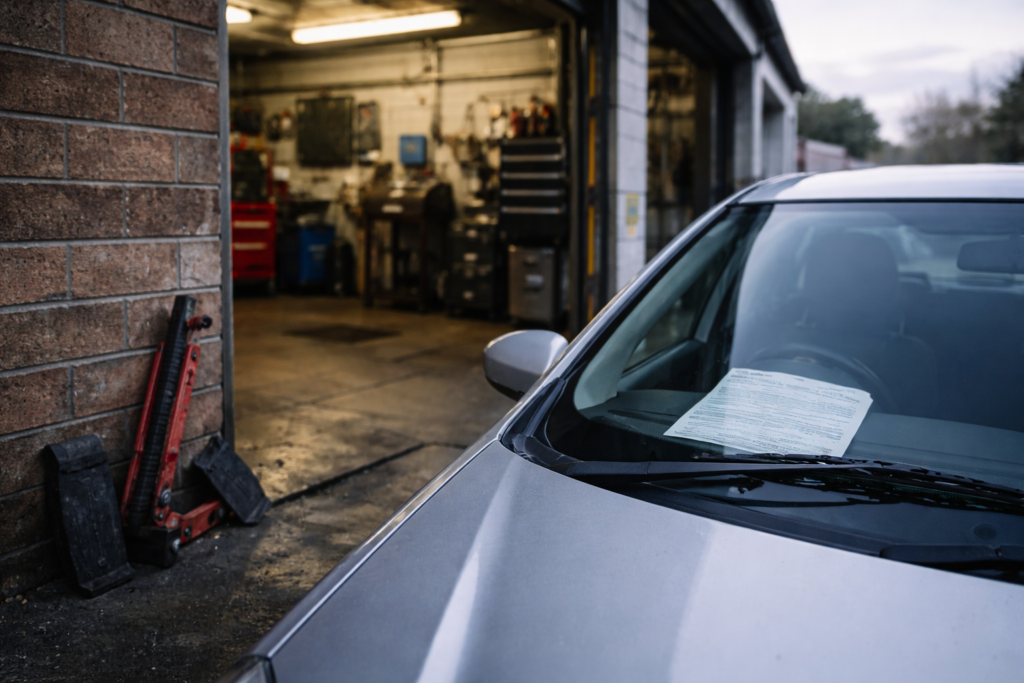
A disputed MOT usually starts with a car that has either failed on something that seems minor, or passed and then shows a serious problem within days. Common UK patterns include a fail on tyres, brakes, suspension, lights, emissions, or corrosion, followed by a quote that feels out of proportion. Another common scenario is a pass certificate, then a garage later says the car is dangerous and “should never have passed”.
In day-to-day UK households this tends to show up as: a car needed for commuting or school runs suddenly off the road; a retest deadline approaching; pressure to authorise repairs quickly; and confusion about what can be challenged versus what is simply wear and tear. Many disputes are less about whether a part is worn, and more about whether the test was carried out correctly, whether the defect is genuinely present, and whether the wording on the certificate matches what is visible on the vehicle.
First checks that save time
Confirm the certificate
Check the MOT result online and compare it to the printed sheet. Look for the exact defect wording, the category (dangerous, major, minor, advisory), and the mileage recorded. The online record is often what later decision-makers rely on, so any mismatch matters.
Note the retest window
If the vehicle failed, the retest rules depend on whether it stays at the same test station and whether it is returned within 10 working days. A dispute can run alongside a retest, but leaving it too long can remove the practical benefit of a partial retest fee.
Stop further changes
A dispute is harder once parts have been replaced or corrosion has been welded, because the original condition cannot be examined. If the car is safe to keep parked, avoid repairs until evidence is gathered. If it is unsafe, record everything before any work starts.
Likely causes in UK cases
Misread test criteria
Many arguments come from misunderstanding what the MOT actually checks. For example, an advisory for brake discs can be legitimate even if braking feels fine, and a fail for a tyre can be based on sidewall damage rather than tread depth. Disputes succeed more often where the defect is clearly outside the criteria, rather than where the part is simply worn.
Rushed inspection
Busy periods and short booking slots can lead to missed context: a headlamp aim not set after a bulb change, a loose undertray affecting emissions readings, or a tester not seeing a recent repair. This is not always misconduct; it is often a process issue that shows up as inconsistent results between stations.
Equipment or setup issues
Emissions failures sometimes trace back to a cold engine, incorrect fuel type, or a car that has only done short trips. Brake roller readings can be affected by tyre pressures or a sticking caliper that frees off later. These cases often look suspicious to drivers because the car “drives normally”, but the test is measuring specific thresholds.
Corrosion judgement calls
Structural corrosion is one of the most disputed areas because it involves judgement about location and severity. A fail can be correct even when rust looks small, if it is within a prescribed area near suspension, seatbelt mounts, or steering components. Successful challenges usually rely on clear photos showing the area is not within the prescribed zone, or that the tester’s notes do not match the location.
Conflict of interest concerns
Where the same business tests and offers repairs, suspicion can arise if a long list of defects is followed by an immediate sales pitch. That alone does not prove anything, but it does mean evidence and a calm paper trail matter.
Step-by-step next actions
Collect clear evidence
Take dated photos and short videos of the alleged defect from multiple angles, including wider shots showing where on the car it is. For tyres, include the full sidewall and tread; for lights, record them operating; for corrosion, include a ruler or coin for scale and show nearby mounting points. Keep the fail sheet and any estimate.
Ask for written clarification
Request a short written explanation from the test station: what was seen, where it was located, and what made it a fail rather than an advisory. Many disputes de-escalate here because the station either corrects an obvious admin error or explains the exact criterion used.
Get an independent view
Arrange an inspection at a different garage that does not have a stake in the original outcome. Ask for a written report with photos, not just a verbal opinion. If the car is unsafe to drive, use recovery; driving a vehicle with a dangerous defect can create separate problems if stopped or involved in an incident.
Decide the goal early
Common workable goals are: correction of an incorrect MOT record, a free or reduced-fee retest, a refund of the test fee, or acknowledgement of an error. A full compensation claim for consequential losses is usually harder unless there is strong evidence of negligence and clear financial proof.
Use the formal complaint route
If the station will not resolve it, use the official MOT complaint process promptly. The vehicle may need to be re-examined in its disputed condition, so avoid repairs unless safety requires it. Keep communication factual: dates, defect wording, photos, and the independent report.
Handle payment disputes carefully
If repairs were authorised based on the fail and later seem unnecessary, gather the authorisation record (texts, emails, signed job card) and the old parts if available. If a credit agreement is involved and the dispute affects affordability or credit files, the same evidence style helps. Related issues sometimes overlap with a Credit score damaged unfairly situation if missed payments follow an unexpected bill.
If it’s ignored
Lose the chance to prove it
Once repairs are done, the original condition is gone. Even if the fail was wrong, it becomes difficult to show what the tester saw (or did not see). The practical outcome is often that the dispute turns into a “word against word” complaint with limited remedy.
Pay more than needed
Drivers often end up paying for work that might have been avoided or priced more competitively. Another common outcome is paying twice: once for rushed repairs at the testing garage, then again later to fix the underlying issue that was missed.
Risk enforcement problems
Driving without a valid MOT can lead to penalties and can complicate insurance if there is an incident. Even with a valid MOT, knowingly driving with a dangerous defect can create separate liability. Where the dispute is about a pass that should have been a fail, continuing to drive without addressing the defect can increase safety risk and repair costs.
When to escalate
Escalate quickly for safety
If the alleged defect involves brakes, steering, tyres with sidewall damage, severe corrosion near mounts, or fuel leaks, treat it as a safety issue first and a dispute second. Arrange recovery and an independent inspection so the condition is documented without adding risk.
Escalate with strong proof
Escalation tends to work best when there is: a clear mismatch between defect wording and what is visible; a second written report contradicting the fail; or evidence of admin errors (wrong registration, mileage, or vehicle details). Keep a timeline: booking time, test completion time, conversations, and any pressure to approve repairs.
Prepare a clean evidence pack
A useful pack usually includes: MOT result printout, screenshots of the online record, photos/videos with dates, independent report, invoices/estimates, and a short statement of what outcome is being requested. If the dispute is also affecting finance or credit reporting, keep lender letters and payment history to hand; the same approach used in a Default notice dispute can help keep the paperwork organised.
FAQ
Can an MOT be “appealed”?
Yes, there is a formal complaint process for MOT testing standards, but it is time-sensitive and may require the vehicle to be inspected in the same condition as when tested.
Should repairs be authorised first?
Usually no, unless the car is unsafe and must be made roadworthy. Evidence is easier to rely on before anything is changed.
Does a second garage opinion settle…
It helps, especially if written with photos, but the formal process may still require an official re-examination.
What if the car passed but…
Stop using it if there are serious symptoms (pulling, grinding brakes, steering play). Get an independent inspection and keep the report; a pass does not guarantee the car is safe.
Can the test fee be refunded?
Refunds are possible where testing standards were not met, but outcomes vary and depend on evidence and the findings of any re-examination.
Will complaining affect future tests?
Most stations continue to test normally, but it is sensible to keep communication factual and use written channels so there is a clear record.
Before you move on
Write down the exact MOT defect wording, take dated photos/video today, and decide whether the car can safely stay off the road until an independent report is obtained. If you felt pushed to authorise repairs immediately or told there was no time, that often points to rushed decision-making rather than a clear, evidenced diagnosis.
Get help with the next step
If the dispute is stuck or the paperwork is messy, submit the key dates and documents for review via UKFixGuide contact so the next message or complaint is structured and evidence-led.