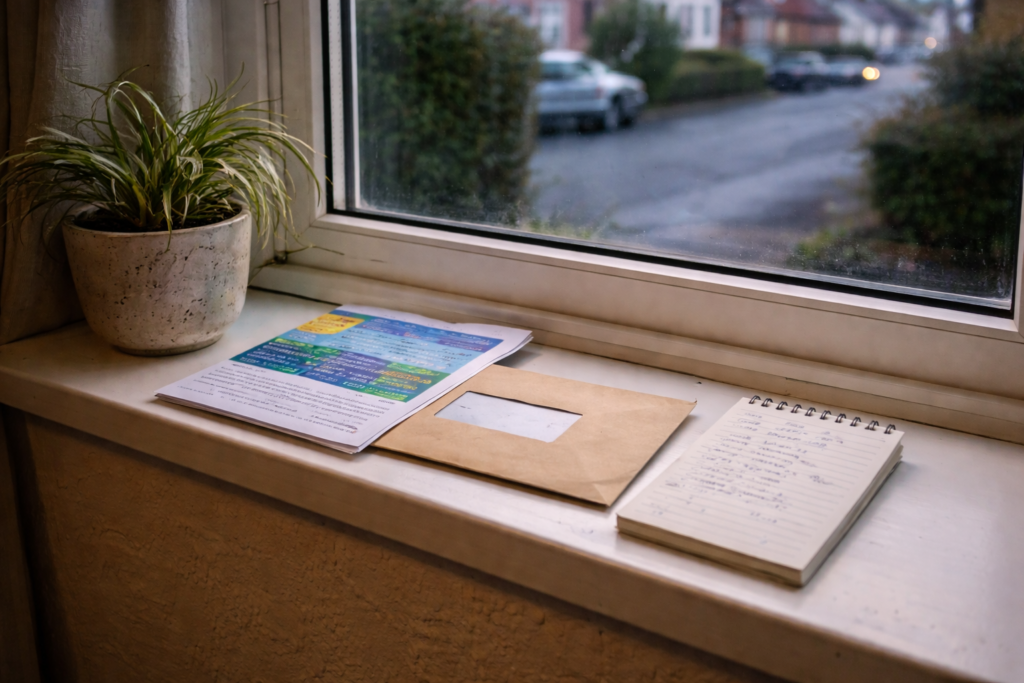
A council tax discount not being applied usually shows up as a bill that looks “normal” even though the household expects a reduction. Common examples in UK homes include a single adult living alone but still being charged the full amount, a student household receiving a demand notice, or a property that should be empty/under repair being billed as if occupied. Sometimes the discount was applied on a previous bill and then disappears after a change (moving in, someone moving out, a new tenancy, a benefits change, or a council system update).
Typical patterns seen on council paperwork include: the bill shows no discount line at all; the bill shows a discount but the instalments don’t reduce; a backdated bill removes the discount and creates arrears; or the online account shows “pending” for weeks while reminders continue. It is also common for people to assume the discount is automatic after reporting a change, but many councils treat it as an application that must be assessed and evidenced.
Most common reasons
Miss a change notification
The most frequent cause is that the council has not recorded a change of circumstances correctly. A move-in date, move-out date, or the number of adults in the property may be wrong on the account. This can happen after a tenancy change, a relationship breakdown, or when someone is away for work but still registered at the address.
Apply under the wrong name
Discounts are linked to the liable person(s). If the bill is in joint names, the council may not apply a single person discount. If the bill is in the wrong name (for example, the previous tenant, a deceased person, or a landlord), the council may refuse to process the discount until liability is corrected.
Fail to provide evidence
Many councils ask for proof and will not apply the discount until it is received. For students, this is usually a student status certificate. For severe mental impairment (SMI) discounts, it is medical certification plus qualifying benefits. For carers, it is evidence of caring hours and the cared-for person’s qualifying benefit. If evidence is missing, the account often sits in “full charge” status while the request is pending.
Confuse exemption and discount
Some situations are exemptions (no council tax) and some are discounts (reduction). A property occupied only by full-time students is usually exempt, but a mixed household may only get a discount depending on who counts as a “disregarded person”. If the council treats the case as a discount when it should be an exemption (or vice versa), the bill can look wrong.
Trigger a review or audit
Councils run periodic reviews and data-matching. Single person discounts are commonly reviewed. A letter or email may ask for confirmation of who lives there; if it is missed or returned late, the discount can be removed and backdated. This often leads to a sudden increase and a demand for payment over fewer instalments.
Banding or valuation issues
Sometimes the “discount not applied” complaint is actually a banding issue: the discount is correct, but the band is higher than expected. If the bill looks consistently high compared with similar homes, it may be worth checking banding separately using Council Tax Wrong Band — how to check and challenge.
Checks before contacting the council
Read the bill lines
Look for a line such as “Single person discount 25%” or “Student exemption”. If it is missing, note the billing period shown (start and end dates), and whether the bill is an annual bill, an adjustment, or a final bill. Adjustments can show confusing “credit then debit” lines even when the end result is correct.
Confirm who is liable
Check the names on the bill and the property address. If the bill is not in the correct name(s), the discount application may be blocked. If there are two liable adults on the account, a single person discount will not apply even if one person is away temporarily.
Check the occupancy dates
Write down the exact dates: when the household moved in, when someone moved out, and any periods the property was empty. Councils often apply changes from the date they are notified unless evidence supports backdating. Having dates ready prevents delays and reduces the risk of the council applying the wrong effective date.
Gather the right proof
Match evidence to the discount type. Common examples: student certificate (dated and showing course status), tenancy agreement and check-in date, proof of sole occupancy (for example, a council review form plus supporting documents), SMI forms, carer evidence, or proof that a person is disregarded. Keep copies of everything submitted.
Step-by-step fixes that work
Log the account details
Take screenshots of the online account showing the current balance, instalments, and any “discount removed” notes. Photograph or save PDFs of the bill pages. Note the bill number and account reference. If reminders have been issued, keep those too.
Submit a clear change report
Use the council’s online form where possible, as it usually creates a reference. Provide: full names of all adults, dates of birth if requested, move-in/move-out dates, and the discount being requested. Avoid vague wording like “living alone for a while”; use exact dates. If the council accepts email, attach evidence as PDFs and request confirmation of receipt.
Ask for backdating explicitly
If the discount should have applied from an earlier date, state the date and why (for example, “single occupancy from 3 March” or “student status from 1 September”). Councils often apply from the date of notification unless backdating is requested and supported. If the council previously had the information, mention when it was provided and include any reference numbers.
Request a hold on recovery
If reminders or summons threats are arriving, ask for recovery action to be placed on hold while the discount is reviewed. Some councils will agree informally; others require a formal dispute note on the account. Keep paying what is clearly due if possible, but avoid guessing a reduced amount without agreement, as missed instalments can trigger enforcement.
Chase using a paper trail
If there is no response within the council’s stated timescales, chase with the reference number and attach the original submission again. A short message works best: what was requested, when it was sent, what evidence was provided, and what outcome is needed (revised bill, backdated credit, updated instalments).
Use the formal challenge route
If the council refuses the discount or applies the wrong dates, ask for the decision in writing and use the council’s formal complaints process where appropriate. For liability and some discount decisions, there may be a statutory appeal route (often via a “proposal” or appeal to the Valuation Tribunal depending on the issue). The key is to separate “billing admin delay” from “decision dispute” and use the correct channel for each.
What happens if it’s ignored
When a discount is missing, the bill is treated as payable in full. If instalments are missed, councils typically issue a reminder, then a final notice, and can apply for a liability order at the magistrates’ court. Costs are often added at the summons and liability order stages. Once a liability order is in place, recovery can move to attachments of earnings/benefits, enforcement agents, or other methods depending on circumstances.
Another common outcome is the discount being removed and backdated after a review, creating sudden arrears. If the household is eligible and has evidence, this is usually reversible, but it takes longer once recovery has started. Keeping the dispute documented early tends to reduce escalation.
When to escalate in the UK
Escalate after no action
If the council has had the evidence and there is still no revised bill after a reasonable period (often 2–6 weeks depending on the council and time of year), escalate through the council’s complaints process. Ask for the account to be flagged as “in dispute” and request a written response.
Escalate after refusal
If the council says the discount does not apply, ask for the legal basis and the facts relied on (who they believe lives there, what dates they used, what evidence they rejected). Provide a short rebuttal with documents. If the issue is about liability or a discount decision that can be appealed, ask for the correct appeal route and deadlines.
Prepare evidence that helps
Evidence that usually makes the difference includes: tenancy agreement pages showing start/end dates; council tax bills for a new address showing the other adult moved; student certificates; benefit award letters relevant to SMI/carer disregards; and copies of council review forms returned on time. A timeline (date, event, proof) is often more persuasive than long explanations.
FAQ
Can a single person discount be…
Often yes, but it depends on council policy and evidence. Backdating is more likely where the council was notified earlier, or where clear proof supports the start date of sole occupancy.
Why was the discount removed suddenly?
Common triggers are a review letter not being returned, data-matching suggesting another adult is resident, or a change recorded incorrectly after a move or name update.
Should instalments be paid while it’s…
Pay what is clearly due if possible and ask the council to place recovery on hold. Missing instalments can lead to a final notice even if the discount is later granted.
Does being a student automatically stop…
No. Full-time students are usually disregarded, and a property occupied only by full-time students is usually exempt, but mixed households may still have a bill.
What if the bill is in…
Ask the council to correct liability first (with tenancy or ownership evidence). Discounts are usually processed only once the liable person(s) are correct on the account.
Before you move on
Write a one-page timeline with dates, who lived at the address, and the discount being requested, then attach the minimum proof needed (student certificate, tenancy dates, or review form response) and ask for a revised bill and updated instalments in writing. If you felt pushed to accept a payment plan immediately or told there was no time, that’s often a sign the process wasn’t handled properly.
Get help with the next step
If the council is still billing at the full rate or recovery has started, support is available—share the bill lines, dates, and evidence list via https://ukfixguide.com/contact/ for help planning the next message and escalation route.


1 thought on “Council tax discount not applied”